
Oglesby Family Research - Person Sheet
Oglesby Family Research - Person Sheet
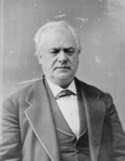
NameGov. Richard James Oglesby 
 412
412
412Birth25 Jul 1824, Oldham County, Kentucky
Census01 Jun 1880, Decatur, Macon County, Illinois413 Age: 55
Death24 Apr 1899, “Oglehurst”, Elkhart Hill, Logan County, Illinois Age: 74
Burial08 May 1899, Elkhart Cemetery, Elkhart, Logan County, Illinois
OccupationPolitician
Cause of deathSuffered from vertigo, fell and hit his head; died within the hour of a brain concussion.414,410
HonorsOglesby Hall at the University of Illinois is named for him.
Public Office FactsThree time governor of Illinois; one term Senator.
Military FactsParticipated in the Mexican-American War; was a General during the Civil War.
FatherJacob Oglesby (1791-1833)
MotherIsabel Watson (1792-1833)
Spouses
Birth04 Jun 1835, Bainbridge, ?, Ohio
Death16 Jun 1868, Springfield, Sangamon County, Illinois414 Age: 33
MemoMrs. Anna White Oglesby died in the Governor’s Mansion.
BurialGreenwood Cemetery, Decatur, Macon County, Illinois415
FatherJoseph White
MotherMary Ann
Marriage24 Mar 1859, Decatur, Macon County, Illinois395
Marr MemoLicense is in Macon County.
ChildrenRichard James “Dickie” (Died as Child) (1859-1865)
Anna Elizabeth (Died as Infant) (~1861-1862)
Olive (1863-)
Robert “Bob” (1865-)
Death1928, Decatur, Macon County, Illinois
FatherJohn Dean Gillett (1819-1888)
MotherLouise Lemira Parke (1821-1901)
Marriage18 Nov 1873, Logan County, Illinois395
ChildrenEmma Louise “Felicite” (1874-)
Richard James “Dick” (1875-)
John Gillett (1878-1938)
Jasper Ernest (1882-)
Biography notes for Gov. Richard James Oglesby
RICHARD J. OGLESBY
This distinguished soldier and statesman was born on the twenty-fifth of July, St. James’ day, 1824, in Oldham County, Kentucky. His parents, Isabella Watson and Jacob Oglesby, both of Scottish descent, came to Kentucky from Virginia.
After following other pursuits, Jacob Oglesby became a farmer in Kentucky where he was a man of some influence, representing his county two terms in the legislature of the state. The profit of his farm enabled him to live comfortably with his large family of eight children until 1833, when the cholera, which swept through the country at that time, bereft the young family of both father and mother, a brother Woodford and a sister Isabella. Afterward in 1836 the youngest daughter Sarah died at the age of six years, in Illinois. Robert, the youngest son, six years old at the time of his parents’ death, died at the age of twenty-one, after a year’s service in the Mexican war. The death of the parents in early maturity left the young family, two sons and four daughters. totally unprovided for.
Kind relatives, however, came to their relief, and assumed their care. Richard, the fifth child, and the elder of the surviving brothers, was but eight years old at the time of his father’s death, and was taken in charge by an uncle, Willis Oglesby, who in 1836 moved to Decatur, Illinois, and afterward lived in Kentucky and Indiana. Richard remained with his uncle until the age of fourteen, when he started out in the world alone. His first journey was on foot, with only a small bundle, from Terre-Haute, Indiana, back to his favorite home, Decatur, Illinois, where he sought and found the protection of two devoted sisters, Mrs. Henry Prather and Mrs. J.J. Peddecord. In Decatur, therefore, in November, 1838, Richard J. Oglesby, at the age of fourteen, fairly entered upon the struggle of life; for a while he had friends and relations who always took a deep interest in his welfare, and pointed out to him, by suggestions and advices, the best course to pursue, he felt, and it was true, that he must rely chiefly on his own will and resources for all the future yet to be revealed and developed. The financial crash of 1837 was then being felt throughout the country; every one was poor. “The time were hard,” sure enough. And that common suffering, which puts all on an equality, while beset with innumerable deprivations, yet impressed upon the generation of that period the hard lesson of self-denial, simplicity of manner, and a pure and unselfish patriotism. From the age of fourteen to seventeen years, his life was very similar to that of other boys, working on the farm, and about town at such employment as could be found, by the day, week, or month.
The usual amusements of those days, he says, were hunting, fishing and “Burgooing,” and on Saturday afternoon in all countyseat towns, horse-racing, ball-playing and occasionally a fist-fight in the street to settle up old differences, clear up the atmosphere and get ready for church next day. Richard had his full share in the sports and pastimes of the day, but managed to keep clear of the sterner tussels in the street.
At seventeen he went to Kentucky, still the home of his eldest sister, Mrs. James F. Wilson, where he learned the trade of a house carpenter under James Rankim. Returning after a year to Decatur he worked for Major E.O. Smith at the same trade, for six dollars a month and board. Times steadily grew harder, and work at any trade more difficult to obtain; besides farming and merchandizing there was little life in any trade or industry in the West. In 1843 farming was next undertaken, in company with Lemuel Allen, a teacher of some repute, whose school Richard had attended for three months the previous winter. They farmed on rented ground one mile east of Decatur, and raised oats, corn and twelve acres of hemp. The last was duly cut and cured, and the following winter and spring was spun into well-rope and bed-cords on a rope walk, invented by Mr. Oglesby for the purpose. On this same rope machine was spun the two large cables used in launching the first flat- boat sent out on the Sangamon river from Decatur. It was laden with corn and other produce of Macon county. The whole population turned out to see the boat take its departure on its long journey down the Sangamon to the Illinois river and thence down the Mississippi to New Orleans. Many of the older and wiser heads of the great company assembled on that occasion regarded the auspicious event as the fulfilment of a prophecy made by “Abe Lincoln” in a speech near a little corner grocery at Decatur in 1830: “That the Sangamon would some day be declared a navigable stream open to the commerce of the world.” The sympathizing crowd followed the course of the “flat-boat” for many miles, cheering vociferously as it swept the various and abrupt curves of the sluggish Sangamon, somewhat perilous to navigation on account of the drift-wood, which had caught and collected into large and compact masses, clogging the stream, in many places, from bank to bank.
In 1840 Mr. Oglesby first heard, in the way of public speaking, the very able debate between Lincoln and Couglas in the old courtroom in Decatur. Though he was but sixteen he had developed an admiration and attachment for Mr. Lincoln which continued to the present time. The example Mr. Lincoln’s life afforded, having begun the study of law with a limited education at the age of twenty-seven, became an inspiration to many young men in the West. Mr. Ogelsby like others felt its influence, and finally resolved as soon as he could obtain the means to follow in the path illuminated by the genius and talent of this noble man.
Therefore in 1844, at the age of twenty, he began the study of law with Silas W. Robbins, in Springfield. In November, 1845, after the usual examinations he was admitted to the bar. It is due to the truth of biography to state that the education of Mr. Oglesby had been limited. His opportunities had been of the poorest kind. At the period when he began the study of law, he could read and write, had a slight knowledge of arithmetic and a brief acquaintance with geography; but this was all he could claim in the way of an education.
In the spring of 1846, the war between the United States and Mexico opened a new field of action; and we find Mr. Oglesby in that service for one year as First Lieut. of Company C, 4th Illinois volunteers, commanded by the late Col. E.D. Baker of Illinois. Lieut. Oglesby marched with the regiment on foot over seven hundred miles through the interior of Mexica, and was in the battles of Vera Cruz and Cerro Gordo; in the latter, he commanded the company, Captain Pugh having been placed by Colonel Baker, in command of the left wing of the regiment, and out of forty-one, rank and file, lost ten, killed and wounded. It was in this battle General Shields fell wounded, at the head of the Fourth Illinois regiment, near Colonel Baker. Lieutenant Oglesby was left in charge of the wounded general for two days on the battle-field, as a mark of respect to the company. On his return, at the close of the war, to his home he at once resumed the practice of law, giving it his whole attention.
But in 1849, catching the gold fever, he made one of a party of eight, which left Decatur for California. The trip was made in ninety-five days, and was one of uninterrupted interest and pleasure. As an evidence of the wisdom of the venture, he states, that on the evening of the third day after his arrival in Sacremento City he repaid the two hundred and fifty dollars borrowed, to make the journey, and had four hundred and seventy dollars in cash left.
His career as a miner was so successful that at the end of two years and six months, though he had lost three thousand dollars deposited in a Sacramento bank, and two thousand five hundred dollars by the burning of Nevada City, he returned to Decatur with four thousand five hundred dollars in gold, and had more cash for a few weeks than any other man in Decatur, then a town of five hundred inhabitants, including many promising young men.
Shortly after the return from California, the law firm of “Oglesby and Waite” was established, which continued until the spring of 1856. At this time Mr. Oglesby decided upon a tour abroad, and in April he left Illinois for a journey to Great Britain and Europe, which was extended to Egypt, Arabia, Palestine and Asia Minor.
He sailed from Philadelphia in the “City of Baltimore,” Captain Lutch, landing, after a pleasant voyage of ten days, at St. George’s Pier, Liverpool. After three days in Liverpool he crossed to Dublin, and visited various places of interest in Ireland. From Port Rush, he sailed for Glasgow, and traveled over Scotland, arriving in London late in June, where he spent three weeks visiting points of historical interest. Parliament, then sitting, claimed his attention several times, and he was interested to observe the style and manners of English oratory.
In the House of Lords, he heard Lor Lyndhurst, the Duke of Argyle, Marquis of Lansdale, Lord John Campbell, Bishop of Oxford and many other distinguished peers. Lord John Campbell he notes as the most fluent speaker. In the house of commons among the many members whose speeches he heard, were Lord Palmerston, then in his prime, Lord John Russell and the famous D’Israeli. Leaving London, Mr. Oglesby spent two weeks in Paris and environs, then proceeded to Berlin, visiting en route, Brussels, Waterloo, Cologne, Mayence, Bonn, Frankfort, Leipsic and Dresden. In Berlin he celebrated his thirty- second birthday, and among other reflections regrets “that he is still a bachelor.” After a short time spent in that city and Potsdam, he determined to sail from Stettin to St. Petersburg.
August the 2nd, he embarked, meeting among his fellow-passengers the famous Colonel Colt, of revolver celebrity, who with his bride was on his way to St. Petersburg. They arrived after three days rough Passage on the Baltic, and on the isxth of August Mr. Oglesby celebrated another birthday, time being then reckoned in Russia O.S.
Two weeks were spent in St. Petersburg and two in Moscow, where on the 7th of September, he saw the present Czar and his Empress crowned in the Church of the Assumption. From Moscow he traveled by diligence eight hundred miles to Warsaw, a tedious journey, but having some unusual interests. In Poland he saw the most beautiful women of Europe. Leaving Warsaw by railway from Dresden and Berlin, he rejoices to find himself once more among the comfortable Germans. He felt depressed in spirit and body after witnessing so much human misery in Russia and Poland. His stay in Berlin was long and agreeable. On the sixteenth of October he was one of a party of ten Americans invited to attend King William, the Crown Prince, now Emperor, and their court, on the annual wild boar hunt in the “King’s Forest,” ten miles north of Berlin. The thirtieth of December, he left that lovely German city to visit Dresden again, Vienna and Trieste. From the last place he sailed to Alexandria, where he beheld with astonishment the marvelous wonders of this ancient city of Egypt. He describes among other famous monuments the obelisks, called “Cleopatra’s needle,” then standing on their original sites, one of which was recently brought to New York.
Late in January, Mr. Oglesby arrived in Cairo. After a short stay, he in company with a friend, chartered a boat and crew, and laying in a supply of provisions, resolved to make a trip up the Nile to Thebes. They left Cairo with the American flag flying, expecting to be gone thirty days, but found so many mysteries along the Nile to see and study, that their journey was prolonged, and more than forty days passed before their return to Cairo.
The ancient temples and tombs of Upper Egypt, still, as for centuries, the marvel of the world, the great pyramids on the west bank of the Nile near Cairo, one of the “seven wonders of the world,” were all, in succession, visited, studied and examined with the greatest possible interest and profit to the travelers from the western prairies of the new continent, where only the great natural objects arrest the eye of the traveler. Two week after their return to Cairo, Mr. Oglesby joined a caravan, to cross the desert, consisting of ten travelers, two dragomen, eleven Bedouins and thirty-three camels. On the twentieth of March they left Cairo for their perilous march to the Holy Land. The journey across the desert was full of eventful and startling adventures, camel-riding, tenting, tracing the scenes of scriptural history on the vast sandy plains, desert mountains and along the shores of the Dead Sea, the halt at the city of Suez, and the ascent of Mt. Horeb and Mt. Sinai, where during the night Mr. Ogelsby read and committed to memory the ten commandments, and with a companion repeated them on the top of Mt. Sinai, as the sun was rising over the mountains of Arabia and the wilderness where the children of Israel wandered for forty years. His journal describes the scene, as the light burst upon the barren plains and rock-riven peaks of the terrible desert, as one of surpassing splendor. There was also a visit to the city of Petra, and Aaron’s tomb on Mt. Hor. The dangers encountered on this journey were the simoom, which overtook them one day and night, during which their suffering was terrible, and the ugly threats and violent demonstrations of the wild Bedouins. At Hebron the weary travelers took horses for Jerusalem, where they arrived May the first, having accomplished a tedious and perilous journey in forty days from Cairo. During his stay in Jerusalem Mr. Oglesby visited all villages and places of scriptural interest near the city and studied with care and reverence the history of the holy places. After his final departure from Jerusalem, he traveled over the plain of Esdraelon, by Mt. Carmel, Nazareth, Mt. Tabor, the Sea of Galilee, which, he says, was one of the few places that looked as he thought it would; Magdala, Capernaum, by the waters of Merone and snow-capped Hermon. Late in May they reached the three streams that form the source of the Jordan, which they found clear and of icy coldness. The next day they visited Caesarea Philippi; from there, their destination was Damascus, where they spent two weeks sight-seeing, and once more enjoyed the comforts of civilization, good coffee, and baths. From Damascus they set out for Beyroot, halting on the way between Lebanon and Anti-Lebanon, to see the wonderful temple of Baalbeck and the town of Jebel. Arriving in Beyroot, three days later Mr. Oglesby sailed for Constantinople, landing after a voyage of eight days, having stopped at several ports; among them Smyrna and Rhodes. After five days spent in Constantinople, he sailed for Athens; two weeks were spent in this classic city, when he took ship on his last voyage on the Mediterranean for Naples; from there he visited Rome, Florence, Milan, Venice, and other famous Italian cities; crossing the Alps by the St. Gothard’s Pass, He returned through Switzerland and the Rhinish States to Berlin, where, after a brief stay, he passed through Northern Germany to Holland, visiting the important cities. Returning to Paris he stayed four weeks, visiting every place of interest in that gay capital, when he went to London, from whence he left for Porsmouth, where he sailed for America, landing in New York December, 1857. A foreign trip at this time, so extended as Mr. Oglesby’s was unusual; and led, through the interest of his friends to a series of lectures, given from his carefully kept journal, during his stay abroad. These lectures are said to have possessed great interest by those who were fortunate enough to hear them, and he is often, even yet, earnestly entreated to lecture again on the same subject.
At the time of the great contest between Lincoln and Douglas, in 1858, Mr. Oglesby became the Republican candidate for Congress in the Congressional district as then arranged. But, unhappily for his rising ambition, the district had been created to return a Democratic majority, and the Hon. James C. Robinson went to Congress while Mr. Oglesby still continued to practice law. In 1860 Mr. Oglesby was requested by the Republican party to become a candidate for the State Senate, and, though the district had before been largely Democratic, was elected in November at the same time that Mr. Lincoln was elected President of the United States. He served one term in the senate, but in 1861 was elected Colonel of the eighth Regiment of Illinois Volunteers, and resigned his seat to go to the field as a soldier in the great civil war. It is not deemed necessary to reproduce the stirring events of that fearful struggle. Mr. Oglesby served for one year as Colonel and led the right of Gen. Grant’s army in his advance on Fort Donelson, and was on the field of battle for three days in attacking that rebel stronghold, which finally yielded, with its fourteen thousand prisoners, after a severe battle on the fourteenth of February, 1862. This was the first substantial union victory up to that time. In 1861 Colonel Oglesby had been appointed by President Lincoln Brigadier General for gallantry at the battle of Fort Donelson, taking rank as such from April the first, 1862. In the autumn of 1862, the great battle of Corinth was fought, on the third and fourth days of October. Gen. Oglesby commanded a brigade in that fight, and on the afternoon of the first day fell upon the field of battle, as was then thought, mortally wounded, the ball having passed under the left arm, through the lungs and lodged near his spine. He passed six months of intense suffering and danger before he was able to leave his home, and still carries in his body the enemy’s ball which brought him so near the gates of death. On his recovery in April, 1863, he was promoted to the rank of Major-General of Volunteers, by appointment of President Lincoln, to rank as such from the twenty-ninth of November, 1862.
Still suffering from his wound, although on duty in the field, he tendered his resignation in July, 1863; but it was not accepted. He was, however, granted a leave of absence and returned home, where he was detailed as president of a general court-martial which sat in Washington from December, 1863, until May, 1864. Upon Gen. Oglesby’s return to Illinois in this year, he was unanimously nominated as the Republican candidate for Governor, and although the state had gone democratic at the last election, was elected by thirty-one thousand majority.
On his nomination for Governor on May 25th, 1864, the President accepted his resignation as Major- General, and he left the field of active hostilities, for which his severe wound had long unfitted him, to enter the arena of political life, where at that time the strife was as bitter as in the fields of war.
Gov. Oglesby is spoken of by the journals of that time as “a liberal-hearted administrator of the high and sacred trust imposed upon him as the official head of a great commonwealth;” “showing himself eminently faithful, competent and able; combining in an admirable degree the qualities of a very man among men.” The Chicago Tribune of January 18th, 1865, says of his inaugural: “The address is a manly, straight-forward document, devoid of pretension, replete with common sense, and admirably written. It clearly proclaims that the same nerve, the same intelligence and the patriotism which marked Gen. Oglesby’s conduct at Donelson and Corinth will distinguish his administration as Governor.”
Being at Washington when that awful national calamity, the assassination of President Lincoln occurred, it was Gov. Oglesby’s painful privilege to be present at the bedside of his beloved friend, within an hour after the fatal shot was given; he watched over him until the end, and saw him yield up his noble life in the cause of the country he loved and served so well. Afterward he remained close beside the precious remains, following in the mournful journey back to Illinois, until they were placed in the silent tomb amid the lamentations of a great nation.
Gov. Oglesby was made president of the National Lincoln Monument Association organized May 11th, 1865, which labored so assiduously until it obtained the means to erect to the martyred president an enduring memorial worthy to mark his last resting place, and hold the ashes of this noble man sacred. This stately monument was so far completed that it was formally dedicated, and the beautiful statue of Lincoln unveiled, October 15th, 1874. The Springfield Journal says: “There seems a peculiar propriety that Lincoln’s ardent friend and admirer, the eloquent and sympathetic Oglesby, should deliver the oration, and that the President and the cabinet should lend dignity by their presence to an occasion which will soon become historic.”
Gov. Oglesby was regarded by the returning regiments of soldiers with the warmest affection; his generous “soldier hear” responded to every demand for assistance or sympathy coming from a man in federal blue. He was ever solicitous for the welfare of all military organizations, and every individual soldier embraced therein.
At the end of his first term he retired to private life; but again, in 1872, his party required his services, and he was nominated and again elected governor in November of that year by forty-one thousand majority. On the tenth day after his inaugural he was chosen by the legislature United States Senator for the term of six years, from March fourth, 1873.
Senator Oglesby was as cordially admired and respected in the senate as in the other public positions he had occupied so honorable. He was an earnest and industrious member, and his unblemished integrity and honesty of purpose won for him the highest regard and respect from his brother senators.
“With proper modesty and fearlessness, he bore himself always as became a republican senator, proud of the noble state he represented;” and his public career was honorable closed by the expiration of his senatorial term on the fourth of March, 1879.
He is in private life the same sound and unswerving republican he has ever been-- the same patriot,--and has the same high sense of public honor which ought to fill the breast of every man who accepts the public confidence. The fidelity, courage and honesty of purpose with which Richard J. Oglesby has served his country whenever her cause has been intrusted to his hands, certainly prclaims him worthy to bear the motto of his Scottish: “Pro Patria.”
He has been twice married; first in 1859, to Anna E., daughter of Joseph White, of Decatur; and afterwards, in 1873, to Emma, daughter of John D. Gillett, of Elkhart. He has children by both marriages.
http://www.rootsweb.com/~kygenweb/kybiog/oldham/oglesby.rj.txt
This distinguished soldier and statesman was born on the twenty-fifth of July, St. James’ day, 1824, in Oldham County, Kentucky. His parents, Isabella Watson and Jacob Oglesby, both of Scottish descent, came to Kentucky from Virginia.
After following other pursuits, Jacob Oglesby became a farmer in Kentucky where he was a man of some influence, representing his county two terms in the legislature of the state. The profit of his farm enabled him to live comfortably with his large family of eight children until 1833, when the cholera, which swept through the country at that time, bereft the young family of both father and mother, a brother Woodford and a sister Isabella. Afterward in 1836 the youngest daughter Sarah died at the age of six years, in Illinois. Robert, the youngest son, six years old at the time of his parents’ death, died at the age of twenty-one, after a year’s service in the Mexican war. The death of the parents in early maturity left the young family, two sons and four daughters. totally unprovided for.
Kind relatives, however, came to their relief, and assumed their care. Richard, the fifth child, and the elder of the surviving brothers, was but eight years old at the time of his father’s death, and was taken in charge by an uncle, Willis Oglesby, who in 1836 moved to Decatur, Illinois, and afterward lived in Kentucky and Indiana. Richard remained with his uncle until the age of fourteen, when he started out in the world alone. His first journey was on foot, with only a small bundle, from Terre-Haute, Indiana, back to his favorite home, Decatur, Illinois, where he sought and found the protection of two devoted sisters, Mrs. Henry Prather and Mrs. J.J. Peddecord. In Decatur, therefore, in November, 1838, Richard J. Oglesby, at the age of fourteen, fairly entered upon the struggle of life; for a while he had friends and relations who always took a deep interest in his welfare, and pointed out to him, by suggestions and advices, the best course to pursue, he felt, and it was true, that he must rely chiefly on his own will and resources for all the future yet to be revealed and developed. The financial crash of 1837 was then being felt throughout the country; every one was poor. “The time were hard,” sure enough. And that common suffering, which puts all on an equality, while beset with innumerable deprivations, yet impressed upon the generation of that period the hard lesson of self-denial, simplicity of manner, and a pure and unselfish patriotism. From the age of fourteen to seventeen years, his life was very similar to that of other boys, working on the farm, and about town at such employment as could be found, by the day, week, or month.
The usual amusements of those days, he says, were hunting, fishing and “Burgooing,” and on Saturday afternoon in all countyseat towns, horse-racing, ball-playing and occasionally a fist-fight in the street to settle up old differences, clear up the atmosphere and get ready for church next day. Richard had his full share in the sports and pastimes of the day, but managed to keep clear of the sterner tussels in the street.
At seventeen he went to Kentucky, still the home of his eldest sister, Mrs. James F. Wilson, where he learned the trade of a house carpenter under James Rankim. Returning after a year to Decatur he worked for Major E.O. Smith at the same trade, for six dollars a month and board. Times steadily grew harder, and work at any trade more difficult to obtain; besides farming and merchandizing there was little life in any trade or industry in the West. In 1843 farming was next undertaken, in company with Lemuel Allen, a teacher of some repute, whose school Richard had attended for three months the previous winter. They farmed on rented ground one mile east of Decatur, and raised oats, corn and twelve acres of hemp. The last was duly cut and cured, and the following winter and spring was spun into well-rope and bed-cords on a rope walk, invented by Mr. Oglesby for the purpose. On this same rope machine was spun the two large cables used in launching the first flat- boat sent out on the Sangamon river from Decatur. It was laden with corn and other produce of Macon county. The whole population turned out to see the boat take its departure on its long journey down the Sangamon to the Illinois river and thence down the Mississippi to New Orleans. Many of the older and wiser heads of the great company assembled on that occasion regarded the auspicious event as the fulfilment of a prophecy made by “Abe Lincoln” in a speech near a little corner grocery at Decatur in 1830: “That the Sangamon would some day be declared a navigable stream open to the commerce of the world.” The sympathizing crowd followed the course of the “flat-boat” for many miles, cheering vociferously as it swept the various and abrupt curves of the sluggish Sangamon, somewhat perilous to navigation on account of the drift-wood, which had caught and collected into large and compact masses, clogging the stream, in many places, from bank to bank.
In 1840 Mr. Oglesby first heard, in the way of public speaking, the very able debate between Lincoln and Couglas in the old courtroom in Decatur. Though he was but sixteen he had developed an admiration and attachment for Mr. Lincoln which continued to the present time. The example Mr. Lincoln’s life afforded, having begun the study of law with a limited education at the age of twenty-seven, became an inspiration to many young men in the West. Mr. Ogelsby like others felt its influence, and finally resolved as soon as he could obtain the means to follow in the path illuminated by the genius and talent of this noble man.
Therefore in 1844, at the age of twenty, he began the study of law with Silas W. Robbins, in Springfield. In November, 1845, after the usual examinations he was admitted to the bar. It is due to the truth of biography to state that the education of Mr. Oglesby had been limited. His opportunities had been of the poorest kind. At the period when he began the study of law, he could read and write, had a slight knowledge of arithmetic and a brief acquaintance with geography; but this was all he could claim in the way of an education.
In the spring of 1846, the war between the United States and Mexico opened a new field of action; and we find Mr. Oglesby in that service for one year as First Lieut. of Company C, 4th Illinois volunteers, commanded by the late Col. E.D. Baker of Illinois. Lieut. Oglesby marched with the regiment on foot over seven hundred miles through the interior of Mexica, and was in the battles of Vera Cruz and Cerro Gordo; in the latter, he commanded the company, Captain Pugh having been placed by Colonel Baker, in command of the left wing of the regiment, and out of forty-one, rank and file, lost ten, killed and wounded. It was in this battle General Shields fell wounded, at the head of the Fourth Illinois regiment, near Colonel Baker. Lieutenant Oglesby was left in charge of the wounded general for two days on the battle-field, as a mark of respect to the company. On his return, at the close of the war, to his home he at once resumed the practice of law, giving it his whole attention.
But in 1849, catching the gold fever, he made one of a party of eight, which left Decatur for California. The trip was made in ninety-five days, and was one of uninterrupted interest and pleasure. As an evidence of the wisdom of the venture, he states, that on the evening of the third day after his arrival in Sacremento City he repaid the two hundred and fifty dollars borrowed, to make the journey, and had four hundred and seventy dollars in cash left.
His career as a miner was so successful that at the end of two years and six months, though he had lost three thousand dollars deposited in a Sacramento bank, and two thousand five hundred dollars by the burning of Nevada City, he returned to Decatur with four thousand five hundred dollars in gold, and had more cash for a few weeks than any other man in Decatur, then a town of five hundred inhabitants, including many promising young men.
Shortly after the return from California, the law firm of “Oglesby and Waite” was established, which continued until the spring of 1856. At this time Mr. Oglesby decided upon a tour abroad, and in April he left Illinois for a journey to Great Britain and Europe, which was extended to Egypt, Arabia, Palestine and Asia Minor.
He sailed from Philadelphia in the “City of Baltimore,” Captain Lutch, landing, after a pleasant voyage of ten days, at St. George’s Pier, Liverpool. After three days in Liverpool he crossed to Dublin, and visited various places of interest in Ireland. From Port Rush, he sailed for Glasgow, and traveled over Scotland, arriving in London late in June, where he spent three weeks visiting points of historical interest. Parliament, then sitting, claimed his attention several times, and he was interested to observe the style and manners of English oratory.
In the House of Lords, he heard Lor Lyndhurst, the Duke of Argyle, Marquis of Lansdale, Lord John Campbell, Bishop of Oxford and many other distinguished peers. Lord John Campbell he notes as the most fluent speaker. In the house of commons among the many members whose speeches he heard, were Lord Palmerston, then in his prime, Lord John Russell and the famous D’Israeli. Leaving London, Mr. Oglesby spent two weeks in Paris and environs, then proceeded to Berlin, visiting en route, Brussels, Waterloo, Cologne, Mayence, Bonn, Frankfort, Leipsic and Dresden. In Berlin he celebrated his thirty- second birthday, and among other reflections regrets “that he is still a bachelor.” After a short time spent in that city and Potsdam, he determined to sail from Stettin to St. Petersburg.
August the 2nd, he embarked, meeting among his fellow-passengers the famous Colonel Colt, of revolver celebrity, who with his bride was on his way to St. Petersburg. They arrived after three days rough Passage on the Baltic, and on the isxth of August Mr. Oglesby celebrated another birthday, time being then reckoned in Russia O.S.
Two weeks were spent in St. Petersburg and two in Moscow, where on the 7th of September, he saw the present Czar and his Empress crowned in the Church of the Assumption. From Moscow he traveled by diligence eight hundred miles to Warsaw, a tedious journey, but having some unusual interests. In Poland he saw the most beautiful women of Europe. Leaving Warsaw by railway from Dresden and Berlin, he rejoices to find himself once more among the comfortable Germans. He felt depressed in spirit and body after witnessing so much human misery in Russia and Poland. His stay in Berlin was long and agreeable. On the sixteenth of October he was one of a party of ten Americans invited to attend King William, the Crown Prince, now Emperor, and their court, on the annual wild boar hunt in the “King’s Forest,” ten miles north of Berlin. The thirtieth of December, he left that lovely German city to visit Dresden again, Vienna and Trieste. From the last place he sailed to Alexandria, where he beheld with astonishment the marvelous wonders of this ancient city of Egypt. He describes among other famous monuments the obelisks, called “Cleopatra’s needle,” then standing on their original sites, one of which was recently brought to New York.
Late in January, Mr. Oglesby arrived in Cairo. After a short stay, he in company with a friend, chartered a boat and crew, and laying in a supply of provisions, resolved to make a trip up the Nile to Thebes. They left Cairo with the American flag flying, expecting to be gone thirty days, but found so many mysteries along the Nile to see and study, that their journey was prolonged, and more than forty days passed before their return to Cairo.
The ancient temples and tombs of Upper Egypt, still, as for centuries, the marvel of the world, the great pyramids on the west bank of the Nile near Cairo, one of the “seven wonders of the world,” were all, in succession, visited, studied and examined with the greatest possible interest and profit to the travelers from the western prairies of the new continent, where only the great natural objects arrest the eye of the traveler. Two week after their return to Cairo, Mr. Oglesby joined a caravan, to cross the desert, consisting of ten travelers, two dragomen, eleven Bedouins and thirty-three camels. On the twentieth of March they left Cairo for their perilous march to the Holy Land. The journey across the desert was full of eventful and startling adventures, camel-riding, tenting, tracing the scenes of scriptural history on the vast sandy plains, desert mountains and along the shores of the Dead Sea, the halt at the city of Suez, and the ascent of Mt. Horeb and Mt. Sinai, where during the night Mr. Ogelsby read and committed to memory the ten commandments, and with a companion repeated them on the top of Mt. Sinai, as the sun was rising over the mountains of Arabia and the wilderness where the children of Israel wandered for forty years. His journal describes the scene, as the light burst upon the barren plains and rock-riven peaks of the terrible desert, as one of surpassing splendor. There was also a visit to the city of Petra, and Aaron’s tomb on Mt. Hor. The dangers encountered on this journey were the simoom, which overtook them one day and night, during which their suffering was terrible, and the ugly threats and violent demonstrations of the wild Bedouins. At Hebron the weary travelers took horses for Jerusalem, where they arrived May the first, having accomplished a tedious and perilous journey in forty days from Cairo. During his stay in Jerusalem Mr. Oglesby visited all villages and places of scriptural interest near the city and studied with care and reverence the history of the holy places. After his final departure from Jerusalem, he traveled over the plain of Esdraelon, by Mt. Carmel, Nazareth, Mt. Tabor, the Sea of Galilee, which, he says, was one of the few places that looked as he thought it would; Magdala, Capernaum, by the waters of Merone and snow-capped Hermon. Late in May they reached the three streams that form the source of the Jordan, which they found clear and of icy coldness. The next day they visited Caesarea Philippi; from there, their destination was Damascus, where they spent two weeks sight-seeing, and once more enjoyed the comforts of civilization, good coffee, and baths. From Damascus they set out for Beyroot, halting on the way between Lebanon and Anti-Lebanon, to see the wonderful temple of Baalbeck and the town of Jebel. Arriving in Beyroot, three days later Mr. Oglesby sailed for Constantinople, landing after a voyage of eight days, having stopped at several ports; among them Smyrna and Rhodes. After five days spent in Constantinople, he sailed for Athens; two weeks were spent in this classic city, when he took ship on his last voyage on the Mediterranean for Naples; from there he visited Rome, Florence, Milan, Venice, and other famous Italian cities; crossing the Alps by the St. Gothard’s Pass, He returned through Switzerland and the Rhinish States to Berlin, where, after a brief stay, he passed through Northern Germany to Holland, visiting the important cities. Returning to Paris he stayed four weeks, visiting every place of interest in that gay capital, when he went to London, from whence he left for Porsmouth, where he sailed for America, landing in New York December, 1857. A foreign trip at this time, so extended as Mr. Oglesby’s was unusual; and led, through the interest of his friends to a series of lectures, given from his carefully kept journal, during his stay abroad. These lectures are said to have possessed great interest by those who were fortunate enough to hear them, and he is often, even yet, earnestly entreated to lecture again on the same subject.
At the time of the great contest between Lincoln and Douglas, in 1858, Mr. Oglesby became the Republican candidate for Congress in the Congressional district as then arranged. But, unhappily for his rising ambition, the district had been created to return a Democratic majority, and the Hon. James C. Robinson went to Congress while Mr. Oglesby still continued to practice law. In 1860 Mr. Oglesby was requested by the Republican party to become a candidate for the State Senate, and, though the district had before been largely Democratic, was elected in November at the same time that Mr. Lincoln was elected President of the United States. He served one term in the senate, but in 1861 was elected Colonel of the eighth Regiment of Illinois Volunteers, and resigned his seat to go to the field as a soldier in the great civil war. It is not deemed necessary to reproduce the stirring events of that fearful struggle. Mr. Oglesby served for one year as Colonel and led the right of Gen. Grant’s army in his advance on Fort Donelson, and was on the field of battle for three days in attacking that rebel stronghold, which finally yielded, with its fourteen thousand prisoners, after a severe battle on the fourteenth of February, 1862. This was the first substantial union victory up to that time. In 1861 Colonel Oglesby had been appointed by President Lincoln Brigadier General for gallantry at the battle of Fort Donelson, taking rank as such from April the first, 1862. In the autumn of 1862, the great battle of Corinth was fought, on the third and fourth days of October. Gen. Oglesby commanded a brigade in that fight, and on the afternoon of the first day fell upon the field of battle, as was then thought, mortally wounded, the ball having passed under the left arm, through the lungs and lodged near his spine. He passed six months of intense suffering and danger before he was able to leave his home, and still carries in his body the enemy’s ball which brought him so near the gates of death. On his recovery in April, 1863, he was promoted to the rank of Major-General of Volunteers, by appointment of President Lincoln, to rank as such from the twenty-ninth of November, 1862.
Still suffering from his wound, although on duty in the field, he tendered his resignation in July, 1863; but it was not accepted. He was, however, granted a leave of absence and returned home, where he was detailed as president of a general court-martial which sat in Washington from December, 1863, until May, 1864. Upon Gen. Oglesby’s return to Illinois in this year, he was unanimously nominated as the Republican candidate for Governor, and although the state had gone democratic at the last election, was elected by thirty-one thousand majority.
On his nomination for Governor on May 25th, 1864, the President accepted his resignation as Major- General, and he left the field of active hostilities, for which his severe wound had long unfitted him, to enter the arena of political life, where at that time the strife was as bitter as in the fields of war.
Gov. Oglesby is spoken of by the journals of that time as “a liberal-hearted administrator of the high and sacred trust imposed upon him as the official head of a great commonwealth;” “showing himself eminently faithful, competent and able; combining in an admirable degree the qualities of a very man among men.” The Chicago Tribune of January 18th, 1865, says of his inaugural: “The address is a manly, straight-forward document, devoid of pretension, replete with common sense, and admirably written. It clearly proclaims that the same nerve, the same intelligence and the patriotism which marked Gen. Oglesby’s conduct at Donelson and Corinth will distinguish his administration as Governor.”
Being at Washington when that awful national calamity, the assassination of President Lincoln occurred, it was Gov. Oglesby’s painful privilege to be present at the bedside of his beloved friend, within an hour after the fatal shot was given; he watched over him until the end, and saw him yield up his noble life in the cause of the country he loved and served so well. Afterward he remained close beside the precious remains, following in the mournful journey back to Illinois, until they were placed in the silent tomb amid the lamentations of a great nation.
Gov. Oglesby was made president of the National Lincoln Monument Association organized May 11th, 1865, which labored so assiduously until it obtained the means to erect to the martyred president an enduring memorial worthy to mark his last resting place, and hold the ashes of this noble man sacred. This stately monument was so far completed that it was formally dedicated, and the beautiful statue of Lincoln unveiled, October 15th, 1874. The Springfield Journal says: “There seems a peculiar propriety that Lincoln’s ardent friend and admirer, the eloquent and sympathetic Oglesby, should deliver the oration, and that the President and the cabinet should lend dignity by their presence to an occasion which will soon become historic.”
Gov. Oglesby was regarded by the returning regiments of soldiers with the warmest affection; his generous “soldier hear” responded to every demand for assistance or sympathy coming from a man in federal blue. He was ever solicitous for the welfare of all military organizations, and every individual soldier embraced therein.
At the end of his first term he retired to private life; but again, in 1872, his party required his services, and he was nominated and again elected governor in November of that year by forty-one thousand majority. On the tenth day after his inaugural he was chosen by the legislature United States Senator for the term of six years, from March fourth, 1873.
Senator Oglesby was as cordially admired and respected in the senate as in the other public positions he had occupied so honorable. He was an earnest and industrious member, and his unblemished integrity and honesty of purpose won for him the highest regard and respect from his brother senators.
“With proper modesty and fearlessness, he bore himself always as became a republican senator, proud of the noble state he represented;” and his public career was honorable closed by the expiration of his senatorial term on the fourth of March, 1879.
He is in private life the same sound and unswerving republican he has ever been-- the same patriot,--and has the same high sense of public honor which ought to fill the breast of every man who accepts the public confidence. The fidelity, courage and honesty of purpose with which Richard J. Oglesby has served his country whenever her cause has been intrusted to his hands, certainly prclaims him worthy to bear the motto of his Scottish: “Pro Patria.”
He has been twice married; first in 1859, to Anna E., daughter of Joseph White, of Decatur; and afterwards, in 1873, to Emma, daughter of John D. Gillett, of Elkhart. He has children by both marriages.
http://www.rootsweb.com/~kygenweb/kybiog/oldham/oglesby.rj.txt
Biography notes for Gov. Richard James Oglesby
Richard James Oglesby
OGLESBY, Richard James, senator, born in Oldham county, Kentucky, 25 July, 1824. He was left an orphan at the age of eight, removed to Decatur. Illinois, in 1836, and learned the carpenter's trade, which, with farming and rope-making, occupied him until 1844. While making rope, he invented a machine that was a decided improvement on the methods before in use. In the mean time he had studied law in his leisure hours, and in 1845 was admitted to the bar, beginning to practise in Sullivan, Moultrie County, Illinois. The following year he returned to Decatur, and was commissioned 1st lieutenant in the 4th Illinois regiment, which he accompanied to Mexico, and was preset at the siege of Vera Cruz and the battle of Cerro Gordo. He resumed practice at Decatur in 1847, pursued a course of study at Louisville law-school, and was graduated there in 1848. In 1849 he went to California, and engaged in mining until 1851, when he again returned to Decatur. In 1860 he was elected to the state senate, but resigned to accept the colonelcy of the 8th Illinois volunteers. He commanded a brigade at the capture of Fort Henry and Fort Donelson, and was promoted for gallantry brigadier-general of volunteers, 21 March, 1862. He added to his reputation at Corinth, where he was severely wounded, and disabled from duty until April, 1863. In the mean time he had been made major-general of volunteers, and assigned to the command of the 16th army corps. This coin-mission he resigned in May, 1864, and in the following November he was elected governor of the state as a Republican by a large majority. He was in office continuously until 1869, and was again elected in 1872. He was chosen United States senator in 1873, and served until 3 March, 1879, but declined a re-election. In November, 1884, he was again elected governor for a period of four year
http://famousamericans.net/richardjamesoglesby/
OGLESBY, Richard James, senator, born in Oldham county, Kentucky, 25 July, 1824. He was left an orphan at the age of eight, removed to Decatur. Illinois, in 1836, and learned the carpenter's trade, which, with farming and rope-making, occupied him until 1844. While making rope, he invented a machine that was a decided improvement on the methods before in use. In the mean time he had studied law in his leisure hours, and in 1845 was admitted to the bar, beginning to practise in Sullivan, Moultrie County, Illinois. The following year he returned to Decatur, and was commissioned 1st lieutenant in the 4th Illinois regiment, which he accompanied to Mexico, and was preset at the siege of Vera Cruz and the battle of Cerro Gordo. He resumed practice at Decatur in 1847, pursued a course of study at Louisville law-school, and was graduated there in 1848. In 1849 he went to California, and engaged in mining until 1851, when he again returned to Decatur. In 1860 he was elected to the state senate, but resigned to accept the colonelcy of the 8th Illinois volunteers. He commanded a brigade at the capture of Fort Henry and Fort Donelson, and was promoted for gallantry brigadier-general of volunteers, 21 March, 1862. He added to his reputation at Corinth, where he was severely wounded, and disabled from duty until April, 1863. In the mean time he had been made major-general of volunteers, and assigned to the command of the 16th army corps. This coin-mission he resigned in May, 1864, and in the following November he was elected governor of the state as a Republican by a large majority. He was in office continuously until 1869, and was again elected in 1872. He was chosen United States senator in 1873, and served until 3 March, 1879, but declined a re-election. In November, 1884, he was again elected governor for a period of four year
http://famousamericans.net/richardjamesoglesby/
Biography notes for Gov. Richard James Oglesby
GOVERNOR RICHARD J. OGLESBY.411 This distinguished soldier and statesman was born on the twenty-fifth of July, St. Jame's [sic] day, 1824, Oldham County, Kentucky. His parents, Isabella Watson and Jacob Oglesby, both of Scottish descent came to Kentucky from Virginia.
After following other pursuits, Jacob Oglesby became a farmer in Kentucky where he was a man of some influence, representing his county two terms in the legislature of that state. The profit of his farm enabled him to live comfortably with his large family of eight children until 1833, when the cholera, which swept through the country at that time, bereft the young family of both father and mother, a brother Woodford and a sister Isabella. Afterward in 1836 the youngest daughter Sarah died at the age of six years, in Illinois. Robert, the youngest son, six years old at the time of his parents' death, died at the age of twenty-one, after a year's service in the Mexican war. The death of the parents in early maturity left the young family, two sons and four daughters, totally unprovided for.
Kind relatives, however, came to their relief, and assumed their care. Richard, the fifth child, and the elder of of the surviving brothers, was but eight years old at the time of his father's death, and was taken in charge by an uncle, Willis Oglesby, who in 1836 moved to Decatur, Illinois, and afterward lived in Kentucky and Indiana. Richard remained with his uncle until the age of fourteen when he started out in the world alone. HIs first journey as on foot, with only a small bundle, from Terre-Haute, Indiana, back to his favorite home, Decatur, Illinois, where he sought and found the protection of two devoted sisters, Mrs. Henry Prather and Mrs. J. J. Peddecord. In Decatur, therefore, in November, 1838, Richard J. Oglesby, at the age of fourteen, fairly entered upon the struggle of life; for a while he had friends and relations who always took a deep interest in his welfare, and pointed out to him, by suggestions and advices, the best course to pursue, he felt, and it as true, that he must rely chiefly on his own will and resources for all the future yet to be revealed and developed. The financial crash of 1837 was then being felt throughout the country; every one was poor. "The times were hard," sure enough. And that common suffering, which puts all on an equality, while beset with innumerable deprivations, yet impressed upon the generation of that period the hard lesson of self-denial, simplicity of manner, and a pure and unselfish patriotism. From the age of fourteen to seventeen years, his life was very similar to that of other boys, working on the farm, and about town at such employment as could be found, by the day, week, or month.
The usual amusements of those days, he says, were hunting, fishing and "Burgooing," and on Saturday afternoon in all country-seat towns, horse-racing, ball-playing and occasionally a fist-fight in the street to settle up old differences, clear up the atmosphere and get ready for church next day. Richard had his full share in the sports and pasttimes of the day, but managed to keep clear of the sterner tussels in the street.
At seventeen he went to Kentucky, still the home of his eldest sister, Mrs. James F. Wilson, where he learned the trade of a house-carpenter under James Rankin. Returning after a year to Decatur he worked for Major E. O. Smith at the same trade, for six dollars a month and board. Times steadily grew harder, and work at any trade more difficult to obtain; besides farming and merchandizing there was little life in any trade or industry in the West. In 1843 farming was next undertaken, in company with Lemuel Allen, a teacher of some repute, whose school Richard had attended for three months the previous winter. They farmed on rented ground one mile east of Decatur, and raised oats, corn and twelve acres of hemp. The last was duly cut and cured, and the following winter and spring was spun into well-rope and bed-cords on a rope walk, invested by Mr. Oglesby for that purpose. On this same rope machine was spun the two large cables used in launching the first flat- boat sent out on the Sangamon river from Decatur. It was laden with corn and other produce of Macon county. The whole population turned out to see the boat take its departure on its long journey down the Sangamon to the Illinois river and thence down the Mississippi to New Orleans. Many of the older and wiser heads of the great company assembled on that occasion regarded the auspicious event as the folfilment of a prophecy made by "Abe Lincoln", in a speech near a little corner grocery at Decatur in 1830: "That the Sangamon would some day be declared a navigable stream open to the commerce of the world." The sympathizing crowd followed the course of the "flat-boat" for many miles, cheering vociferously as it swept the various and abrupt curves of the sluggish Sangamon, somewhat perilous to navigation on account of the drift-wood, which had caught and collected into large and compact masses, clogging the stream, in many place, from bank to bank.
In 1840 Mr. Oglesby first heard, in the way of public speaking, the very able debate between Lincoln and Douglas in the old court-room in Decatur. Though he was but sixteen he had developed an admiration and attachment for Mr. Lincoln which continued to the present time. The example Mr. Lincoln's life afforded, having begun the study of law with a limited education at the age of twenty-seven, became an inspiration to many young men in the West. Mr. Oglesby like others felt its influence, and finally resolved as soon as he could obtain the means to follow in the path illuminated by the genius and talent of this noble man.
Therefore in 1844, at the age of twenty, he began the study of law with Silas W. Robbins, in Springfield. In November, 1845, after the usual examinations he was admitted to the bar. It is due to the truth of biography to state that the education of Mr. Oglesby had been limited. His opportunities had been of the poorest kind. At the period when he began the study of law, he could read and write, had a slight knowledge of arithmetic and a brief acquaintance with geography; but this was all he could claim in the way of an education.
In the spring of 1846, the war between the United States and Mexico opened a new field of action; and we find Mr. Oglesby in that service for one year as First Lieut. of Company C, 4th Illinois volunteers, commanded by the late Col. E. D. Baker of Illinois. Lieut. Oglesby marched with the regiment on foot over seven hundred miles through the interior of Mexico, and was in the battles of Vera Cruz and Cerro Gordo; in the latter, he commanded the company, Captain Pugh having been placed by Colonel Baker, in command of the left wing of the regiment, and out of forty-one, rank and file, lost ten, killed and wounded. It was in this battle General Shields fell wounded, at the head of the Fourth Illinois regiment, near Colonel Baker. Lieutenant Oglesby was left in charge of the wounded general for two days on the battle- field, as a mark of respect to the company. On his return, at the close of the war, to him home he at once resumed the practice of law, giving it his whole attention.
But in 1849, catching the gold fever, he made one of a party of eight, which left Decatur for California. He drove a team of six mules every mile of the journey, from St. Joseph, Missouri to Sacramento City, California. The trip was made in ninety-five days, and as one of uninterrupted interest and pleasure. As an evidence of the wisdom of the venture, he states, that on the evening of the third day after his arrival in Sacramento City he repaid the two hundred and fifty dollars borrowed, to make the journey, and had four hundred and seventy dollars in cash left.
His career as a miner was so successful that at the end of two years and six months, though he had lost three thousand dollars deposited in a Sacramento bank, and two thousand five hundred dollars by the burning of Nevada City, he returned to Decatur with four thousand five hundred dollars in gold, and had more cash for a few weeks than any other man in Decatur, then a town of five hundred inhabitants, including many promising young men.
Shortly after the return from California, the law firm of "Oglesby and Waite" was established, which continued until the spring of 1856. At this time Mr. Oglesby decided upon a tour abroad, and in April he left Illinois for a journey to Great Britain and Europe, which was extended to Egypt, Arabia, Palestine and Asia Minor.
He sailed from Philadelphia in the "City of Baltimore," Captain Lutch, landing, after a pleasant voyage of ten days, at St. George's Pier, Liverpool. After three days visit in Liverpool he crossed to Dublin, and visited various places of interest in Ireland. From Port Rush, he sailed for Glasgow, and traveled over Scotland, arriving in London late in June, where he spent three weeks visiting points of historical interest. Parliament, then sitting, claimed his attention several times, and he was interested to observe the style and manners of English oratory.
In the House of Lords, he heard Lord Lyndhurst, the Duke of Argyle, Marquis of Lansdale, Lord John Campbell, Bishop of Oxford and many other distinguished peers. Lord John Campbell he notes as the most fluent speaker. In the house of commons among the many members whose speeches he heard, were Lord Palmerston, then in his prime, Lord John Russell and the famous D'Israeli. Leaving London, Mr. Oglesby spent two weeks in Paris and environs, then proceeded to Berlin, visiting en route, Brussels, Waterloo, Cologne, Mayence, Bonn, Frankfort, Leipsic and Dresden. In Berlin he celebrated his thirty-second birthday and among other reflections regrets "that he is still a bachelor." After a short time spent in that city and Potsdam, he determined to sail from Stettin to St. Petersburg.
August the 2d, he embarked, meeting among his fellow-passengers the famous Colonel Colt, of revolver celebrity, who with his bride was on his way to St. Petersburg. They arrived after three days rough passage on the Baltic, and on the sixth of August Mr. Oglesby celebrated another birthday, time being then recokoned in Russia O. S.
Two weeks were spent in St. Petersburg and two in Moscow, where on the 7th of September, he saw the present Czar and his Empress corwned in the Church of the Assumption. From Moscow he traveled by diligence eight hundred miles to Warsaw, a tedious journey, but having some unusual interests. In Poland he saw the most beautiful women of Europe. Leaving Warsaw by railway from Dresden and Berlin, he rejoiced to find himself once more among the comfortable Germans. He felt depressed in spirit and body after witnessing so much human misery in Russia and Poland. His stay in Berlin was long and agreeable. On the sixteenth of October he was one of a party of ten Americans invited to attend King William, the Crown Prince, now Emporer, and their court, on the annual wild boar hunt in the "King's Forest," ten miles north of Berlin. The thirtieth of December, he left that lovely German city to visit Dresden again, Vienna and Triete. From the last place he sailed to Alexandria, where he behild with astonishment the marvelous wonders of this ancient city of Egypt. He describes among other famous monuments the obelisks, called "Cleopatra's needle," then standing on the original site, one of which was recently brought to New York.
Late in January, Mr. Oglesby arrived in Cairo. After a short stay, he in company with a friend, chartered a boat and crew, and laying in a supply of provisions, resolved to make a trip up the Nile to Thebes. They left Cairo with the American flag flying, expecting to be gone thirty days, but found so many mysteries along the Nile to see and study, that their journey was prolonged, and more than forty days passed before their return to Cairo.
The ancient temples and tombs of Upper Egypt, still, as for centuries, the marvel of the world, the great pyramids on the west bank of the Nile near Cairo, one of the "seven wonders of the world," were all, in succession, visited, studied and examined with the greatest possible interest and profit to the travelers from the western prairies of the new continent, where only the great natural objects arrest the eye of the traveler. Two weeks after their return to Cairo, Mr. Oglesby joined a caravan, to cross the desert, consisting of ten travelers, two dragonmen, eleven Bedouins and thirty-three camels. On the twentieth of March they left Cairo for their periolous march to the Holy Land. The journey across the desert was full of eventful and startling adventures, camel-riding, tenting, tracing the scenes of scriptural history on the vast sandy plains, desert mountains and along the shores of the Dead Sea, the halt at the city of Suez, and the ascent of Mt. Horeb and Mt. Sinai, where during the night Mr Oglesby read and committed to memory the ten commandments, and with a companion repeated them on the top of Mt. Sinai, as the sun was rising over the mountains of Arabia and the wilderness where the children of Israel wandered forty years. His journal describes the scene, as the light burst upon the barren plains and rock-riven peaks of the terrible desert, as one of surpassing splendor. There was also a visit to the city of Petra, and Aaron's tomb on Mt. Hor. The dangers encountered them on this journey were the simoom, which overtook them one day and night, during which their suffereing was terrible, and the ugly threats and violent demonstrations of the wild Beduoins. At Hebron the weary travelers took horses for Jerusalem, where they arrived May the first, having accomplished a tedious and perilous journey in forty days from Cairo. During his stay in Jerusalem Mr. Oglesby visited all villages and places of scriptural interest near the city and studied with care and reverence the history of these holy places. After his final departure from Jerusalem, he traveled over the plain of Esdralon, by Mt. Carmel, Nazareth, Mt. Tabor, he Sea of Galilee, which, he says, was one of the few places that looked as he thought it would. Magdala, Capernaum, by the waters of Merone and snow-capped Hermon. Late in May they reached the three streams that form the source of the Jordan, which they found clear and of icy coldness. The next day they visited Caesarea Philippi; from there, their destination was Damascus, where they spent two weeks sight- seeing, and once more enjoyed the comforts of civilization, good coffee, and baths. From Damascas they set out for Beyroot [sic], halting on the way between Lebanaon and Anti-Lebanon, to see the wonderful temple of Baalbeck and the town of Jebel. Arriving in Beyroot [sic], three days later Mr. Oglesby sailed for Constantinople, landing after a voyage of eight days, having stopped at several ports; among them Smyrna and Rhodes. After five days spent in Constantinople, he sailed for Athens; two weeks were spent in this classic city, when he took ship on his last voyage on the Mediterranean for Naples; from there he visited Rome, Florence, Milan, Venice, and other famous Italian cities; crossing the Alps by the St. Gothard's Pass, he returned through Switzerland the the Rhinish States to Berlin, where, after a brief stay, he passed through Northern Germany to Holland, visiting the important cities. Returning to Paris he stayed four weeks, visiting every place of interest in that gay capital, when he went to London, from whence he left for Portsmouth, where he sailed for America, landing in New York Decembr, 1857. A foreign trip at this time, so extended as Mr. Oglesby's, was unusual; and led, through the interest of his friends to a series of lectures, given from his carefully kept journal, during his stay abroad. These lectures are said to have possessed great interest by those who wre fortunate enough to hear them, and he is often, even yet, earnestly entreated to lecture again on the same subject.
At the time of the great contest between Lincoln and Douglas, in 1858, Mr. Oglesby became the Republican candidate for Congress in the Congressional district as then arranged. But, unhappily for his rising ambition, the district had been created to return a Democratic majority, and the Hon. James C. Robinson went to Congress while Mr. Oglesby still continued to practice law. In 1860 Mr. Oglesby was requested by the Republican party to become a candidate for the State Senate, and though the district had before been largely Democratic, was elected in November at the same time that Mr. Lincoln was elected President of the United States. He served one term in the senate, but in 1861 was elected Colonel of the Eighth Regiment of Illinois Volunteers, and resigned his seat to go the field as a soldier in the great Civil war. It is not deemed necessary to reproduce the stirring events of that fearful struggle. Mr. Oglesby served for one year as Colonel and led the right of Gen. Grant's army in his advance on Fort Donelson, and was on the field of battle for three days in attacking tht rebel stronghold, which finally yielded, with its fourteen thousand prisoners, after a severe battle on the fourteenth of February, 1862. This was the first substantial union victory up to that time. In 1862 Colonel Oglesby had been appointed by President Lincoln Brigadier General for gallantry at the battle of Fort Donelson, taking rank as such from April the first, 1862. In the autumn of 1862, the great battle of Corinth was fought, on the third and fourth days of October. Gen. Oglesby commanded a brigade in that fight, and on the afternoon of the first day fell upon the field of battle, as was then thought, mortally wounded, the ball having passed under the left arm, through the lungs and lodged near his spine. He passed six months of intense suffering and danger before he was able to leave his home, and still carries in his body the enemy's ball which brought him so near the gates of death. On his recovery in April, 1863, he was promoted to the rank of Major-General of Volunteers, by appointment of President Lincoln, to rank as such from the twenty-ninth of November, 1862.
Still suffering from his wound, although on duty in the field, he tendered his resignation in July, 1863; but it was not accepted. He was, however, granted a leave of absence and returned home, where he was detailed as president of a general court-martial which sat in Washington from December, 1863, until May, 1864. Upon Gen. Oglesby's return to Illinois in this year, he as unanimously nominated as the Republican candidate for Governor, and although the state had gone democratic at the last election, was elected by thirty-one thousand majority.
On his nomination for Governor on May 25th, 1864, the President accepted his resignation as Major-General, and he left the field of active hostilities, for which his severe wound had long unfitted him, to enter the arena of political life, where at that time the strife was as bitter as in the fields of war.
Gov. Oglesby is spoken of by the journals of that time as "a liberal-hearted administrator of the high and sacred trust imposed upon him as the official head of a great commonwealth;" "showing himself eminently faithful, competent and able; combining in an admirable degree the qualities of a very man among men." The Chiago Tribune of January 18th, 1865, says of his inaugural: "The address is a manly, straight- forward document, devoid of pretension, replete with common sense, and admirably written. It clearly proclaims that the same nerve, the same intelligence and the patriotism which marked Gen. Oglesby's conduct at Donelson and Corinth will distinguish his administration as Governor." Being at Washington when that awful national calamity, the assassination of Presidsent Lincoln occured, it was Gov. Oglesby's painful privilege to be present at the bedside of his beloved friend, within an hour after the fatal shot was given; he watched over him until the end, and saw him yield up his noble life in the cause of the country he loved and served so well. Afterward he remained close beside the precious remains, following in the mournful journey back to Illinois, until they were placed in the silent tomb amid the lamentations of a great nation. Gov. Oglesby as made president of the National Lincoln Monument Association organized May 11th, 1865, which labored so assiduously until it obtained the means to erect to the martyred president an enduring memorial worthy to mark his last resting place, and hold the ashes of this noble man sacred. This stately monument was so far completed that it was fomally dedicated, and the beautiful statue of Lincoln unveiled, October 15th, 1874. The Springfield Journal says: "There seems a peculiar propriety that Lincoln's ardent friend and admirer, the eloquent and sympathetic Oglesby, should deliver the oration, and that the President and the cabinet should lend dignity by their presence to an occasion which will soon become historic. Gen. Oglesby was regarded by the returning regiments of soldiers with the warmest affection; his generous "soldier heart" responded to every demand for assistance or sympathy coming from a man in federal blue. He as ever solitious for the welfare of all military organizations, and every individual soldier embraced therein.
At the end of his first term he retired to private life; but again, in 1872, his party required his services, and he was nominated and again elected governor in November of that year by forty-one thousand majority. On the tenth day after his inaugural he was chosen by the legislature United States Senator for the term of six years, from March fourth, 1873.
Sentator Oglesby was as cordially admired and respected in the senate as in the other public positions he had occupied so honorably. He was an earnest and industrious member, and his umblemished integrity and honesty of purpose won for him the highest regard and respect from his brother senators.
He is in private life the same sound and unswerving republican he has ever been - the same patriot, - and has the same high sense of public honor which ought to fill the breast of every man who accepts the public confidence. The fidelity, courage and honesty of purpose with which Richard J. Oglesby has served his country whenever her cause has been intrusted to his hands, certain proclaim him worth to bear the motto of his Scottish ancestors:
"PRO PATRIA."
He has been twice married; first, in 1859, to Anna E., daughter of Joseph White, of Decatur; and afterwards, in 1873, to Emma, daughter of John D. Gillett, of Elkhart. He has children by both marriages.
Allen Baker Campbell Colt D'Israeli Douglas Gillett Lansdale Oglesby Lutch Lyndhurst Palmerston Peddecord Prather Pugh Rankin Robbins Robinson Russell Shields Watson Waite White Wilson
=
Arabia Alexandria-Egypt Asia_Minor Athens-Grece Baltimore-MD Berlin- Germany Beyroot Bonn-Germany Brussells Cairo-Egypt Capernaum Caesarea_Philippi Cologne Constantinople Corinth-MS Damascas Decatur- Macon-IL Dresden-Germany Egypt Europe Florence-Italy Frankfort-Germany Glasgow-Scotland Great_Britain Holland Leipsic-Germany Liverpool- England Jerusalem Jordan Lebanon London-England Mayence Mexico Nazareth Nevada_City-NV Naples-Italy New_Orleans-LA NY Palestine Paris-France Petra Philadelphia-PA Poland Rhodes Rome-Italy Smyrna Springfield- Sangamon-IL St_Joseph-MO Sacramento_City-CA St_Petersburg-Russia Stettin Switzerland Terre_Haute-IN Triete VA Vienna-Italy Waterloo
http://www.rootsweb.com/~kygenweb/kybiog/oldham/oglesby.rj.txt
History of Macon County, Illinois. With Illustrations Descriptive Of Its Scenery, and Biographical Sketches of some of its Prominent Men and Pioneers. Published by Brink, McDonough & Co., Phildelphia, 1880. Reproduced through efforts of The Decatur Genealogical Society, 1972. pp. 126-129 [Oldham County]. 411
After following other pursuits, Jacob Oglesby became a farmer in Kentucky where he was a man of some influence, representing his county two terms in the legislature of that state. The profit of his farm enabled him to live comfortably with his large family of eight children until 1833, when the cholera, which swept through the country at that time, bereft the young family of both father and mother, a brother Woodford and a sister Isabella. Afterward in 1836 the youngest daughter Sarah died at the age of six years, in Illinois. Robert, the youngest son, six years old at the time of his parents' death, died at the age of twenty-one, after a year's service in the Mexican war. The death of the parents in early maturity left the young family, two sons and four daughters, totally unprovided for.
Kind relatives, however, came to their relief, and assumed their care. Richard, the fifth child, and the elder of of the surviving brothers, was but eight years old at the time of his father's death, and was taken in charge by an uncle, Willis Oglesby, who in 1836 moved to Decatur, Illinois, and afterward lived in Kentucky and Indiana. Richard remained with his uncle until the age of fourteen when he started out in the world alone. HIs first journey as on foot, with only a small bundle, from Terre-Haute, Indiana, back to his favorite home, Decatur, Illinois, where he sought and found the protection of two devoted sisters, Mrs. Henry Prather and Mrs. J. J. Peddecord. In Decatur, therefore, in November, 1838, Richard J. Oglesby, at the age of fourteen, fairly entered upon the struggle of life; for a while he had friends and relations who always took a deep interest in his welfare, and pointed out to him, by suggestions and advices, the best course to pursue, he felt, and it as true, that he must rely chiefly on his own will and resources for all the future yet to be revealed and developed. The financial crash of 1837 was then being felt throughout the country; every one was poor. "The times were hard," sure enough. And that common suffering, which puts all on an equality, while beset with innumerable deprivations, yet impressed upon the generation of that period the hard lesson of self-denial, simplicity of manner, and a pure and unselfish patriotism. From the age of fourteen to seventeen years, his life was very similar to that of other boys, working on the farm, and about town at such employment as could be found, by the day, week, or month.
The usual amusements of those days, he says, were hunting, fishing and "Burgooing," and on Saturday afternoon in all country-seat towns, horse-racing, ball-playing and occasionally a fist-fight in the street to settle up old differences, clear up the atmosphere and get ready for church next day. Richard had his full share in the sports and pasttimes of the day, but managed to keep clear of the sterner tussels in the street.
At seventeen he went to Kentucky, still the home of his eldest sister, Mrs. James F. Wilson, where he learned the trade of a house-carpenter under James Rankin. Returning after a year to Decatur he worked for Major E. O. Smith at the same trade, for six dollars a month and board. Times steadily grew harder, and work at any trade more difficult to obtain; besides farming and merchandizing there was little life in any trade or industry in the West. In 1843 farming was next undertaken, in company with Lemuel Allen, a teacher of some repute, whose school Richard had attended for three months the previous winter. They farmed on rented ground one mile east of Decatur, and raised oats, corn and twelve acres of hemp. The last was duly cut and cured, and the following winter and spring was spun into well-rope and bed-cords on a rope walk, invested by Mr. Oglesby for that purpose. On this same rope machine was spun the two large cables used in launching the first flat- boat sent out on the Sangamon river from Decatur. It was laden with corn and other produce of Macon county. The whole population turned out to see the boat take its departure on its long journey down the Sangamon to the Illinois river and thence down the Mississippi to New Orleans. Many of the older and wiser heads of the great company assembled on that occasion regarded the auspicious event as the folfilment of a prophecy made by "Abe Lincoln", in a speech near a little corner grocery at Decatur in 1830: "That the Sangamon would some day be declared a navigable stream open to the commerce of the world." The sympathizing crowd followed the course of the "flat-boat" for many miles, cheering vociferously as it swept the various and abrupt curves of the sluggish Sangamon, somewhat perilous to navigation on account of the drift-wood, which had caught and collected into large and compact masses, clogging the stream, in many place, from bank to bank.
In 1840 Mr. Oglesby first heard, in the way of public speaking, the very able debate between Lincoln and Douglas in the old court-room in Decatur. Though he was but sixteen he had developed an admiration and attachment for Mr. Lincoln which continued to the present time. The example Mr. Lincoln's life afforded, having begun the study of law with a limited education at the age of twenty-seven, became an inspiration to many young men in the West. Mr. Oglesby like others felt its influence, and finally resolved as soon as he could obtain the means to follow in the path illuminated by the genius and talent of this noble man.
Therefore in 1844, at the age of twenty, he began the study of law with Silas W. Robbins, in Springfield. In November, 1845, after the usual examinations he was admitted to the bar. It is due to the truth of biography to state that the education of Mr. Oglesby had been limited. His opportunities had been of the poorest kind. At the period when he began the study of law, he could read and write, had a slight knowledge of arithmetic and a brief acquaintance with geography; but this was all he could claim in the way of an education.
In the spring of 1846, the war between the United States and Mexico opened a new field of action; and we find Mr. Oglesby in that service for one year as First Lieut. of Company C, 4th Illinois volunteers, commanded by the late Col. E. D. Baker of Illinois. Lieut. Oglesby marched with the regiment on foot over seven hundred miles through the interior of Mexico, and was in the battles of Vera Cruz and Cerro Gordo; in the latter, he commanded the company, Captain Pugh having been placed by Colonel Baker, in command of the left wing of the regiment, and out of forty-one, rank and file, lost ten, killed and wounded. It was in this battle General Shields fell wounded, at the head of the Fourth Illinois regiment, near Colonel Baker. Lieutenant Oglesby was left in charge of the wounded general for two days on the battle- field, as a mark of respect to the company. On his return, at the close of the war, to him home he at once resumed the practice of law, giving it his whole attention.
But in 1849, catching the gold fever, he made one of a party of eight, which left Decatur for California. He drove a team of six mules every mile of the journey, from St. Joseph, Missouri to Sacramento City, California. The trip was made in ninety-five days, and as one of uninterrupted interest and pleasure. As an evidence of the wisdom of the venture, he states, that on the evening of the third day after his arrival in Sacramento City he repaid the two hundred and fifty dollars borrowed, to make the journey, and had four hundred and seventy dollars in cash left.
His career as a miner was so successful that at the end of two years and six months, though he had lost three thousand dollars deposited in a Sacramento bank, and two thousand five hundred dollars by the burning of Nevada City, he returned to Decatur with four thousand five hundred dollars in gold, and had more cash for a few weeks than any other man in Decatur, then a town of five hundred inhabitants, including many promising young men.
Shortly after the return from California, the law firm of "Oglesby and Waite" was established, which continued until the spring of 1856. At this time Mr. Oglesby decided upon a tour abroad, and in April he left Illinois for a journey to Great Britain and Europe, which was extended to Egypt, Arabia, Palestine and Asia Minor.
He sailed from Philadelphia in the "City of Baltimore," Captain Lutch, landing, after a pleasant voyage of ten days, at St. George's Pier, Liverpool. After three days visit in Liverpool he crossed to Dublin, and visited various places of interest in Ireland. From Port Rush, he sailed for Glasgow, and traveled over Scotland, arriving in London late in June, where he spent three weeks visiting points of historical interest. Parliament, then sitting, claimed his attention several times, and he was interested to observe the style and manners of English oratory.
In the House of Lords, he heard Lord Lyndhurst, the Duke of Argyle, Marquis of Lansdale, Lord John Campbell, Bishop of Oxford and many other distinguished peers. Lord John Campbell he notes as the most fluent speaker. In the house of commons among the many members whose speeches he heard, were Lord Palmerston, then in his prime, Lord John Russell and the famous D'Israeli. Leaving London, Mr. Oglesby spent two weeks in Paris and environs, then proceeded to Berlin, visiting en route, Brussels, Waterloo, Cologne, Mayence, Bonn, Frankfort, Leipsic and Dresden. In Berlin he celebrated his thirty-second birthday and among other reflections regrets "that he is still a bachelor." After a short time spent in that city and Potsdam, he determined to sail from Stettin to St. Petersburg.
August the 2d, he embarked, meeting among his fellow-passengers the famous Colonel Colt, of revolver celebrity, who with his bride was on his way to St. Petersburg. They arrived after three days rough passage on the Baltic, and on the sixth of August Mr. Oglesby celebrated another birthday, time being then recokoned in Russia O. S.
Two weeks were spent in St. Petersburg and two in Moscow, where on the 7th of September, he saw the present Czar and his Empress corwned in the Church of the Assumption. From Moscow he traveled by diligence eight hundred miles to Warsaw, a tedious journey, but having some unusual interests. In Poland he saw the most beautiful women of Europe. Leaving Warsaw by railway from Dresden and Berlin, he rejoiced to find himself once more among the comfortable Germans. He felt depressed in spirit and body after witnessing so much human misery in Russia and Poland. His stay in Berlin was long and agreeable. On the sixteenth of October he was one of a party of ten Americans invited to attend King William, the Crown Prince, now Emporer, and their court, on the annual wild boar hunt in the "King's Forest," ten miles north of Berlin. The thirtieth of December, he left that lovely German city to visit Dresden again, Vienna and Triete. From the last place he sailed to Alexandria, where he behild with astonishment the marvelous wonders of this ancient city of Egypt. He describes among other famous monuments the obelisks, called "Cleopatra's needle," then standing on the original site, one of which was recently brought to New York.
Late in January, Mr. Oglesby arrived in Cairo. After a short stay, he in company with a friend, chartered a boat and crew, and laying in a supply of provisions, resolved to make a trip up the Nile to Thebes. They left Cairo with the American flag flying, expecting to be gone thirty days, but found so many mysteries along the Nile to see and study, that their journey was prolonged, and more than forty days passed before their return to Cairo.
The ancient temples and tombs of Upper Egypt, still, as for centuries, the marvel of the world, the great pyramids on the west bank of the Nile near Cairo, one of the "seven wonders of the world," were all, in succession, visited, studied and examined with the greatest possible interest and profit to the travelers from the western prairies of the new continent, where only the great natural objects arrest the eye of the traveler. Two weeks after their return to Cairo, Mr. Oglesby joined a caravan, to cross the desert, consisting of ten travelers, two dragonmen, eleven Bedouins and thirty-three camels. On the twentieth of March they left Cairo for their periolous march to the Holy Land. The journey across the desert was full of eventful and startling adventures, camel-riding, tenting, tracing the scenes of scriptural history on the vast sandy plains, desert mountains and along the shores of the Dead Sea, the halt at the city of Suez, and the ascent of Mt. Horeb and Mt. Sinai, where during the night Mr Oglesby read and committed to memory the ten commandments, and with a companion repeated them on the top of Mt. Sinai, as the sun was rising over the mountains of Arabia and the wilderness where the children of Israel wandered forty years. His journal describes the scene, as the light burst upon the barren plains and rock-riven peaks of the terrible desert, as one of surpassing splendor. There was also a visit to the city of Petra, and Aaron's tomb on Mt. Hor. The dangers encountered them on this journey were the simoom, which overtook them one day and night, during which their suffereing was terrible, and the ugly threats and violent demonstrations of the wild Beduoins. At Hebron the weary travelers took horses for Jerusalem, where they arrived May the first, having accomplished a tedious and perilous journey in forty days from Cairo. During his stay in Jerusalem Mr. Oglesby visited all villages and places of scriptural interest near the city and studied with care and reverence the history of these holy places. After his final departure from Jerusalem, he traveled over the plain of Esdralon, by Mt. Carmel, Nazareth, Mt. Tabor, he Sea of Galilee, which, he says, was one of the few places that looked as he thought it would. Magdala, Capernaum, by the waters of Merone and snow-capped Hermon. Late in May they reached the three streams that form the source of the Jordan, which they found clear and of icy coldness. The next day they visited Caesarea Philippi; from there, their destination was Damascus, where they spent two weeks sight- seeing, and once more enjoyed the comforts of civilization, good coffee, and baths. From Damascas they set out for Beyroot [sic], halting on the way between Lebanaon and Anti-Lebanon, to see the wonderful temple of Baalbeck and the town of Jebel. Arriving in Beyroot [sic], three days later Mr. Oglesby sailed for Constantinople, landing after a voyage of eight days, having stopped at several ports; among them Smyrna and Rhodes. After five days spent in Constantinople, he sailed for Athens; two weeks were spent in this classic city, when he took ship on his last voyage on the Mediterranean for Naples; from there he visited Rome, Florence, Milan, Venice, and other famous Italian cities; crossing the Alps by the St. Gothard's Pass, he returned through Switzerland the the Rhinish States to Berlin, where, after a brief stay, he passed through Northern Germany to Holland, visiting the important cities. Returning to Paris he stayed four weeks, visiting every place of interest in that gay capital, when he went to London, from whence he left for Portsmouth, where he sailed for America, landing in New York Decembr, 1857. A foreign trip at this time, so extended as Mr. Oglesby's, was unusual; and led, through the interest of his friends to a series of lectures, given from his carefully kept journal, during his stay abroad. These lectures are said to have possessed great interest by those who wre fortunate enough to hear them, and he is often, even yet, earnestly entreated to lecture again on the same subject.
At the time of the great contest between Lincoln and Douglas, in 1858, Mr. Oglesby became the Republican candidate for Congress in the Congressional district as then arranged. But, unhappily for his rising ambition, the district had been created to return a Democratic majority, and the Hon. James C. Robinson went to Congress while Mr. Oglesby still continued to practice law. In 1860 Mr. Oglesby was requested by the Republican party to become a candidate for the State Senate, and though the district had before been largely Democratic, was elected in November at the same time that Mr. Lincoln was elected President of the United States. He served one term in the senate, but in 1861 was elected Colonel of the Eighth Regiment of Illinois Volunteers, and resigned his seat to go the field as a soldier in the great Civil war. It is not deemed necessary to reproduce the stirring events of that fearful struggle. Mr. Oglesby served for one year as Colonel and led the right of Gen. Grant's army in his advance on Fort Donelson, and was on the field of battle for three days in attacking tht rebel stronghold, which finally yielded, with its fourteen thousand prisoners, after a severe battle on the fourteenth of February, 1862. This was the first substantial union victory up to that time. In 1862 Colonel Oglesby had been appointed by President Lincoln Brigadier General for gallantry at the battle of Fort Donelson, taking rank as such from April the first, 1862. In the autumn of 1862, the great battle of Corinth was fought, on the third and fourth days of October. Gen. Oglesby commanded a brigade in that fight, and on the afternoon of the first day fell upon the field of battle, as was then thought, mortally wounded, the ball having passed under the left arm, through the lungs and lodged near his spine. He passed six months of intense suffering and danger before he was able to leave his home, and still carries in his body the enemy's ball which brought him so near the gates of death. On his recovery in April, 1863, he was promoted to the rank of Major-General of Volunteers, by appointment of President Lincoln, to rank as such from the twenty-ninth of November, 1862.
Still suffering from his wound, although on duty in the field, he tendered his resignation in July, 1863; but it was not accepted. He was, however, granted a leave of absence and returned home, where he was detailed as president of a general court-martial which sat in Washington from December, 1863, until May, 1864. Upon Gen. Oglesby's return to Illinois in this year, he as unanimously nominated as the Republican candidate for Governor, and although the state had gone democratic at the last election, was elected by thirty-one thousand majority.
On his nomination for Governor on May 25th, 1864, the President accepted his resignation as Major-General, and he left the field of active hostilities, for which his severe wound had long unfitted him, to enter the arena of political life, where at that time the strife was as bitter as in the fields of war.
Gov. Oglesby is spoken of by the journals of that time as "a liberal-hearted administrator of the high and sacred trust imposed upon him as the official head of a great commonwealth;" "showing himself eminently faithful, competent and able; combining in an admirable degree the qualities of a very man among men." The Chiago Tribune of January 18th, 1865, says of his inaugural: "The address is a manly, straight- forward document, devoid of pretension, replete with common sense, and admirably written. It clearly proclaims that the same nerve, the same intelligence and the patriotism which marked Gen. Oglesby's conduct at Donelson and Corinth will distinguish his administration as Governor." Being at Washington when that awful national calamity, the assassination of Presidsent Lincoln occured, it was Gov. Oglesby's painful privilege to be present at the bedside of his beloved friend, within an hour after the fatal shot was given; he watched over him until the end, and saw him yield up his noble life in the cause of the country he loved and served so well. Afterward he remained close beside the precious remains, following in the mournful journey back to Illinois, until they were placed in the silent tomb amid the lamentations of a great nation. Gov. Oglesby as made president of the National Lincoln Monument Association organized May 11th, 1865, which labored so assiduously until it obtained the means to erect to the martyred president an enduring memorial worthy to mark his last resting place, and hold the ashes of this noble man sacred. This stately monument was so far completed that it was fomally dedicated, and the beautiful statue of Lincoln unveiled, October 15th, 1874. The Springfield Journal says: "There seems a peculiar propriety that Lincoln's ardent friend and admirer, the eloquent and sympathetic Oglesby, should deliver the oration, and that the President and the cabinet should lend dignity by their presence to an occasion which will soon become historic. Gen. Oglesby was regarded by the returning regiments of soldiers with the warmest affection; his generous "soldier heart" responded to every demand for assistance or sympathy coming from a man in federal blue. He as ever solitious for the welfare of all military organizations, and every individual soldier embraced therein.
At the end of his first term he retired to private life; but again, in 1872, his party required his services, and he was nominated and again elected governor in November of that year by forty-one thousand majority. On the tenth day after his inaugural he was chosen by the legislature United States Senator for the term of six years, from March fourth, 1873.
Sentator Oglesby was as cordially admired and respected in the senate as in the other public positions he had occupied so honorably. He was an earnest and industrious member, and his umblemished integrity and honesty of purpose won for him the highest regard and respect from his brother senators.
He is in private life the same sound and unswerving republican he has ever been - the same patriot, - and has the same high sense of public honor which ought to fill the breast of every man who accepts the public confidence. The fidelity, courage and honesty of purpose with which Richard J. Oglesby has served his country whenever her cause has been intrusted to his hands, certain proclaim him worth to bear the motto of his Scottish ancestors:
"PRO PATRIA."
He has been twice married; first, in 1859, to Anna E., daughter of Joseph White, of Decatur; and afterwards, in 1873, to Emma, daughter of John D. Gillett, of Elkhart. He has children by both marriages.
Allen Baker Campbell Colt D'Israeli Douglas Gillett Lansdale Oglesby Lutch Lyndhurst Palmerston Peddecord Prather Pugh Rankin Robbins Robinson Russell Shields Watson Waite White Wilson
=
Arabia Alexandria-Egypt Asia_Minor Athens-Grece Baltimore-MD Berlin- Germany Beyroot Bonn-Germany Brussells Cairo-Egypt Capernaum Caesarea_Philippi Cologne Constantinople Corinth-MS Damascas Decatur- Macon-IL Dresden-Germany Egypt Europe Florence-Italy Frankfort-Germany Glasgow-Scotland Great_Britain Holland Leipsic-Germany Liverpool- England Jerusalem Jordan Lebanon London-England Mayence Mexico Nazareth Nevada_City-NV Naples-Italy New_Orleans-LA NY Palestine Paris-France Petra Philadelphia-PA Poland Rhodes Rome-Italy Smyrna Springfield- Sangamon-IL St_Joseph-MO Sacramento_City-CA St_Petersburg-Russia Stettin Switzerland Terre_Haute-IN Triete VA Vienna-Italy Waterloo
http://www.rootsweb.com/~kygenweb/kybiog/oldham/oglesby.rj.txt
History of Macon County, Illinois. With Illustrations Descriptive Of Its Scenery, and Biographical Sketches of some of its Prominent Men and Pioneers. Published by Brink, McDonough & Co., Phildelphia, 1880. Reproduced through efforts of The Decatur Genealogical Society, 1972. pp. 126-129 [Oldham County]. 411
Biography notes for Gov. Richard James Oglesby
OGLESBY, Richard James, 1824-1899 416
Years of Service: 1873-1879
Party: Republican
OGLESBY, Richard James, (cousin of Woodson Ratcliffe Oglesby), a Senator from Illinois; born in Floydsburg, Oldham County, Ky., July 25, 1824; orphaned and raised by an uncle in Decatur, Ill.; received a limited schooling; worked as a farmer, rope-maker, and carpenter; studied law; was admitted to the bar in 1845 and commenced practice in Sullivan, Ill.; during the Mexican War served as first lieutenant of Company C, Fourth Illinois Regiment; spent two years mining in California; returned to Decatur, Ill., and resumed the practice of law; unsuccessful candidate for election in 1858 to the Thirty-sixth Congress; elected to the State senate in 1860 and served during one session, when he resigned to enter the Union Army during the Civil War; served as colonel, brigadier general, and major general of the Eighth Regiment, Illinois Volunteer Infantry; Governor of Illinois 1865-1869; again elected Governor in 1872 and served from January 13, 1873, until his resignation on January 23, 1873, having been elected Senator; elected as a Republican to the United States Senate and served from March 4, 1873, to March 3, 1879; declined to be a candidate for reelection; chairman, Committee on Public Lands (Forty-fourth and Forty-fifth Congresses); Governor of Illinois 1885-1889; retired to his farm, Oglehurst, Elkhart, Ill., where he died April 24, 1899; interment in Elkhart Cemetery.
Bibliography
DAB; Johns, Jane Martin. Personal Recollections of Early Decatur, Abraham Lincoln, Richard J. Oglesby and the Civil War. Edited by Howard C. Schaub. Decatur, IL: Decatur Chapter, Daughters of the American Revolution, 1912; Wilkie, Franc B. A Sketch of Richard Oglesby. Chicago: W.A. Shanholtzer, 1984.
Years of Service: 1873-1879
Party: Republican
OGLESBY, Richard James, (cousin of Woodson Ratcliffe Oglesby), a Senator from Illinois; born in Floydsburg, Oldham County, Ky., July 25, 1824; orphaned and raised by an uncle in Decatur, Ill.; received a limited schooling; worked as a farmer, rope-maker, and carpenter; studied law; was admitted to the bar in 1845 and commenced practice in Sullivan, Ill.; during the Mexican War served as first lieutenant of Company C, Fourth Illinois Regiment; spent two years mining in California; returned to Decatur, Ill., and resumed the practice of law; unsuccessful candidate for election in 1858 to the Thirty-sixth Congress; elected to the State senate in 1860 and served during one session, when he resigned to enter the Union Army during the Civil War; served as colonel, brigadier general, and major general of the Eighth Regiment, Illinois Volunteer Infantry; Governor of Illinois 1865-1869; again elected Governor in 1872 and served from January 13, 1873, until his resignation on January 23, 1873, having been elected Senator; elected as a Republican to the United States Senate and served from March 4, 1873, to March 3, 1879; declined to be a candidate for reelection; chairman, Committee on Public Lands (Forty-fourth and Forty-fifth Congresses); Governor of Illinois 1885-1889; retired to his farm, Oglehurst, Elkhart, Ill., where he died April 24, 1899; interment in Elkhart Cemetery.
Bibliography
DAB; Johns, Jane Martin. Personal Recollections of Early Decatur, Abraham Lincoln, Richard J. Oglesby and the Civil War. Edited by Howard C. Schaub. Decatur, IL: Decatur Chapter, Daughters of the American Revolution, 1912; Wilkie, Franc B. A Sketch of Richard Oglesby. Chicago: W.A. Shanholtzer, 1984.
Biography notes for Gov. Richard James Oglesby
Oglesby, Richard James (1824-1899) of Decatur, Ill. Cousin of Woodson R. Oglesby; father of John Gillett Oglesby. Born in Oldham County, Ky., July 25, 1824. Served in the U.S. Army during the Mexican War; candidate for U.S. Representative from Illinois, 1858; member of Illinois state senate, 1860-61; colonel in the Union Army during the Civil War; Governor of Illinois, 1865-69, 1873, 1885-89; U.S. Senator from Illinois, 1873-79. Died in Elkhart, Ill., April 24, 1899. Interment at Elkhart Cemetery, Elkhart, Ill. 412
Biography notes for Gov. Richard James Oglesby
The History of Richard James Oglesby 417
Richard J. Oglesby’s record of public service undoubtedly justifies his long being called “Decatur's most distinguished citizen.” In addition, his personal qualities qualify him as Decatur's most popular citizen of the nineteenth century. Although he spent his first twelve years in Kentucky, his last ten years in Logan County, Illinois and was away from Decatur in public service many times, it was the forty-six Decatur years, 1836-1882, that were his rich and productive ones.
Politically, he was our district’s state senator, Illinois’ thrice-elected governor, and the only Decatur resident to serve in the U.S. Senate. Here he first met Abraham Lincoln with whom his career would be interrelated. In 1860 Oglesby promoted Lincoln's candidacy for the presidency at a state Republican convention held in Decatur, Illinois. With skillful timing and great showmanship he initiated and secure adoption of the slogan “Lincoln the railsplitter for President” achieving enthusiastic state endorsement of Lincoln. Later he was an important factor in Lincoln’s Republican convention in Chicago. He was at Lincoln’s bedside when he died, was president of the group to plan the monument in Springfield at Oak Ridge Cemetery, giving the oration at its dedication with President U.S. Grant and his cabinet in the audience.
Militarily, he fought in the Mexican and American Civil wars, achieving the rank of Major-General in the latter. Injured at the Battle of Corinth, he carried an ounce shot in his body for the remainder of his life while continuing as an active and productive public servant.
Personally, he has been described as a big man, with a big heart and a big brain. An experience observing the sale of a family slave may have influenced his being antislavery from an early age and resulted in his exerting strong influence during his first term as governor in Illinois’ becoming the first state in the union to ratify the 13th amendment prohibiting slavery.
Oglesby’s first defeat, in 1858 as a political candidate, was said to be a personal triumph, for his convincing earnestness, hearty good nature and superior eloquence impressed his most vigorous opponents. As a stump speaker he was said to have no equal. He was electric, moving, full of a penetrating enthusiasm. There was no sham. “His clean-shaven, expressive face and his bluff, hearty western manner gave his appearance a charm that was brightened by a physique of commanding proportions.”
When President Lincoln in 1864 asked that Illinois Republicans nominate a strong candidate for governor because of the help and support he needed, Oglesby was his suggestion. Oglesby was delighted, was nominated, and immediately “made things lively.” His agreement with Lincoln on major issues of the day contributed to his strong feeling of loyalty. With Lincoln under fire for his war policies, Oglesby never apologized for him. Instead he predicted that the time would come when Lincoln’s almost God-like wisdom, foresight and forbearance would place him on the calendar of saints.
For more information about Richard James Oglesby please call the museum at (217) 429-9422, or write to:
The Governor Oglesby Mansion, Inc.
421 West William Street
Decatur, IL. 62522.
Send mail to mccd@fgi.net with questions or comments about this web site. Last modified: September 15, 1998
Richard J. Oglesby’s record of public service undoubtedly justifies his long being called “Decatur's most distinguished citizen.” In addition, his personal qualities qualify him as Decatur's most popular citizen of the nineteenth century. Although he spent his first twelve years in Kentucky, his last ten years in Logan County, Illinois and was away from Decatur in public service many times, it was the forty-six Decatur years, 1836-1882, that were his rich and productive ones.
Politically, he was our district’s state senator, Illinois’ thrice-elected governor, and the only Decatur resident to serve in the U.S. Senate. Here he first met Abraham Lincoln with whom his career would be interrelated. In 1860 Oglesby promoted Lincoln's candidacy for the presidency at a state Republican convention held in Decatur, Illinois. With skillful timing and great showmanship he initiated and secure adoption of the slogan “Lincoln the railsplitter for President” achieving enthusiastic state endorsement of Lincoln. Later he was an important factor in Lincoln’s Republican convention in Chicago. He was at Lincoln’s bedside when he died, was president of the group to plan the monument in Springfield at Oak Ridge Cemetery, giving the oration at its dedication with President U.S. Grant and his cabinet in the audience.
Militarily, he fought in the Mexican and American Civil wars, achieving the rank of Major-General in the latter. Injured at the Battle of Corinth, he carried an ounce shot in his body for the remainder of his life while continuing as an active and productive public servant.
Personally, he has been described as a big man, with a big heart and a big brain. An experience observing the sale of a family slave may have influenced his being antislavery from an early age and resulted in his exerting strong influence during his first term as governor in Illinois’ becoming the first state in the union to ratify the 13th amendment prohibiting slavery.
Oglesby’s first defeat, in 1858 as a political candidate, was said to be a personal triumph, for his convincing earnestness, hearty good nature and superior eloquence impressed his most vigorous opponents. As a stump speaker he was said to have no equal. He was electric, moving, full of a penetrating enthusiasm. There was no sham. “His clean-shaven, expressive face and his bluff, hearty western manner gave his appearance a charm that was brightened by a physique of commanding proportions.”
When President Lincoln in 1864 asked that Illinois Republicans nominate a strong candidate for governor because of the help and support he needed, Oglesby was his suggestion. Oglesby was delighted, was nominated, and immediately “made things lively.” His agreement with Lincoln on major issues of the day contributed to his strong feeling of loyalty. With Lincoln under fire for his war policies, Oglesby never apologized for him. Instead he predicted that the time would come when Lincoln’s almost God-like wisdom, foresight and forbearance would place him on the calendar of saints.
For more information about Richard James Oglesby please call the museum at (217) 429-9422, or write to:
The Governor Oglesby Mansion, Inc.
421 West William Street
Decatur, IL. 62522.
Send mail to mccd@fgi.net with questions or comments about this web site. Last modified: September 15, 1998
Research notes for Gov. Richard James Oglesby
TIME LINE FOR RICHARD JAMES OGLESBY 415
Richard James Oglesby
-A chronological listing of some of the important events in his life-
1824: Born July 25 in Oldham County, Kentucky, son of Colonel Jacob Oglesby.
1833: Orphaned at age eight in June, when his parents died of cholera.
1833: Saw Uncle Tim, a family slave, sold for $400 with Dick, aged 9, in tear, promising that some day he'd buy Uncle Tim's freedom. Oglesby later referred to this experience as the beginning of his strong anti- slave feelings.
1834-35: Worked in Kentucky for a year at the carpenter's trade.
1836: Brought to Decatur by his uncle, Willis Oglesby, and placed in the care of another uncle, Richard Oglesby, and his wife, "Aunt Judy." Continued his carpentry apprenticeship for six months under a prominent Decatur builder, E.O. Smith. Also worked at farming.
1842: Raised hemp one summer, manufacturing the rope that launched Decatur's first flatboat on the Sangamon River. Net earnings for summer, $6.50.
1844: Studied law in Springfield under the highly respected Judge Silas Robbins.
1845: Admitted to the bar, practicing law briefly in Sullivan, Illinois.
1846: In war with Mexico, retiring as a first lieutenant after fighting at Vera Cruz and Cerro Gordo.
1849: Joined a party of eight Decatur men, including Henry Prather, who was his brother-in-law, E.O. Smith and Samuel Powers in the gold rush. Drove a six-mule team from St. Joseph, Missouri to Sacramento, California in 95 days.
1851: Returned from trip with $4500 in gold, purchased Uncle Tim's freedom, and invested some of his gold, plus money from the land warrant received as a soldier in the Mexican War in what would become the Oglesby addition, naming one street Eldorado for the gold mine and another Cerro Gordo for the battle of that name.
1853: Formed a law partnership with Sheridan Wait.
1856: Began a twenty-month tour of Europe, Egypt, Arabia and the Holy Land. Saw this trip as a way of securing education in a manner more to his liking than reading or schooling.
1857: Gave a series of talks on his travels in Powers Hall, these credited with helping him develop "the wonderful magnetic power of his eloquence." (Jane Johns)
1859: Bought lots 1 through 5, block 5, Western Addition, with an 1857 house on it built by John Whitney. Was said to have been a wedding gift from the father of his bride, Anna White of Decatur.
1860: On May 6th Oglesby presented the slogan "Lincoln the railsplitter for President", to the Illinois Republican Convention meeting in Decatur's temporary wigwam. Under Oglesby's skillful guidance, Lincoln received the Illinois conventions' overwhelming endorsement of Lincoln for the presidency. The following week in Chicago, Oglesby assisted in the same, at the National Republican Convention.
1860: Elected to the state senate.
1861: Resigned as state senator to begin service in the Civil War. Chosen colonel of the Eighth Illinois Regiment, the first regiment to be tendered in Illinois.
1862: Promoted to Brigadier-General on April 1st in recognition of valor at the Battle of Fort Donnelson. Shot through the lung at the Battle of Corinth. Commissioned Major General in November, 1865.
1863: Assigned to the Sixteenth Army Corps, still suffering from the bullet he carried and would carry for the rest of his life. Tried to resign but General Grant detailed him to court martial duty in Washington D.C.
1864: Returned to Decatur in May to recuperate and later to become a candidate for governor. Elected to a term 1865-68.
1865: On January 17th, sworn in quietly as Governor of Illinois, the inauguration delayed by the death of his five-year old son, Dickie.
1865: January 31st - Led the Illinois legislature in this state's becoming the first in the nation to ratify the 13th amendment to the U.S. Constitution, abolishing slavery.
1865: April 15th - At Lincoln's deathbed.
1865: May 11th - Made president of an association to secure funds and erect a suitable monument to Lincoln in Springfield's Oak Ridge Cemetery.
1868: May 16th - Mrs. Anna White Oglesby died in the governor's mansion. Buried in Greenwood Cemetery, Decatur, near their son, Dickie.
1872: Elected to second term as governor. Resigned eight days later when elected U.S. senator by the state legislature. Senate term 1872-1879.
1873: November 18th - Married Emma Gillett Keays in Elkhart, Illinois.
1874: October 15th - Lincoln's monument in Springfield dedicated, Oglesby giving the oration with President U.S. Grant and cabinet in the audience.
1880: October 6th, 7th - Entertained General Grant at 421 West William while Grant was in Decatur as honored guest and speaker at a national G.A.R. encampment. The Grand Army of the Republic had been founded in Decatur April 6, 1866. The G.A.R. was an organization of Union soldiers in the Civil War.
1882: March 30th - 421 West William sold by Oglesby to James E. Bering, a founder of the Chambers, Bering and Quinlan Company.
1885: Inaugurated to a 3rd term as governor, twenty years after his first term.
1889: Retired from political life, living at his Oglehurst estate near Elkhart, Illinois until his death in 1899.
For more information about Richard James Oglesby please call the museum at (217) 429-9422, or write to: The Governor Oglesby Mansion, Inc., 421 West William Street, Decatur, IL. 62522.
Send mail to mccd@fgi.net with questions or comments about this web site. Last modified: January 15, 1998
Richard James Oglesby
-A chronological listing of some of the important events in his life-
1824: Born July 25 in Oldham County, Kentucky, son of Colonel Jacob Oglesby.
1833: Orphaned at age eight in June, when his parents died of cholera.
1833: Saw Uncle Tim, a family slave, sold for $400 with Dick, aged 9, in tear, promising that some day he'd buy Uncle Tim's freedom. Oglesby later referred to this experience as the beginning of his strong anti- slave feelings.
1834-35: Worked in Kentucky for a year at the carpenter's trade.
1836: Brought to Decatur by his uncle, Willis Oglesby, and placed in the care of another uncle, Richard Oglesby, and his wife, "Aunt Judy." Continued his carpentry apprenticeship for six months under a prominent Decatur builder, E.O. Smith. Also worked at farming.
1842: Raised hemp one summer, manufacturing the rope that launched Decatur's first flatboat on the Sangamon River. Net earnings for summer, $6.50.
1844: Studied law in Springfield under the highly respected Judge Silas Robbins.
1845: Admitted to the bar, practicing law briefly in Sullivan, Illinois.
1846: In war with Mexico, retiring as a first lieutenant after fighting at Vera Cruz and Cerro Gordo.
1849: Joined a party of eight Decatur men, including Henry Prather, who was his brother-in-law, E.O. Smith and Samuel Powers in the gold rush. Drove a six-mule team from St. Joseph, Missouri to Sacramento, California in 95 days.
1851: Returned from trip with $4500 in gold, purchased Uncle Tim's freedom, and invested some of his gold, plus money from the land warrant received as a soldier in the Mexican War in what would become the Oglesby addition, naming one street Eldorado for the gold mine and another Cerro Gordo for the battle of that name.
1853: Formed a law partnership with Sheridan Wait.
1856: Began a twenty-month tour of Europe, Egypt, Arabia and the Holy Land. Saw this trip as a way of securing education in a manner more to his liking than reading or schooling.
1857: Gave a series of talks on his travels in Powers Hall, these credited with helping him develop "the wonderful magnetic power of his eloquence." (Jane Johns)
1859: Bought lots 1 through 5, block 5, Western Addition, with an 1857 house on it built by John Whitney. Was said to have been a wedding gift from the father of his bride, Anna White of Decatur.
1860: On May 6th Oglesby presented the slogan "Lincoln the railsplitter for President", to the Illinois Republican Convention meeting in Decatur's temporary wigwam. Under Oglesby's skillful guidance, Lincoln received the Illinois conventions' overwhelming endorsement of Lincoln for the presidency. The following week in Chicago, Oglesby assisted in the same, at the National Republican Convention.
1860: Elected to the state senate.
1861: Resigned as state senator to begin service in the Civil War. Chosen colonel of the Eighth Illinois Regiment, the first regiment to be tendered in Illinois.
1862: Promoted to Brigadier-General on April 1st in recognition of valor at the Battle of Fort Donnelson. Shot through the lung at the Battle of Corinth. Commissioned Major General in November, 1865.
1863: Assigned to the Sixteenth Army Corps, still suffering from the bullet he carried and would carry for the rest of his life. Tried to resign but General Grant detailed him to court martial duty in Washington D.C.
1864: Returned to Decatur in May to recuperate and later to become a candidate for governor. Elected to a term 1865-68.
1865: On January 17th, sworn in quietly as Governor of Illinois, the inauguration delayed by the death of his five-year old son, Dickie.
1865: January 31st - Led the Illinois legislature in this state's becoming the first in the nation to ratify the 13th amendment to the U.S. Constitution, abolishing slavery.
1865: April 15th - At Lincoln's deathbed.
1865: May 11th - Made president of an association to secure funds and erect a suitable monument to Lincoln in Springfield's Oak Ridge Cemetery.
1868: May 16th - Mrs. Anna White Oglesby died in the governor's mansion. Buried in Greenwood Cemetery, Decatur, near their son, Dickie.
1872: Elected to second term as governor. Resigned eight days later when elected U.S. senator by the state legislature. Senate term 1872-1879.
1873: November 18th - Married Emma Gillett Keays in Elkhart, Illinois.
1874: October 15th - Lincoln's monument in Springfield dedicated, Oglesby giving the oration with President U.S. Grant and cabinet in the audience.
1880: October 6th, 7th - Entertained General Grant at 421 West William while Grant was in Decatur as honored guest and speaker at a national G.A.R. encampment. The Grand Army of the Republic had been founded in Decatur April 6, 1866. The G.A.R. was an organization of Union soldiers in the Civil War.
1882: March 30th - 421 West William sold by Oglesby to James E. Bering, a founder of the Chambers, Bering and Quinlan Company.
1885: Inaugurated to a 3rd term as governor, twenty years after his first term.
1889: Retired from political life, living at his Oglehurst estate near Elkhart, Illinois until his death in 1899.
For more information about Richard James Oglesby please call the museum at (217) 429-9422, or write to: The Governor Oglesby Mansion, Inc., 421 West William Street, Decatur, IL. 62522.
Send mail to mccd@fgi.net with questions or comments about this web site. Last modified: January 15, 1998
Research notes for Gov. Richard James Oglesby
Oglesby Mansion 418
The restored home of Illinois Governor Richard J. Oglesby, located in Decatur, Illinois, is owned by the Macon County Conservation District and the operations are managed by Oglesby Mansion Inc. The home is also listed in the National Register of Historic Places. Tours of the house are available to groups. For information call, (217) 429-9422.
The Governor Oglesby Mansion
Richard J. Oglesby's first home in Decatur was a log cabin where he lived with his Aunt Judy and Uncle Richard Oglesby on arriving as an orphan, age twelve, in 1836.
When Richard Oglesby married Anna White of Decatur in 1859, her father was said to have given them a home at the southwest corner of West William and Edward. Records show that on September 28, 1859, Richard Oglesby purchased at auction for $2600, lots one through five, Western Addition, from the estate of John Whitney. It is thought that a house built by Whitney in 1857 was part of the purchase. It is presumed that this was the seven-room, two-story frame house later attached to the west end of the larger, presently existing house. This older house became an ell on the newer one, housing kitchen and servants' quarters until it was removed some years later.
The present house was built c1874, after Oglesby's marriage to Emma Gillett Keays in 1873, while he was a United States Senator, 1873-1879. He has been quoted as saying that the new house was to be his place of retirement following his term in the senate. Sources relate that his four children by his second wife were born "in his handsome new house."
This new house, possessing such features of the Italianate style as the low-pitched roof with belvedere, or flat, deck area at the roof's center, originally with a balustrade around it; overhanging eaves with decorative brackets as supports; grouping windows; bay windows; and of course verandas. The diamond shaped window lead panes are original to the home. Only the solarium attached to the rear of the house is not original, it having been added c1952.
On the interior, a vestibule with tile floor leads to a wide, central hall with three inch alternating strips of walnut and maple flooring. This same type of flooring is in the dining room located on the front west side. In the central hall is one of the mansion's seven fireplaces, and across from it on the east wall is a slightly curving stairway of walnut with a niche in the wall for statuary.
The dining room has white enameled woodwork including the mantel and corner cupboards with mirrored doors. There is a semi-octagonal bay window, and an elaborate chandelier with globes of frosted glass originally lighted by gas. On the left, or east front of the first floor is a spacious 16 by 30 foot living room with 12 foot ceiling and rectangular bay window.
Behind the parlor at the rear of the mansion is the especially beautiful library with walnut wainscoting, bookcases, mantel and walnut framed mirror over it. There is a parquet floor and an intricate ceiling design of walnut and plaster with the ceiling of the semi-octagonal bay window repeating in miniature the ceiling in the main portion of the room. The long, narrow diamond paned double casement doors on the east originally opened on the veranda. That is where General, and former President, U. S. Grant stood on October 6, 1880 to receive the cheers and shouts of the Civil War Union veterans in Decatur for a G.A.R. encampment, with Grant and his son, Jesse, as the Oglesby's house guests.
Oglesby's plan to retire at the close of his senate term changed when he was urged to run for a third time as Governor for Illinois, twenty years after serving his first term. He won, and at the end of his 1885-1889 term he retired not to 421 West William, but to Oglehurst, an estate near Elkhart. Oglesby had sold the Decatur property on March 30, 1882 to James E. Bering, grandfather of E.B. Evans, whose family in March, 1976 sold the property to the Macon County Conservation District which has an agreement with the Governor Oglesby Mansion Corporation.
For more information about the Governor Oglesby Mansion please call the museum at (217) 429-9422, or write to: The Governor Oglesby Mansion, Inc., 421 West William Street, Decatur, IL. 62522.
Send mail to mccd@fgi.net with questions or comments about this web site. Last modified: September 15, 1998
The restored home of Illinois Governor Richard J. Oglesby, located in Decatur, Illinois, is owned by the Macon County Conservation District and the operations are managed by Oglesby Mansion Inc. The home is also listed in the National Register of Historic Places. Tours of the house are available to groups. For information call, (217) 429-9422.
The Governor Oglesby Mansion
Richard J. Oglesby's first home in Decatur was a log cabin where he lived with his Aunt Judy and Uncle Richard Oglesby on arriving as an orphan, age twelve, in 1836.
When Richard Oglesby married Anna White of Decatur in 1859, her father was said to have given them a home at the southwest corner of West William and Edward. Records show that on September 28, 1859, Richard Oglesby purchased at auction for $2600, lots one through five, Western Addition, from the estate of John Whitney. It is thought that a house built by Whitney in 1857 was part of the purchase. It is presumed that this was the seven-room, two-story frame house later attached to the west end of the larger, presently existing house. This older house became an ell on the newer one, housing kitchen and servants' quarters until it was removed some years later.
The present house was built c1874, after Oglesby's marriage to Emma Gillett Keays in 1873, while he was a United States Senator, 1873-1879. He has been quoted as saying that the new house was to be his place of retirement following his term in the senate. Sources relate that his four children by his second wife were born "in his handsome new house."
This new house, possessing such features of the Italianate style as the low-pitched roof with belvedere, or flat, deck area at the roof's center, originally with a balustrade around it; overhanging eaves with decorative brackets as supports; grouping windows; bay windows; and of course verandas. The diamond shaped window lead panes are original to the home. Only the solarium attached to the rear of the house is not original, it having been added c1952.
On the interior, a vestibule with tile floor leads to a wide, central hall with three inch alternating strips of walnut and maple flooring. This same type of flooring is in the dining room located on the front west side. In the central hall is one of the mansion's seven fireplaces, and across from it on the east wall is a slightly curving stairway of walnut with a niche in the wall for statuary.
The dining room has white enameled woodwork including the mantel and corner cupboards with mirrored doors. There is a semi-octagonal bay window, and an elaborate chandelier with globes of frosted glass originally lighted by gas. On the left, or east front of the first floor is a spacious 16 by 30 foot living room with 12 foot ceiling and rectangular bay window.
Behind the parlor at the rear of the mansion is the especially beautiful library with walnut wainscoting, bookcases, mantel and walnut framed mirror over it. There is a parquet floor and an intricate ceiling design of walnut and plaster with the ceiling of the semi-octagonal bay window repeating in miniature the ceiling in the main portion of the room. The long, narrow diamond paned double casement doors on the east originally opened on the veranda. That is where General, and former President, U. S. Grant stood on October 6, 1880 to receive the cheers and shouts of the Civil War Union veterans in Decatur for a G.A.R. encampment, with Grant and his son, Jesse, as the Oglesby's house guests.
Oglesby's plan to retire at the close of his senate term changed when he was urged to run for a third time as Governor for Illinois, twenty years after serving his first term. He won, and at the end of his 1885-1889 term he retired not to 421 West William, but to Oglehurst, an estate near Elkhart. Oglesby had sold the Decatur property on March 30, 1882 to James E. Bering, grandfather of E.B. Evans, whose family in March, 1976 sold the property to the Macon County Conservation District which has an agreement with the Governor Oglesby Mansion Corporation.
For more information about the Governor Oglesby Mansion please call the museum at (217) 429-9422, or write to: The Governor Oglesby Mansion, Inc., 421 West William Street, Decatur, IL. 62522.
Send mail to mccd@fgi.net with questions or comments about this web site. Last modified: September 15, 1998
Notes for Richard James & Anna Elizabeth (Family)
“In 1959, Mr. Oglesby married Miss Anna E. White. His bride was one of Decatur’s society belles, who, with her sister, “Hattie,” (Mrs. F. L. Hayes), had made their father’s house one of the gayest in town. The marriage was a happy one.There was never a more devoted and loving husband and father than Richard Oglesby.
Two of his children sleep beside their mother in Greenwood cemetery, and two, Mrs. Olive Oglesby Snyder, of Kansas City, and Robert (Bob), who once took a long journey around the world in a saling vessel and afterwards made a fortune in the Kansas oil fields, are still living. “Bob” was born in the Governor’s mansion in Springfield, only a short time before his mother’s death.” 419
After his election as Governor of Illinois in 1864, citizens of Decature had resolved to make the inauguration of Governor Oglesby a gala occasion. Society was agog with preparations for the Inaugural Ball. Suddenly, like a thunderbolt from a clear sky, came the news that little five year old “Dickey” Oglesby was dying of diptheria.
For a week the stricken father wrestled in agony, hoping against hope that his child would live. The boy died the day before the day set for the inauguration of the governor.420
The last year of Governor Oglesby’s term of office was saddened by the long illness and death of his wife. After the birth of her baby boy, Robert, she was a suffering invalid for months during which time her husband devoted himself to her care, not leaving her for an hour unless duty called.
Mrs. Anna Oglesby died in the governor’s mansion at Springfield, on the 16th day of June, 1868, and was brought to Decatur, where she rests in Greenwood cemetery beside her children. 421
Two of his children sleep beside their mother in Greenwood cemetery, and two, Mrs. Olive Oglesby Snyder, of Kansas City, and Robert (Bob), who once took a long journey around the world in a saling vessel and afterwards made a fortune in the Kansas oil fields, are still living. “Bob” was born in the Governor’s mansion in Springfield, only a short time before his mother’s death.” 419
After his election as Governor of Illinois in 1864, citizens of Decature had resolved to make the inauguration of Governor Oglesby a gala occasion. Society was agog with preparations for the Inaugural Ball. Suddenly, like a thunderbolt from a clear sky, came the news that little five year old “Dickey” Oglesby was dying of diptheria.
For a week the stricken father wrestled in agony, hoping against hope that his child would live. The boy died the day before the day set for the inauguration of the governor.420
The last year of Governor Oglesby’s term of office was saddened by the long illness and death of his wife. After the birth of her baby boy, Robert, she was a suffering invalid for months during which time her husband devoted himself to her care, not leaving her for an hour unless duty called.
Mrs. Anna Oglesby died in the governor’s mansion at Springfield, on the 16th day of June, 1868, and was brought to Decatur, where she rests in Greenwood cemetery beside her children. 421
Research notes for Richard James & Emma Susan (Family)
MARR: OGLESBY, RICHARD J KEAYS, EMMA G LOGAN 11/18/1873 002/0134 00003236 395
CHILD: Ware has Richard J., Felicite, John & Jasper.
James Hardy Ware <jware12753@aol.com>
http://worldconnect.rootsweb.com/cgi-bin/igm.cgi?o...1160322&id=I6736
CHILD: Ware has Richard J., Felicite, John & Jasper.
James Hardy Ware <jware12753@aol.com>
http://worldconnect.rootsweb.com/cgi-bin/igm.cgi?o...1160322&id=I6736