
Oglesby Family Research - Person Sheet
Oglesby Family Research - Person Sheet
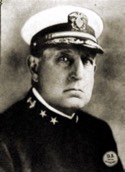
NameAdmiral Hugh Rodman 
 117
117
117Birth06 Jan 1859, Frankfort, Franklin County, Kentucky
Birth01 Jun 1859206
Census01 Jun 1860, Frankfort, Franklin County, Kentucky208 Age: 1
Census01 Jun 1870, Frankfort, Franklin County, Kentucky209 Age: 11
Graduation10 Jun 1880, United States Naval Academy, Annapoli, Anne Arundel County, Maryland Age: 21
MemoGraduate #1521
Census01 Jun 1900 Age: 41
MemoNot found.
Census15 Apr 1910 Age: 51
MemoNot found.
Census01 Jan 1920, Long Beach, Los Angeles County, California229 Age: 60
Census01 Apr 1930, Washington, District of Columbia230 Age: 71
Retirement06 Jan 1923 Age: 64
Death07 Jun 1940, Naval Hospital, Washington, District of Columbia Age: 81
Burial10 Jun 1940, Arlington National Cemetery, Arlington County, Virginia231
MemoSection 4 Site 3282
OccupationUS Navy
EducationUS Naval Academy #1521
Military FactsUS Navy, retired as Adminral.
HonorsNavy Cross
FatherHugh Herst Rodman M.D. (1818-1872)
MotherSusan Ann Barbour (1825-1899)
Spouses
Birthabt 1862, Kentucky230
Death13 Oct 1942
Burial15 Oct 1942, Arlington National Cemetery, Arlington County, Virginia
MemoSection 4 Site 3282
FatherBurwell Bassett Sayre (~1813-)
MotherMildred C. Ruffin (~1828-1863)
Marriageabt 1889230
Biography notes for Admiral Hugh Rodman
Admiral Hugh Rodman
Hugh Rodman, son of Hugh Rodman (M.D.) and Susan Ann Barbour Rodman, was born in Frankfort, Kentucky on January 6, 1859. He died June 7, 1940 in Naval Hospital, Washington, D.C., and is buried in the National Cemetery, Arlington, Virginia.
He was appointed a Cadet Midshipman from the Seventh Congressional District of Kentucky in September, 1875. While at the Naval Academy he was active in all competitive sports, and all through life participated in outdoor sports, particularly shooting, fishing, and golf. Detached from the Naval Academy with the Class of 1880, he was promoted to Midshipman two years later and graduated. In June, 1884 he was commissioned Ensign, and thereafter was promoted in rank at successive intervals until May, 1917 when he attained flag rank of Real Admiral. While serving the two years as Commander in Chief, Pacific Fleet, July, 1919-1921, he had the rank of Admiral. Transferred to the Retired List of the Navy on January 6, 1923, after a distinguished career of forty-three years in the Naval Service, he later attained the rank of Admiral on the Retired List, in accordance with the law enacted June 21, 1930. He saw the transitions in ships from wood to steel, from sail to steam, and the growth of our Navy from a small inferior position to one of recognized world leadership.
As a Junior Officer, he served on the North Atlantic Station aboard the Yantic; on the Pacific Station in the Wachusett, and Hartford (Farragut's flagship during the Civil War). In 1883 he was present at the coronation of King Kalakan at Honolulu. He served on the Asiatic Station attached successively to the USS Monocacy, Palos, Omaha, Essex. Shore assignments followed, from 1889 to 1897, at the Naval Academy, Hydrographic Office, Naval Observatory, and U.S. Coast and Geodetic Survey Office, intermittently ashore and in steamers of the Coast Survey, including Endeavor, Bache, Patterson, and Matchless.
At the outbreak of the Spanish-American War, he was serving in the cruiser Raleigh, which had been cruising in the Mediterranean, but was then at Hong Kong, and became a unit of Admiral Dewey's Fleet. In command of the forward guns on the Raleigh in the battle of Manila Bay, the Raleigh was first to answer the hostile fire from land batteries upon the American Fleet at Manila Bay; she was mainly instrumental in putting out of action and sinking the Castilla, a Spanish cruiser. He was commended by the Captain of the Raleigh for "... eminent and conspicuous conduct in the Battle of Manila, Bay, May 1, 1898 ... and the capture of Manila City, August 13, 1898."
Detached from the Raleigh in June, 1899, he made a cruise for scientific exploration of the Pacific, under the general direction of Professor Alexander Agassiz, in the U.S. Fish Commission vessel Albatross, serving as her Executive Officer and Navigator. The following year, in the Alaska area, the work of investigation of its commercial fisheries was continued. In 1901 he assumed command of the USS Iroquois at Honolulu, Hawaii, and remained in that area until relieved of that command in 1904. The next three years, again on the Asiatic Station, he was successively Executive Officer of the USS New Orleans, Cincinnati, and Wisconsin; Commanding Officer of the USS Elcano; and Aide on the staff of the Commander in Chief, Asiatic Fleet, in the USS West Virginia, flagship. Returning to the United States in June, 1907, he attended the War College, Newport, Rhode Island, with additional duty as Inspector in Charge, 6th Lighthouse District, with headquarters at Charleston, South Carolina.
After serving six months as Captain of the Yard, Naval Station, Cavite, Philippine Islands, he assumed command of the USS Cleveland on June 30, 1909 in which he returned to the West Coast. The following September 26, he assumed duty as Inspection Officer, later as Captain of the Yard, Navy Yard, Mare Island, California, where he served until December 27, 1911. The next month he assumed command of the USS Connecticut, flagship of the Atlantic Fleet, transferred in October, 1912 to command of the USS Delaware. While in this command he convoyed the President of the United States to the Panama Canal, then under construction. He later crossed the Atlantic, made a courtesy visit to France, and while lying at Villa France, he toured the European countries, incuding France, England, Holland, Germany, Austria, Switzerland, Italy.
Returning to the United States, he was ordered to the Canal Zone, remained in that area from January, 1914 to October, 1915, first in an advisory capacity to General Goethals, the Army engineer-builder. As Superintendent of Transportation, Panama Canal, later redesignated Marine Superintendent, he wrote the rules and regulations applicable to vessels which use the Canal, and organized and operated it when the canal was first opened under General Goethal's authority.
When detached in October, 1915 he commanded the USS New York on the East Coast. After one year he was relieved, and in October, 1916 he reported to the Navy Department, Washington, D.C., to serve as a Member of the General Board, later that year he was given additional duty on the Board of Directors of the Panama Railroad Company.
When the United States entered the first World War in April, 1917, he commanded Division three, Atlantic Fleet, and successively during the war he served as Squadron or Division Commander in the flagships Rhode Island, Missouri, Connecticut, until assuming command of the Battleship Division Nine, USS New York, flagship. This division became the Sixth Battle Squadron of the British Grand Fleet, under Admiral Sir David Beatty, R.N., operating in the North Sea until the Armistice, based at Scapa Flow and Edinburgh, The Grand Fleet when in column was 76 miles in length. He was present at the surrender of the German Fleet, and shortly after, convoyed President Wilson from Portland England to Brest, France, for the Peace Conferences. The Distinguished Service Medal was awarded him, "For exceptionally meritorious service in a duty of great responsibility as Commander, Division Nine, United States Atlantic Fleet which served with the British Grand Fleet, as the Sixth Battle Squadron."
Returning his division to New York, he was relieved of that command, and ordered as Commander in Chief, Pacific Fleet, with additional duty in command of Squadron 4, Division 8, Pacific Fleet, in the USS New Mexico, flagship. He served for two years from July 1, 1919, followed by two years as Commandant, Fifth Haval District, Naval Operating Base, Hampton Roads, Virginia. While in that duty he made an official visit to South America as a member of a special diplomatic mission, with the title Minister Plenipotentiary and Envoy Extraordinary.
On January 6,1923 he transferred to the Retired List of the Navy, having reached the statutory age. During 1922-1923, he was Senior Member of the Board to Formulate a Policy for the Administration of all Naval Shore Stations. In the the years since the war ended, in personal friendship and in his official capacity, he welcomed royal visitors to the United States, including the Prince of Wales, the royal family of Belgium, and Admiral of the Fleet, Earl Beatty, Royal Navy.
In June, 1923, he accompanied President of the United States Warren G. Harding to a general inspection trip to Alaska, which ended in the death of the President the following August. Admiral Rodman also was sent to Marion, Ohio, to attend the funeral of the late President.
He had active duty in April, 1937 to attend the coronation ceremonies of King George VI and Queen Elizabeh in London, England, as guest of the King and Representative of the Navy of the United States. He was authorized by the Secretary of the Navy to hoist his flag in the old New York, his former flagship, for the King's Fleet Review on May 20.
Always a champion of men of the Navy, he was instrumental in suppression of an oil painting in 1934 which was found to give an untrue concept of their character, and showed even then the subversive influences at work to depreciate the Service. He wrote to the Secretary of the Navy, "... today I know of no finer body of men than our enlisted personnel, both in the Navy and Marine Corps."
In addition to the Distinguished Service Medal, Admiral Rodman had received the following decorations: Spanish Campaign Medal; Dewey Medal; Victory Medal, Grand Fleet Clasp; and the following foreign decorations: Knight Commander of the Bath, presented in person by King George V of Great Britain; Grand Cordon of Leopold, presented in person by King Albert of the Belgians; Order of the Rising Sun of Japan, presented by the Empire of Japan, Commander of the Legion of Honor, presented by the Republic of France; Grand Official of the Order of El Sol Del Peru, presented by the President of the Republic of Peru; Primero Order de Merito, presented by the President of the Republic of Chile; La Solidaridad, presented in person by the President of Panama; and the Coronation Medal (May 12, 1937).
Married in 1889 to Miss Elizabeth Ruffin Sayre of Frankfort, Kentucky, who survived him for two years, they made their home in Washington following his retirement.
He was author of a book, Yarns of a Kentucky Admiral. The USS Rodman was named in his honor. This destroyer, DD-156, was built at Federal Shipbuilding and Drydock Company, Kearny, New Jersey, launched September 26, 1941, and sponsored by his grandniece, Mrs. Albert K. Stebbins, Jr. of Southern Pines, North Carolina.
Biography from the Department of Naval History, Washington, D.C.
CZBrats
July 19, 1999
url: http://www.czbrats.com/Builders/Rodman.htm
Hugh Rodman, son of Hugh Rodman (M.D.) and Susan Ann Barbour Rodman, was born in Frankfort, Kentucky on January 6, 1859. He died June 7, 1940 in Naval Hospital, Washington, D.C., and is buried in the National Cemetery, Arlington, Virginia.
He was appointed a Cadet Midshipman from the Seventh Congressional District of Kentucky in September, 1875. While at the Naval Academy he was active in all competitive sports, and all through life participated in outdoor sports, particularly shooting, fishing, and golf. Detached from the Naval Academy with the Class of 1880, he was promoted to Midshipman two years later and graduated. In June, 1884 he was commissioned Ensign, and thereafter was promoted in rank at successive intervals until May, 1917 when he attained flag rank of Real Admiral. While serving the two years as Commander in Chief, Pacific Fleet, July, 1919-1921, he had the rank of Admiral. Transferred to the Retired List of the Navy on January 6, 1923, after a distinguished career of forty-three years in the Naval Service, he later attained the rank of Admiral on the Retired List, in accordance with the law enacted June 21, 1930. He saw the transitions in ships from wood to steel, from sail to steam, and the growth of our Navy from a small inferior position to one of recognized world leadership.
As a Junior Officer, he served on the North Atlantic Station aboard the Yantic; on the Pacific Station in the Wachusett, and Hartford (Farragut's flagship during the Civil War). In 1883 he was present at the coronation of King Kalakan at Honolulu. He served on the Asiatic Station attached successively to the USS Monocacy, Palos, Omaha, Essex. Shore assignments followed, from 1889 to 1897, at the Naval Academy, Hydrographic Office, Naval Observatory, and U.S. Coast and Geodetic Survey Office, intermittently ashore and in steamers of the Coast Survey, including Endeavor, Bache, Patterson, and Matchless.
At the outbreak of the Spanish-American War, he was serving in the cruiser Raleigh, which had been cruising in the Mediterranean, but was then at Hong Kong, and became a unit of Admiral Dewey's Fleet. In command of the forward guns on the Raleigh in the battle of Manila Bay, the Raleigh was first to answer the hostile fire from land batteries upon the American Fleet at Manila Bay; she was mainly instrumental in putting out of action and sinking the Castilla, a Spanish cruiser. He was commended by the Captain of the Raleigh for "... eminent and conspicuous conduct in the Battle of Manila, Bay, May 1, 1898 ... and the capture of Manila City, August 13, 1898."
Detached from the Raleigh in June, 1899, he made a cruise for scientific exploration of the Pacific, under the general direction of Professor Alexander Agassiz, in the U.S. Fish Commission vessel Albatross, serving as her Executive Officer and Navigator. The following year, in the Alaska area, the work of investigation of its commercial fisheries was continued. In 1901 he assumed command of the USS Iroquois at Honolulu, Hawaii, and remained in that area until relieved of that command in 1904. The next three years, again on the Asiatic Station, he was successively Executive Officer of the USS New Orleans, Cincinnati, and Wisconsin; Commanding Officer of the USS Elcano; and Aide on the staff of the Commander in Chief, Asiatic Fleet, in the USS West Virginia, flagship. Returning to the United States in June, 1907, he attended the War College, Newport, Rhode Island, with additional duty as Inspector in Charge, 6th Lighthouse District, with headquarters at Charleston, South Carolina.
After serving six months as Captain of the Yard, Naval Station, Cavite, Philippine Islands, he assumed command of the USS Cleveland on June 30, 1909 in which he returned to the West Coast. The following September 26, he assumed duty as Inspection Officer, later as Captain of the Yard, Navy Yard, Mare Island, California, where he served until December 27, 1911. The next month he assumed command of the USS Connecticut, flagship of the Atlantic Fleet, transferred in October, 1912 to command of the USS Delaware. While in this command he convoyed the President of the United States to the Panama Canal, then under construction. He later crossed the Atlantic, made a courtesy visit to France, and while lying at Villa France, he toured the European countries, incuding France, England, Holland, Germany, Austria, Switzerland, Italy.
Returning to the United States, he was ordered to the Canal Zone, remained in that area from January, 1914 to October, 1915, first in an advisory capacity to General Goethals, the Army engineer-builder. As Superintendent of Transportation, Panama Canal, later redesignated Marine Superintendent, he wrote the rules and regulations applicable to vessels which use the Canal, and organized and operated it when the canal was first opened under General Goethal's authority.
When detached in October, 1915 he commanded the USS New York on the East Coast. After one year he was relieved, and in October, 1916 he reported to the Navy Department, Washington, D.C., to serve as a Member of the General Board, later that year he was given additional duty on the Board of Directors of the Panama Railroad Company.
When the United States entered the first World War in April, 1917, he commanded Division three, Atlantic Fleet, and successively during the war he served as Squadron or Division Commander in the flagships Rhode Island, Missouri, Connecticut, until assuming command of the Battleship Division Nine, USS New York, flagship. This division became the Sixth Battle Squadron of the British Grand Fleet, under Admiral Sir David Beatty, R.N., operating in the North Sea until the Armistice, based at Scapa Flow and Edinburgh, The Grand Fleet when in column was 76 miles in length. He was present at the surrender of the German Fleet, and shortly after, convoyed President Wilson from Portland England to Brest, France, for the Peace Conferences. The Distinguished Service Medal was awarded him, "For exceptionally meritorious service in a duty of great responsibility as Commander, Division Nine, United States Atlantic Fleet which served with the British Grand Fleet, as the Sixth Battle Squadron."
Returning his division to New York, he was relieved of that command, and ordered as Commander in Chief, Pacific Fleet, with additional duty in command of Squadron 4, Division 8, Pacific Fleet, in the USS New Mexico, flagship. He served for two years from July 1, 1919, followed by two years as Commandant, Fifth Haval District, Naval Operating Base, Hampton Roads, Virginia. While in that duty he made an official visit to South America as a member of a special diplomatic mission, with the title Minister Plenipotentiary and Envoy Extraordinary.
On January 6,1923 he transferred to the Retired List of the Navy, having reached the statutory age. During 1922-1923, he was Senior Member of the Board to Formulate a Policy for the Administration of all Naval Shore Stations. In the the years since the war ended, in personal friendship and in his official capacity, he welcomed royal visitors to the United States, including the Prince of Wales, the royal family of Belgium, and Admiral of the Fleet, Earl Beatty, Royal Navy.
In June, 1923, he accompanied President of the United States Warren G. Harding to a general inspection trip to Alaska, which ended in the death of the President the following August. Admiral Rodman also was sent to Marion, Ohio, to attend the funeral of the late President.
He had active duty in April, 1937 to attend the coronation ceremonies of King George VI and Queen Elizabeh in London, England, as guest of the King and Representative of the Navy of the United States. He was authorized by the Secretary of the Navy to hoist his flag in the old New York, his former flagship, for the King's Fleet Review on May 20.
Always a champion of men of the Navy, he was instrumental in suppression of an oil painting in 1934 which was found to give an untrue concept of their character, and showed even then the subversive influences at work to depreciate the Service. He wrote to the Secretary of the Navy, "... today I know of no finer body of men than our enlisted personnel, both in the Navy and Marine Corps."
In addition to the Distinguished Service Medal, Admiral Rodman had received the following decorations: Spanish Campaign Medal; Dewey Medal; Victory Medal, Grand Fleet Clasp; and the following foreign decorations: Knight Commander of the Bath, presented in person by King George V of Great Britain; Grand Cordon of Leopold, presented in person by King Albert of the Belgians; Order of the Rising Sun of Japan, presented by the Empire of Japan, Commander of the Legion of Honor, presented by the Republic of France; Grand Official of the Order of El Sol Del Peru, presented by the President of the Republic of Peru; Primero Order de Merito, presented by the President of the Republic of Chile; La Solidaridad, presented in person by the President of Panama; and the Coronation Medal (May 12, 1937).
Married in 1889 to Miss Elizabeth Ruffin Sayre of Frankfort, Kentucky, who survived him for two years, they made their home in Washington following his retirement.
He was author of a book, Yarns of a Kentucky Admiral. The USS Rodman was named in his honor. This destroyer, DD-156, was built at Federal Shipbuilding and Drydock Company, Kearny, New Jersey, launched September 26, 1941, and sponsored by his grandniece, Mrs. Albert K. Stebbins, Jr. of Southern Pines, North Carolina.
Biography from the Department of Naval History, Washington, D.C.
CZBrats
July 19, 1999
url: http://www.czbrats.com/Builders/Rodman.htm
Military Notes notes for Admiral Hugh Rodman
Spanish-American war; appointed (1916) General Board, USN; commanded (1917) 3rd Div., Atlantic Fleet; commanded (Nov 1917) 9th Div., Battleship force, USN, in British Grand Fleet; commissioned (1919) Admiral & Commander-in-chief, Pacific Fleet, USN. Retired 1923. 117
Notes for Admiral Hugh Rodman
Golden Spike Driven
July 15, 1923
President Harding misses twice and drives it home
On a hot and sunny day at North Nenana, Alaska Terrirotial Governor Scott Bone inserted the spike into the rail. President Warren G. Harding missed the spike twice and then drove it home to officially complete the construction of the Alaska Railroad.
Harding arrived in Seward on the transport Henderson July 13, 1923 accompanied by his wife and a large entourage including Hubert Work, Secretary of the Interior; Herbert Hoover, Secretary of Commerce; Henry Wallace, Secretary of Agriculture; Frederick Gillette, Speaker of the House; Colonel W. J. Greeley, Chief of the Forest Service; and Ike Taylor, Alaska Road Commission.
Equipment used to transport the party included a baggage car, business car B-1, coach (smoker), the sleepers "Fairbanks," "Talkeetna," and "Anchorage," compartment observation car "Kenai," diner "McKinley Park," and compartment observation car "Denali."
Harding spoke in Anchorage on July 13th and also made a side trip to the Chicakaloon coal fields. On the 14th, he stayed at the Curry Hotel (MilePost 248), which was owned and operated by the Railroad.
Charles Ross, who had been present at the ceremony, and later Harry Truman's press secretary, recalls his most vivid memory. Admiral Hugh Rodman, as an expert on Alaska's climate, had advised the reporters to outfit themselves in heavy shirts, heavy underwear, sweaters, galoshes, and leggings to protect against the cold and mosquitoes. Nenana was hot and there were no mosquitoes. The next day in Fairbanks, Harding made a speech at the local baseball park where the temperature was 95 degrees. Three people collapsed from heat prostration. Ross notes in his diary that the wearers of heavy underwear threatened reprisals against Rodman.
On Harding's trip back he stopped for lunch at the Fiarview Inn at Talkeetna. Harding was in poor health at the time and died in San Francisco on his return trip from Alaska.
Rumor has it that Harding brought his mistress along on the trip. Some speculate that Harding's wife poisoned him because of his carrying on. Others say that Harding was poisoned because of his involvement in the Teapot Dome scandal.
url: http://userwww.service.emory.edu/~marisa/AK/spike.html
July 15, 1923
President Harding misses twice and drives it home
On a hot and sunny day at North Nenana, Alaska Terrirotial Governor Scott Bone inserted the spike into the rail. President Warren G. Harding missed the spike twice and then drove it home to officially complete the construction of the Alaska Railroad.
Harding arrived in Seward on the transport Henderson July 13, 1923 accompanied by his wife and a large entourage including Hubert Work, Secretary of the Interior; Herbert Hoover, Secretary of Commerce; Henry Wallace, Secretary of Agriculture; Frederick Gillette, Speaker of the House; Colonel W. J. Greeley, Chief of the Forest Service; and Ike Taylor, Alaska Road Commission.
Equipment used to transport the party included a baggage car, business car B-1, coach (smoker), the sleepers "Fairbanks," "Talkeetna," and "Anchorage," compartment observation car "Kenai," diner "McKinley Park," and compartment observation car "Denali."
Harding spoke in Anchorage on July 13th and also made a side trip to the Chicakaloon coal fields. On the 14th, he stayed at the Curry Hotel (MilePost 248), which was owned and operated by the Railroad.
Charles Ross, who had been present at the ceremony, and later Harry Truman's press secretary, recalls his most vivid memory. Admiral Hugh Rodman, as an expert on Alaska's climate, had advised the reporters to outfit themselves in heavy shirts, heavy underwear, sweaters, galoshes, and leggings to protect against the cold and mosquitoes. Nenana was hot and there were no mosquitoes. The next day in Fairbanks, Harding made a speech at the local baseball park where the temperature was 95 degrees. Three people collapsed from heat prostration. Ross notes in his diary that the wearers of heavy underwear threatened reprisals against Rodman.
On Harding's trip back he stopped for lunch at the Fiarview Inn at Talkeetna. Harding was in poor health at the time and died in San Francisco on his return trip from Alaska.
Rumor has it that Harding brought his mistress along on the trip. Some speculate that Harding's wife poisoned him because of his carrying on. Others say that Harding was poisoned because of his involvement in the Teapot Dome scandal.
url: http://userwww.service.emory.edu/~marisa/AK/spike.html
Notes for Admiral Hugh Rodman
The Story of the American Expeditionary Force
AMERICAN BATTLESHIPS WITH THE GRAND FLEET
A Contribution from CAMARADERIE Newsletter of the Western Front Association's U.S. Chapter
The Grand Fleet's Sixth Battle Squadron and the Surrender of the High Seas Fleet
by Alan Weatherley Alexandria, Virgina
Shortly after America declared war on Germany on April 6th., 1917 the Royal Navy paid off the last five King Edward VII class battleships still serving with the Grand Fleet. Launched between 1903 and 1905 these pre-dreadnoughts were hopelessly outclassed by the ships with which they were expected to do battle - should the Germans ever leave the security of their bases. Since the inconclusive clash at Jutland the previous year, the Kaiser's High Seas Fleet had shown little or no inclination to repeat such a sortie in strength and throughout this long period of inaction, officers and crews aboard the idle battleships and battlecruisers had grown estranged from one another with the result that morale was low. This disheartening situation had developed in spite of the fact that in ship on ship encounters the Germans had proved themselves to be equal to the British and thus might have been tempted to try and repeat their tactical success. (In the contest between battlecruisers which opened the conflict, three British ships, including the veteran of the Falkland Islands victory HMS Invincible, had been sent to the bottom with colossal loss of life in exchange for the destruction of just one of their own.) Notwithstanding their inactivity, the High Seas Fleet remained a potent threat and Britain was forced to maintain an active defense.
Although the Edward VII's were obsolete, they had made up the numbers which maintained the Royal Navy's physical and psychological superiority over their adversaries. The gap that their retirement created in the Grand Fleet's ranks was hardly catastrophic but it did give the Admiralty some concern. In order to fill this gap it was decided to invite their new allies to send a squadron across the Atlantic to join the British forces. After much consideration, the US Navy accepted this invitation and six battleships were selected to rotate amongst themselves to provide four ships for the Sixth Battle Squadron. The oldest was USS Delaware which had been completed in 1910. She was joined by USS Florida, (1911), and two pairs of sister-ships, USS Arkansas and USS Wyoming, (1912), USS New York and USS Texas, (1914). In terms of battleship development, the six vessels represented the second through the fifth incarnations of American-built dreadnoughts. All were similar to one another in layout with their main armament of 12" or 14" guns in center line turrets. Each sported the distinctive twin 'basket' or lattice masts favored by US designers. Furthermore, at a time when oil-power was gaining favor, they were all coal-burners. Although the deprivations of the U-boat campaign had robbed Britain of imported fuel oil there was no shortage of good Welsh coal. Ship for ship, the Americans could be favorably compared with their British counterparts although their crews were not nearly as experienced. Nevertheless, from their open-minded admiral downwards, they were prepared to learn.
Rear-Admiral Hugh Rodman flew his flag in New York. He took the sensible line that the Americans were there to benefit from their host's experience and that they should make the most of the opportunity offered to them. He later wrote "I realized that the British Fleet had had three years of actual warfare and knew the game from the ground floor up; and while we might know it theoretically, there would be a great deal to learn practically." Fortunately, Rodman, a genial Kentuckian, established excellent relations with Admiral Sir David Beatty, a dashing Irishman, who had succeeded Sir John Jellicoe, a cautious Englishman, as Commander-in-Chief of the Grand Fleet. They appear to have genuinely liked one another and although at first Beatty had reservations about the true value of his ally's contribution he had sufficient political savoir-faire not to air them in public. Furthermore, he recognized the considerable effort Rodman and his subordinates were making to fit in with the Grand Fleet. The effort paid off and by June 1918 it seems real integration had been achieved and whatever misgivings Beatty had harbored earlier on appear to have been laid to rest.
Although they were actively involved in routine sweeps, convoy protection and laying the North Sea Barrage, much to their disappointment the American contingent never came in direct conflict with the High Seas Fleet. They came closest in the spring of 1918 when Admiral Reinhard Scheer took his charges out on April 23rd. for what was to be their last sortie of the war. Scheer planned to intercept a British convoy which was sailing from Bergen in Norway together with the covering forces that were already at sea. Unfortunately for the German admiral the intelligence on which he had based his plans was faulty and so he missed both that convoy and another sailing in the opposite direction. Ill-luck continued, high winds grounded his reconnaissance Zeppelins and his scouting cruisers failed to detect their prey, so that when the battlecruiser Moltke developed engine problems which necessitated her being taken under tow, Scheer called it a day and returned to base.
Although the British had been on the alert for German movements because of the Zeebrugge raid on April 22nd., Scheer had succeeded in maintaining radio silence until the Moltke incident on the 24th. Learning that their opponents were out, the 31 battleships of the Grand Fleet, including Rodman's squadron, together with their escorts, put to sea in a vain attempt to intercept the numerically inferior High Seas Fleet. Compounding the failure of the chase, the British had their own intelligence misfortune when one of their submarines, J 6, on patrol close to Scheer's route neglected to report the enemy's movements. Nevertheless, had German intelligence been more accurate Scheer's superior force could have caused a great deal of damage to both convoy and escort. (In late 1917 similar convoys had been attacked by light forces attached to the High Seas Fleet with great success.)
Ironically, if the sortie had taken place a few days earlier, the covering force for the Scandinavian convoys would have been Rodman's squadron. At least one historian has raised the question of what might have happened had Scheer left port earlier and come upon the enthusiastic but inexperienced Americans and sunk them in the inhospitable waters of the North Sea. Actions between capital ships often resulted in horrendous casualties for the losers, (at Jutland only three men out of a crew of 1031 survived after Invincible exploded), and it is fascinating to speculate on the effect such a devastating loss might have had on American public opinion. It may be recalled that at the time the AEF had yet to be involved in any major fighting and participation in the war was still something of an adventure. Equally ironically, by virtue of their station, the Sixth Battle Squadron would have found themselves in the vanguard had Beatty's pursuit of Scheer proved successful. Rodman was rather wistful when he considered this lost opportunity some years later, "I have often thought what a glorious day it would have been for the ships of our country to have led the Grand Fleet into action." Such an opportunity was not to come until twenty-five years later when his successors had shrugged off the mantle of junior partner.
As the war drew to a close morale within the High Seas Fleet worsened. Not only were the internal tensions continuing to drain the sailors' willingness to obey their officers, it was also increasingly obvious that any hopes that Germany may have had for victory on land were beginning to evaporate. By the beginning of May the Ludendorff offensives were petering out and the influx of enormous numbers of fresh American troops would place the army at a crippling disadvantage in manpower. The naval blockade had so affected the import of food and raw materials that the nation was at the point of human and industrial starvation. Allied successes in the campaign against the U-boats had finally begun to contain the most effective weapon the Germans possessed. No longer in a position to suggest peace terms let alone dictate them, an exhausted Germany was sliding into collapse. Unrest in the High Seas Fleet was heightened when credible rumours of final 'death or glory' sorties began to circulate. Scheer did not improve the situation with the declaration that "It is impossible for the Fleet to remain inactive in any final battle that may sooner or later precede an Armistice. The Fleet must be committed. Even if it is not to be expected that this would decisively influence the course of events, it is still, from the moral point of view, a question of honour and existence of the Navy to have done its utmost in the last battle." Plans for a final offensive were actually drawn up. However, the crews failed to share their Admiral's enthusiasm for what would amount to a 'death ride' and when at the end of October the Fleet was ordered to assemble outside Wilhelmshaven mutiny broke out. By November 4th. red flags flew above the Naval bases and they were under the control of revolutionary councils.
As armistice negotiations proceeded, arguments had broken out amongst the allies as to the terms that should be imposed upon the German navy. Unaware of the true extent of the mutiny, and still falling prey to the notion of a final aggressive sortie, the Admiralty wanted the surrender of two out of three squadrons of Scheer's battleships and all six of the surviving battlecruisers. These proposals were met with some resistance from the American delegation who harbored suspicions that after any 'surrender' the British would simply take over the German capital ships and thus commit their navy to a far more ambitious building program than that they were already engaged upon. Not surprisingly, many in America government circles hoped that the US would emerge from the war an even stronger naval power. In the end, it was agreed that the German fleet would be 'interned' until a proper disposition could be decided upon at a formal peace conference. As no neutral nation had either the desire or the capacity to handle such an internment the British offered to accommodate their erstwhile enemies at Scapa Flow, the vast inhospitable anchorage in the Orkney Islands to the north of Scotland. This offer was accepted and when the armistice was concluded at Compiegne the Germans had agreed to the internment of 10 battleships, 6 battlecruisers, 8 light cruisers and 50 destroyers. (Under the same agreement the remaining U-boat forces were to surrender to Admiral Tyrwhitt at Harwich.)
Four days after the signing Rear-Admiral Meurer arrived in Scotland aboard the light cruiser Konigsberg to discuss the procedure. In a series of tense, highly punctilious meetings it was determined that the High Seas Fleet surrender would take place on November 21st. Given the codename of Operation ZZ the exercise soon took on the derisive sobriquet of Der Tag. In a massive show of strength Beatty and the Grand Fleet set sail to meet the Germans. 370 ships representing the cream of the Royal Navy gathered to greet their former enemies and escort them to their initial internment areas in the Firth of Forth. In the midst of this armada were the Sixth Battle Squadron under the temporary command of Rear-Admiral William H. Sims. Sims had arrived in London as a personal emissary of Secretary of the Navy Josephus Daniels in early 1917 and had worked closely with the Admiralty since then. A reputed anglophile, he was seen as a useful counterweight to the anglophobe Chief of Naval Operations Admiral William S. Benson. (It was Benson on the Allied Naval Council who had raised the question of the Royal Navy simply annexing those units of the High Seas Fleet it wanted.) Sims was to enjoy the same cordial and effective working relationship with his British counterparts on shore as Rodman did at sea. Amongst the American witnesses to the surrender was Lieutenant Francis T. Hunter, aboard the flagship New York, whose lively description of the scene provides us with a colorful picture of the events as they unfolded:
"This was the day! No secrecy; no doubt. The world knew. The King himself had come but yesterday to acclaim the triumph that must be ours today. Too vast a situation well to comprehend - the German High Seas Fleet had sailed from Kiel! And the King had come. Hundreds of strangers were aboard our ships. A flush of excitement covered every face, held back by a forbidding silence that seemed to suspend the motion of the very earth.
"From early evening, long lines of destroyers had preceded us to sea, hours and hours of them, out of the misty Firth of Forth, followed by envious eyes. Every official ship that could turn a screw would follow shortly. Shortly! The hours were ages long. It was not until two A.M. that the greatest day of our lives began. The day of a thousand dreams. We seemed to be living within a highly inflated bubble, about to burst. The American flagship New York broke moor, swung slowly with the tide, felt the throbbing of her screws, fell into line to lead the Sixth Battle Squadron to sea.
"Out of the firth; out of the fog. Gray ships in a gray dawn...Great monsters rising and falling on the incoming swells, by their very stateliness acclaiming victory. At four A.M. our general alarm clanged harshly...All hands to battle stations! A few moments bustling rush - then quiet again...Each gun is manned. Every man is at his post...Range finders scan the horizon and lookouts swing their glasses in wide arcs for smoke. Three decks below the water line men sit with 'phones, tubes, boards, pencils, and strange instruments, connected with the conning tower. The plotting room. The centre of control of fire. No "Wooden Horse of Troy," for Admiral Beatty. Not the slightest chance for Hunnish trickery...He has the German guaranties - but he treats them as the Germans would, "Mere scraps of paper." Perhaps they seek to take the Grand Fleet unawares?...
"At last dawn comes, blazing red. A low haze cuts the visibility to five short miles, but the rising sun reveals a new disposition of our forces. Admiral Beatty has divided his ships into two great lines - the northern and the southern. These two lines, proceeding on parallel courses, about two miles apart, will permit the German fleet to pass down their centre. A "Ships right and left about" will then bring both lines steaming in inverted order toward the Firth of Forth, the German line between. Either of our lines, without the other, could engage the surrendering German fleet successfully." (The American Squadron took its place in the northern line.)
"On we steam at twelve knots to point "X" in the North Sea. Eight bells strikes clearly. We know the great moment is not far distant now, and the imposing spectacle are reassured. At last:
""Sail ho!" -- from the foretop lookout. "Where away?" - from the bridge. "One point off the starboard bow," in reply. "Can you make it out?" "Dense smoke, sir, seems to be approaching."
"Twenty-five minutes later, off May Island, the tiny light cruiser Cardiff, towing a kite balloon, leads the great German battle cruiser Seydlitz, at the head of her column, between our lines. On they pass - Derfflinger, Von der Tann, Hindenburg, Moltke -- as if in review. The low sun glances from their shabby sides. Their huge guns, motionless, are trained fore and aft. It is the sight of our dreams - a sight for kings! Those long, low, sleek-looking monsters, which we had pictured ablaze with spouting flame and fury, steaming like peaceful merchantmen on a calm sea. Then the long line of battleships, led by Friedrich der Gross,...Konig Albert, Kaiser, Kronprinz Wilhelm, Kaiserin, Bayern, Markgraf, Prinz Regent Luitpold, and Grosser Kurfurst...powerful to look at, dangerous in battle, pitiful in surrender...This, then, is the end for which the Kaiser has lavished his millions on his "incomparable" navy...
"Strangely enough, the German surrender lacked the thrill of victory. There was the gaping wonder of it, the inconceivable that was happening before our very eyes - the great German fleet steaming helplessly there at our side - conquered...The one prevalent emotion, so far as I could ascertain, was pity. It carried even to our great Commander-in-Chief, who I believe was the least thrilled and most disappointed person present. In speaking to us after the surrender he remarked:
"It was a most disappointing day. It was a pitiful day, to see those great ships coming in like sheep being herded by dogs to their fold, without an effort on anybody's part." And no one of his audience dissented. They were as helpless as sheep. About two hours' vigil satisfied our commanders that such was the case, and we secured battle stations. Later investigation showed that all our precautions were quite unnecessary. Not only had the powder and ammunition been removed from the German ships, but their range finders, gun sights. fire control, and very breech blocks as well. They came mere skeletons of their former fighting selves in a miserable state as to equipment, upkeep and repair. For example, in passing May Island at the entrance of the Firth of Forth, Admiral Beatty signalled one of the German Squadrons to put on 17 knots and close up in formation. The reply came to him, "We cannot do better than 12 knots. Lack lubricating oil." What chance, then, of a modern engagement where a speed of at least 18 knots is sustained? Apparently they were no better off for food. Hardly had they anchored when the crews turned-to with hook and line to catch what they might for dinner!
"Guarded on every side, the German ships entered the firth at about three o'clock quietly to drop anchor outside the nets. We stood in past them, as they rode peacefully to the tide, and on to our berths, squadron after squadron, type after type, until their German eyes must have bulged in awe at such a vast array of power. Last of all came the Queen Elizabeth, flagship of the Grand Fleet, with Admiral Beatty."
Beatty was disappointed. He had hoped for another Trafalgar, not this "pitiful" spectacle. To the end he almost hoped for trouble. If the guns of the High Seas Fleet had been rendered harmless, those of the Grand Fleet were fully loaded and trained on the German line, their crews closed up in their distinctive white anti-flash hoods. But the order to fire never came. The only casualty of the operation was the German destroyer V 30 which struck a mine and sunk during the journey from Kiel. As his Flagship steamed slowly to its anchorage, Beatty was cheered by his British and American sailors. His gold-laced cap raised in response to their praise, the admiral acknowledged and thanked them for their part in what was a hollow victory. Shortly thereafter, he sent the signal "The German flag will be hauled down at sunset today, Thursday, and will not be hoisted again without permission." Ten days after the final shots had been heard on the Western Front, the war at sea was over.
Ten more days later and the Americans sailed for home. With Rodman in charge once more, New York led the Sixth Battle Squadron out of the Firth of Forth. The four Queen Elizabeth class 'super-dreadnought' battleships of the Fifth Battle Squadron, together with the Eleventh Destroyer Flotilla escorted them on their passage. As Francis T. Hunter was to describe it: "There was music and cheering nearly all the way, culminating as we approached May Island....There was a sustained roar of cheers as the great ships parted from us, and the signal force was put to it in the rapid exchange of felicitous messages. From the masthead of...HMS Barham was displayed at the last the plain English hoist "G-O-O-D B-Y-E-E-E-E." Simultaneously a message was received by radio from the Commander-in-Chief, Grand Fleet:
"Your comrades in the Grand Fleet regret your departure,. We trust it is only temporary and that the interchange of squadrons from the two great fleets of the Anglo-Saxon race may be repeated. We wish you good-bye, good luck, a good time; and come back soon!""
The once proud High Seas Fleet did raise its ensigns again on June 21st., 1919 when in a final act of desperate defiance the rusting, neglected ships interned at Scapa Flow were scuttled by their skeleton crews. Their British guardians, who had taken advantage of fine weather to leave the anchorage for gunnery practice in the North Sea, were not amused. American warships were to return to British waters to face a hostile Germany soon enough, but not all the battleships of the Sixth Battle Squadron came with them. The veteran Delaware was stricken in 1924, Florida in 1931. Wyoming was rebuilt in the 1920's as a training ship. Some consideration was given to returning her to battleship status during World War II, but the project was never carried out. She was stricken in 1947. Her sister-ship Arkansas did see service during 1941-45. Partly modernized, she sailed as cover for Atlantic convoys and as a floating battery gave valuable support to the amphibious landings in Normandy, the South of France, Iwo Jima and Okinawa. She went on to survive destruction in the first atomic test at Bikini Atoll, but was sunk in the second on July 25th., 1946. Like Arkansas, New York saw action in both the Atlantic and Pacific theaters and ended up at Bikini. However, she survived both tests and was towed to Kwajalein and decommissioned. She was then taken to Pearl Harbor but proved too radioactive to have her fittings removed and so was sunk as a target in July 1948. After service in company with Arkansas and New York once more, Texas finished her career as a fighting ship and went on to enjoy a far less traumatic end; she became a state war memorial in 1948 and is the sole surviving US battleship of the dreadnought era. She is at anchor in the Houston Ship Channel and is being restored to her 1945 configuration and colors.
Sources and thanks: Lieutenant Francis T. Hunter's account of the surrender of the High Seas Fleet is from his memoir BEATTY, JELLICOE, SIMS AND RODMAN, Yankee Gobs and British Tars, as Seen by an 'Anglomaniac' published in 1919 by Doubleday, Page & Company.
This article originally appeared in revised form in CAMARADERIE, the newsletter of the United States branch of the Western Front Association. It has been presented here with the permission of the author and with the help of Len Shurtleff, President of the US Branch
Photos courtesy of regular DBC contributor Ray Mentzer and the National Archives MH
To find other features on the DOUGHBOY CENTER visit our General Headquarters
For further information on the events of 1914-1918 visit the homepage of The Great War Society
THE DOUGHBOY CENTER wishes to continually add material Additions and comments on these pages may be directed to: Michael E. Hanlon (medwardh@hotmail.com) regarding content, or to Mike Iavarone (mikei@mcs.com) regarding form and function. Original artwork & copy; © 1998, The Great War Society
url: http://www.worldwar1.com/dbc/battlesh.htm
AMERICAN BATTLESHIPS WITH THE GRAND FLEET
A Contribution from CAMARADERIE Newsletter of the Western Front Association's U.S. Chapter
The Grand Fleet's Sixth Battle Squadron and the Surrender of the High Seas Fleet
by Alan Weatherley Alexandria, Virgina
Shortly after America declared war on Germany on April 6th., 1917 the Royal Navy paid off the last five King Edward VII class battleships still serving with the Grand Fleet. Launched between 1903 and 1905 these pre-dreadnoughts were hopelessly outclassed by the ships with which they were expected to do battle - should the Germans ever leave the security of their bases. Since the inconclusive clash at Jutland the previous year, the Kaiser's High Seas Fleet had shown little or no inclination to repeat such a sortie in strength and throughout this long period of inaction, officers and crews aboard the idle battleships and battlecruisers had grown estranged from one another with the result that morale was low. This disheartening situation had developed in spite of the fact that in ship on ship encounters the Germans had proved themselves to be equal to the British and thus might have been tempted to try and repeat their tactical success. (In the contest between battlecruisers which opened the conflict, three British ships, including the veteran of the Falkland Islands victory HMS Invincible, had been sent to the bottom with colossal loss of life in exchange for the destruction of just one of their own.) Notwithstanding their inactivity, the High Seas Fleet remained a potent threat and Britain was forced to maintain an active defense.
Although the Edward VII's were obsolete, they had made up the numbers which maintained the Royal Navy's physical and psychological superiority over their adversaries. The gap that their retirement created in the Grand Fleet's ranks was hardly catastrophic but it did give the Admiralty some concern. In order to fill this gap it was decided to invite their new allies to send a squadron across the Atlantic to join the British forces. After much consideration, the US Navy accepted this invitation and six battleships were selected to rotate amongst themselves to provide four ships for the Sixth Battle Squadron. The oldest was USS Delaware which had been completed in 1910. She was joined by USS Florida, (1911), and two pairs of sister-ships, USS Arkansas and USS Wyoming, (1912), USS New York and USS Texas, (1914). In terms of battleship development, the six vessels represented the second through the fifth incarnations of American-built dreadnoughts. All were similar to one another in layout with their main armament of 12" or 14" guns in center line turrets. Each sported the distinctive twin 'basket' or lattice masts favored by US designers. Furthermore, at a time when oil-power was gaining favor, they were all coal-burners. Although the deprivations of the U-boat campaign had robbed Britain of imported fuel oil there was no shortage of good Welsh coal. Ship for ship, the Americans could be favorably compared with their British counterparts although their crews were not nearly as experienced. Nevertheless, from their open-minded admiral downwards, they were prepared to learn.
Rear-Admiral Hugh Rodman flew his flag in New York. He took the sensible line that the Americans were there to benefit from their host's experience and that they should make the most of the opportunity offered to them. He later wrote "I realized that the British Fleet had had three years of actual warfare and knew the game from the ground floor up; and while we might know it theoretically, there would be a great deal to learn practically." Fortunately, Rodman, a genial Kentuckian, established excellent relations with Admiral Sir David Beatty, a dashing Irishman, who had succeeded Sir John Jellicoe, a cautious Englishman, as Commander-in-Chief of the Grand Fleet. They appear to have genuinely liked one another and although at first Beatty had reservations about the true value of his ally's contribution he had sufficient political savoir-faire not to air them in public. Furthermore, he recognized the considerable effort Rodman and his subordinates were making to fit in with the Grand Fleet. The effort paid off and by June 1918 it seems real integration had been achieved and whatever misgivings Beatty had harbored earlier on appear to have been laid to rest.
Although they were actively involved in routine sweeps, convoy protection and laying the North Sea Barrage, much to their disappointment the American contingent never came in direct conflict with the High Seas Fleet. They came closest in the spring of 1918 when Admiral Reinhard Scheer took his charges out on April 23rd. for what was to be their last sortie of the war. Scheer planned to intercept a British convoy which was sailing from Bergen in Norway together with the covering forces that were already at sea. Unfortunately for the German admiral the intelligence on which he had based his plans was faulty and so he missed both that convoy and another sailing in the opposite direction. Ill-luck continued, high winds grounded his reconnaissance Zeppelins and his scouting cruisers failed to detect their prey, so that when the battlecruiser Moltke developed engine problems which necessitated her being taken under tow, Scheer called it a day and returned to base.
Although the British had been on the alert for German movements because of the Zeebrugge raid on April 22nd., Scheer had succeeded in maintaining radio silence until the Moltke incident on the 24th. Learning that their opponents were out, the 31 battleships of the Grand Fleet, including Rodman's squadron, together with their escorts, put to sea in a vain attempt to intercept the numerically inferior High Seas Fleet. Compounding the failure of the chase, the British had their own intelligence misfortune when one of their submarines, J 6, on patrol close to Scheer's route neglected to report the enemy's movements. Nevertheless, had German intelligence been more accurate Scheer's superior force could have caused a great deal of damage to both convoy and escort. (In late 1917 similar convoys had been attacked by light forces attached to the High Seas Fleet with great success.)
Ironically, if the sortie had taken place a few days earlier, the covering force for the Scandinavian convoys would have been Rodman's squadron. At least one historian has raised the question of what might have happened had Scheer left port earlier and come upon the enthusiastic but inexperienced Americans and sunk them in the inhospitable waters of the North Sea. Actions between capital ships often resulted in horrendous casualties for the losers, (at Jutland only three men out of a crew of 1031 survived after Invincible exploded), and it is fascinating to speculate on the effect such a devastating loss might have had on American public opinion. It may be recalled that at the time the AEF had yet to be involved in any major fighting and participation in the war was still something of an adventure. Equally ironically, by virtue of their station, the Sixth Battle Squadron would have found themselves in the vanguard had Beatty's pursuit of Scheer proved successful. Rodman was rather wistful when he considered this lost opportunity some years later, "I have often thought what a glorious day it would have been for the ships of our country to have led the Grand Fleet into action." Such an opportunity was not to come until twenty-five years later when his successors had shrugged off the mantle of junior partner.
As the war drew to a close morale within the High Seas Fleet worsened. Not only were the internal tensions continuing to drain the sailors' willingness to obey their officers, it was also increasingly obvious that any hopes that Germany may have had for victory on land were beginning to evaporate. By the beginning of May the Ludendorff offensives were petering out and the influx of enormous numbers of fresh American troops would place the army at a crippling disadvantage in manpower. The naval blockade had so affected the import of food and raw materials that the nation was at the point of human and industrial starvation. Allied successes in the campaign against the U-boats had finally begun to contain the most effective weapon the Germans possessed. No longer in a position to suggest peace terms let alone dictate them, an exhausted Germany was sliding into collapse. Unrest in the High Seas Fleet was heightened when credible rumours of final 'death or glory' sorties began to circulate. Scheer did not improve the situation with the declaration that "It is impossible for the Fleet to remain inactive in any final battle that may sooner or later precede an Armistice. The Fleet must be committed. Even if it is not to be expected that this would decisively influence the course of events, it is still, from the moral point of view, a question of honour and existence of the Navy to have done its utmost in the last battle." Plans for a final offensive were actually drawn up. However, the crews failed to share their Admiral's enthusiasm for what would amount to a 'death ride' and when at the end of October the Fleet was ordered to assemble outside Wilhelmshaven mutiny broke out. By November 4th. red flags flew above the Naval bases and they were under the control of revolutionary councils.
As armistice negotiations proceeded, arguments had broken out amongst the allies as to the terms that should be imposed upon the German navy. Unaware of the true extent of the mutiny, and still falling prey to the notion of a final aggressive sortie, the Admiralty wanted the surrender of two out of three squadrons of Scheer's battleships and all six of the surviving battlecruisers. These proposals were met with some resistance from the American delegation who harbored suspicions that after any 'surrender' the British would simply take over the German capital ships and thus commit their navy to a far more ambitious building program than that they were already engaged upon. Not surprisingly, many in America government circles hoped that the US would emerge from the war an even stronger naval power. In the end, it was agreed that the German fleet would be 'interned' until a proper disposition could be decided upon at a formal peace conference. As no neutral nation had either the desire or the capacity to handle such an internment the British offered to accommodate their erstwhile enemies at Scapa Flow, the vast inhospitable anchorage in the Orkney Islands to the north of Scotland. This offer was accepted and when the armistice was concluded at Compiegne the Germans had agreed to the internment of 10 battleships, 6 battlecruisers, 8 light cruisers and 50 destroyers. (Under the same agreement the remaining U-boat forces were to surrender to Admiral Tyrwhitt at Harwich.)
Four days after the signing Rear-Admiral Meurer arrived in Scotland aboard the light cruiser Konigsberg to discuss the procedure. In a series of tense, highly punctilious meetings it was determined that the High Seas Fleet surrender would take place on November 21st. Given the codename of Operation ZZ the exercise soon took on the derisive sobriquet of Der Tag. In a massive show of strength Beatty and the Grand Fleet set sail to meet the Germans. 370 ships representing the cream of the Royal Navy gathered to greet their former enemies and escort them to their initial internment areas in the Firth of Forth. In the midst of this armada were the Sixth Battle Squadron under the temporary command of Rear-Admiral William H. Sims. Sims had arrived in London as a personal emissary of Secretary of the Navy Josephus Daniels in early 1917 and had worked closely with the Admiralty since then. A reputed anglophile, he was seen as a useful counterweight to the anglophobe Chief of Naval Operations Admiral William S. Benson. (It was Benson on the Allied Naval Council who had raised the question of the Royal Navy simply annexing those units of the High Seas Fleet it wanted.) Sims was to enjoy the same cordial and effective working relationship with his British counterparts on shore as Rodman did at sea. Amongst the American witnesses to the surrender was Lieutenant Francis T. Hunter, aboard the flagship New York, whose lively description of the scene provides us with a colorful picture of the events as they unfolded:
"This was the day! No secrecy; no doubt. The world knew. The King himself had come but yesterday to acclaim the triumph that must be ours today. Too vast a situation well to comprehend - the German High Seas Fleet had sailed from Kiel! And the King had come. Hundreds of strangers were aboard our ships. A flush of excitement covered every face, held back by a forbidding silence that seemed to suspend the motion of the very earth.
"From early evening, long lines of destroyers had preceded us to sea, hours and hours of them, out of the misty Firth of Forth, followed by envious eyes. Every official ship that could turn a screw would follow shortly. Shortly! The hours were ages long. It was not until two A.M. that the greatest day of our lives began. The day of a thousand dreams. We seemed to be living within a highly inflated bubble, about to burst. The American flagship New York broke moor, swung slowly with the tide, felt the throbbing of her screws, fell into line to lead the Sixth Battle Squadron to sea.
"Out of the firth; out of the fog. Gray ships in a gray dawn...Great monsters rising and falling on the incoming swells, by their very stateliness acclaiming victory. At four A.M. our general alarm clanged harshly...All hands to battle stations! A few moments bustling rush - then quiet again...Each gun is manned. Every man is at his post...Range finders scan the horizon and lookouts swing their glasses in wide arcs for smoke. Three decks below the water line men sit with 'phones, tubes, boards, pencils, and strange instruments, connected with the conning tower. The plotting room. The centre of control of fire. No "Wooden Horse of Troy," for Admiral Beatty. Not the slightest chance for Hunnish trickery...He has the German guaranties - but he treats them as the Germans would, "Mere scraps of paper." Perhaps they seek to take the Grand Fleet unawares?...
"At last dawn comes, blazing red. A low haze cuts the visibility to five short miles, but the rising sun reveals a new disposition of our forces. Admiral Beatty has divided his ships into two great lines - the northern and the southern. These two lines, proceeding on parallel courses, about two miles apart, will permit the German fleet to pass down their centre. A "Ships right and left about" will then bring both lines steaming in inverted order toward the Firth of Forth, the German line between. Either of our lines, without the other, could engage the surrendering German fleet successfully." (The American Squadron took its place in the northern line.)
"On we steam at twelve knots to point "X" in the North Sea. Eight bells strikes clearly. We know the great moment is not far distant now, and the imposing spectacle are reassured. At last:
""Sail ho!" -- from the foretop lookout. "Where away?" - from the bridge. "One point off the starboard bow," in reply. "Can you make it out?" "Dense smoke, sir, seems to be approaching."
"Twenty-five minutes later, off May Island, the tiny light cruiser Cardiff, towing a kite balloon, leads the great German battle cruiser Seydlitz, at the head of her column, between our lines. On they pass - Derfflinger, Von der Tann, Hindenburg, Moltke -- as if in review. The low sun glances from their shabby sides. Their huge guns, motionless, are trained fore and aft. It is the sight of our dreams - a sight for kings! Those long, low, sleek-looking monsters, which we had pictured ablaze with spouting flame and fury, steaming like peaceful merchantmen on a calm sea. Then the long line of battleships, led by Friedrich der Gross,...Konig Albert, Kaiser, Kronprinz Wilhelm, Kaiserin, Bayern, Markgraf, Prinz Regent Luitpold, and Grosser Kurfurst...powerful to look at, dangerous in battle, pitiful in surrender...This, then, is the end for which the Kaiser has lavished his millions on his "incomparable" navy...
"Strangely enough, the German surrender lacked the thrill of victory. There was the gaping wonder of it, the inconceivable that was happening before our very eyes - the great German fleet steaming helplessly there at our side - conquered...The one prevalent emotion, so far as I could ascertain, was pity. It carried even to our great Commander-in-Chief, who I believe was the least thrilled and most disappointed person present. In speaking to us after the surrender he remarked:
"It was a most disappointing day. It was a pitiful day, to see those great ships coming in like sheep being herded by dogs to their fold, without an effort on anybody's part." And no one of his audience dissented. They were as helpless as sheep. About two hours' vigil satisfied our commanders that such was the case, and we secured battle stations. Later investigation showed that all our precautions were quite unnecessary. Not only had the powder and ammunition been removed from the German ships, but their range finders, gun sights. fire control, and very breech blocks as well. They came mere skeletons of their former fighting selves in a miserable state as to equipment, upkeep and repair. For example, in passing May Island at the entrance of the Firth of Forth, Admiral Beatty signalled one of the German Squadrons to put on 17 knots and close up in formation. The reply came to him, "We cannot do better than 12 knots. Lack lubricating oil." What chance, then, of a modern engagement where a speed of at least 18 knots is sustained? Apparently they were no better off for food. Hardly had they anchored when the crews turned-to with hook and line to catch what they might for dinner!
"Guarded on every side, the German ships entered the firth at about three o'clock quietly to drop anchor outside the nets. We stood in past them, as they rode peacefully to the tide, and on to our berths, squadron after squadron, type after type, until their German eyes must have bulged in awe at such a vast array of power. Last of all came the Queen Elizabeth, flagship of the Grand Fleet, with Admiral Beatty."
Beatty was disappointed. He had hoped for another Trafalgar, not this "pitiful" spectacle. To the end he almost hoped for trouble. If the guns of the High Seas Fleet had been rendered harmless, those of the Grand Fleet were fully loaded and trained on the German line, their crews closed up in their distinctive white anti-flash hoods. But the order to fire never came. The only casualty of the operation was the German destroyer V 30 which struck a mine and sunk during the journey from Kiel. As his Flagship steamed slowly to its anchorage, Beatty was cheered by his British and American sailors. His gold-laced cap raised in response to their praise, the admiral acknowledged and thanked them for their part in what was a hollow victory. Shortly thereafter, he sent the signal "The German flag will be hauled down at sunset today, Thursday, and will not be hoisted again without permission." Ten days after the final shots had been heard on the Western Front, the war at sea was over.
Ten more days later and the Americans sailed for home. With Rodman in charge once more, New York led the Sixth Battle Squadron out of the Firth of Forth. The four Queen Elizabeth class 'super-dreadnought' battleships of the Fifth Battle Squadron, together with the Eleventh Destroyer Flotilla escorted them on their passage. As Francis T. Hunter was to describe it: "There was music and cheering nearly all the way, culminating as we approached May Island....There was a sustained roar of cheers as the great ships parted from us, and the signal force was put to it in the rapid exchange of felicitous messages. From the masthead of...HMS Barham was displayed at the last the plain English hoist "G-O-O-D B-Y-E-E-E-E." Simultaneously a message was received by radio from the Commander-in-Chief, Grand Fleet:
"Your comrades in the Grand Fleet regret your departure,. We trust it is only temporary and that the interchange of squadrons from the two great fleets of the Anglo-Saxon race may be repeated. We wish you good-bye, good luck, a good time; and come back soon!""
The once proud High Seas Fleet did raise its ensigns again on June 21st., 1919 when in a final act of desperate defiance the rusting, neglected ships interned at Scapa Flow were scuttled by their skeleton crews. Their British guardians, who had taken advantage of fine weather to leave the anchorage for gunnery practice in the North Sea, were not amused. American warships were to return to British waters to face a hostile Germany soon enough, but not all the battleships of the Sixth Battle Squadron came with them. The veteran Delaware was stricken in 1924, Florida in 1931. Wyoming was rebuilt in the 1920's as a training ship. Some consideration was given to returning her to battleship status during World War II, but the project was never carried out. She was stricken in 1947. Her sister-ship Arkansas did see service during 1941-45. Partly modernized, she sailed as cover for Atlantic convoys and as a floating battery gave valuable support to the amphibious landings in Normandy, the South of France, Iwo Jima and Okinawa. She went on to survive destruction in the first atomic test at Bikini Atoll, but was sunk in the second on July 25th., 1946. Like Arkansas, New York saw action in both the Atlantic and Pacific theaters and ended up at Bikini. However, she survived both tests and was towed to Kwajalein and decommissioned. She was then taken to Pearl Harbor but proved too radioactive to have her fittings removed and so was sunk as a target in July 1948. After service in company with Arkansas and New York once more, Texas finished her career as a fighting ship and went on to enjoy a far less traumatic end; she became a state war memorial in 1948 and is the sole surviving US battleship of the dreadnought era. She is at anchor in the Houston Ship Channel and is being restored to her 1945 configuration and colors.
Sources and thanks: Lieutenant Francis T. Hunter's account of the surrender of the High Seas Fleet is from his memoir BEATTY, JELLICOE, SIMS AND RODMAN, Yankee Gobs and British Tars, as Seen by an 'Anglomaniac' published in 1919 by Doubleday, Page & Company.
This article originally appeared in revised form in CAMARADERIE, the newsletter of the United States branch of the Western Front Association. It has been presented here with the permission of the author and with the help of Len Shurtleff, President of the US Branch
Photos courtesy of regular DBC contributor Ray Mentzer and the National Archives MH
To find other features on the DOUGHBOY CENTER visit our General Headquarters
For further information on the events of 1914-1918 visit the homepage of The Great War Society
THE DOUGHBOY CENTER wishes to continually add material Additions and comments on these pages may be directed to: Michael E. Hanlon (medwardh@hotmail.com) regarding content, or to Mike Iavarone (mikei@mcs.com) regarding form and function. Original artwork & copy; © 1998, The Great War Society
url: http://www.worldwar1.com/dbc/battlesh.htm
Notes for Admiral Hugh Rodman
DD-456 Rodman
(DD-456: dp. 1,630; l. 347'10"; b. 36'; dr. 14' (mean); cpl.270;a.4 5'', 4 1.1'', 5 20mm.,5 21'' tt.,6 dcp 2 dct;cl. Gleaves)
Rodman (DD-456) was laid down 16 December 1940 by the Federal Shipbuilding & Dry Dock Co., Kearny, N. J.; launched 26 September 1941; sponsored by Mrs. Albert K. Stebbins, Jr., grandniece of Admiral Rodman, and commissioned 27 January 1942, Comdr. W. G. Michelet in command.
Following shakedown, Rodman, assigned to TF 22, alternated training and patrol duties at Argentia with screening and plane guard services for Ranger (CV 4) as that carrier trained aviation personnel along the northeast U.S. coast and ferried planes of the Army's 33d Pursuit Squadron to Accra on the Gold Coast from 22 April to 28 May 1942. Detached in June, she departed Newport 1 July, escorted a seven-troopship convoy to the Firth of Clyde, then continued on to the Orkneys where as a unit of TF 99, she commenced operations with the British Home Fleet. Based at Scapa Flow into August, she alternated patrols from Scotland and Iceland to protect the southern legs of the PQ QP convoy lanes between those two countries and the north Russian ports of Murmansk and Archangel. With the long summer days, however, the U-boats and Norwegian based Luftwaffe units continued to exact a heavy toll. In early July, they destroyed Convoy PQ 17. Further convoys were postponed until the relative cover of the Arctic winter darkness could be regained.
Operation "Easy Unit" then came into being. Toward the end of July, Rodman was designated to assist in filling the increasing immediate logistics demands of the Russians, and of British and American personnel in northern Russia, and to prepare for bases, men, and equipment to provide air cover for the convoys when they resumed. On 17 August Rodman, with Tuscaloosa (CA-37) and two other American destroyers departed Scapa Flow carrying medical personnel and supplies men, and equipment for the RAF's number 144 and 145 Hampden Squadrons, ammunition, pyrotechnics, radar gear drystores, and provisions. Following the route taken by British destroyers 3 weeks earlier, they entered Kola Inlet after dark on the 23d. The luftwaffe was grounded. The ships off loaded, refueled, took on merchant sailors survivors of ill-fated convoys, and departed Vaenga Bay on the 24th.
En route back to Scotland, the American ships were joined by Royal Navy destroyers. On the 25th, the British ships tracked the German minelayer Ulm, one of many ships and boats engaged in planting mines at the entrance to the White Sea and in the shallow waters off Novaya Zemlya, and sank her southeast of Bear Island.
Rodman arrived back in the Firth of Clyde on the 30th and on 1 September got underway for New York. An abbreviated overhaul at Boston followed and, at the end of the month, she resumed training and patrols off the U.S. northeast coast. On 25 October she sortied with TG 34.2 to support the amphibious force of TF 34 in Operation "Torch," the invasion of North Africa. On 7 November, TU 34.2.3., Santee (CVE-29) Emmons (DD-457), and Rodman left TG 34.2 and screened the Southern Attack Group to its destination. From then through the 11th, Rodman screened Santee, then put into Safi for replenishment. On the 13th she retired, arrived at Norfolk on the 24th, thence proceeded to Boston where her 1.1-inch battery was replaced by 40mm. and 20mm. guns.
In December she steamed to the Panama Canal whence she escorted a convoy back to the U.S. east coast, arriving at Norfolk 7 January 1943. The next day she sailed again joining Ranger for two more ferry runs to Africa, this time to Morocco. During March and April, she remained in the western Atlantic, again ranging as far north as Argentia on patrol and escort duty. In May, she returned to the United Kingdom.
Arriving at Scapa Flow on the 18th, Rodman rejoined the Home Fleet. Into the summer she and her sister ships patrolled out of Scotland and Iceland and screened the larger ships of the combined force, including Duke of York, South Dakota, and Alabama, as they attempted to draw the German fleet particularly Tirpitz, out of the protected fjords.
With August, Rodman returned to the United States and by 1 September had resumed patrols at Argentia. Detached in October, she departed Norfolk 3 November for Bermuda whence she sailed in the advance scouting line screening lowa (BB-61) then carrying President Roosevelt on the first leg of his journey to the Teheran Conference. Returning in mid-December, the destroyer guarded carriers on training exercises out of Newport and Portland, Maine, until April 1944. Then, on the 20th, she headed east with other units of her squadron, DesRon 10. On 1 May she arrived at Mers-elKebir, whence she operated as a unit of TG 80.6, a hunterkiller group formed to work with the North African coastal air squadrons against the U-boat menace to shipping in the 325-mile stretch between the Straits of Gibraltar and Oran. The Anglo-American air-sea effort, devised to keep U-boats submerged to the point of exhaustion and then overwhelm them as they surfaced, required time and patience, as well as coordination. It was instrumental in slicing the number of operational U-boats in the Mediterranean by over one-third between March and June.
On 14 May Rodman, with others of her squadron, departed Mers-el-Kebir to track a submarine which had sunk four merchantmen in less than 2 days. A 72 hour air-surface hunt ensued, but on the morning of the 17th, the damaged U - 616 surfaced, was abandoned, and sank. The force picked up survivors and retired to Mers-el-Kebir only to sail for England the following day.
On 22 May Rodman arrived at Plymouth and on the 23d assumed duties as CTU 126.2.1 for Operation "Neptune," the naval phase of "Overlord" the invasion of France. On the 24th, she conducted shore bombardment exercises. Then she waited. On the 4th the convoy "B-1", formed, headed out across the Channel, and then turned back. On the 5th the convoy again formed and headed east, this time continuing on to France and landing reinforcements on Omaha Beach on the afternoon of the 6th. Rodman, detached on arrival in the assault area, joined TG 122.4 and through the 16th provided gunfire support and patrolled in the Baie de la Seine. Brief respite at Plymouth followed, but on the 18th she returned to the Normandy coast. Back in English waters from the 21st through the 24th, she joined TF 129 on the 25th as that force joined the IX Army Air Force in supporting the 9th, 79th, and 4th Army Divisions closing on Cherbourg.
Rodman returned to England the same day, preceded to sea again on the 30th; and, after a 3-day stop at Belfast, got underway for the Mediterranean to participate in operation "Dragoon" ("Anvil"), the invasion of southern France Arriving at Mers-el-Kebir 11 July, she was en route to Sicily on the 16th, and into August operated between that island, the coast of Italy, and Malta.
On 11 August, assigned to TU 85.12.4, Rodman sailed from Taranto. Two days later French warships joined the formation; and on the 15th, the force arrived off the Delta assault area in the Baie de Bougnon. From 0430 to 0641, Rodman covered the minecraft sweeping the channels to the beaches. Two hours of shore bombardment followed. She then shifted to call fire support duties, which, with antiaircraft screening duties, she continued until retiring to Palermo on the 17th. Back off southern France on the 22d, she fired on shore batteries at Toulon on the 23d, covered minesweepers in the Golfe de Fos on the 25th, and in the Baie de Marseilles on the 26th. Engaged in screening and patrol duties through the end of the month, she sailed for Oran 2 September and for the next month and a half escorted men and supplies into the assault area.
In late October, Destroyer Squadron 10 escorted a convoy back to the United States. From New York Rodman continued on to Boston for conversion to a destroyer minesweeper. Emerging from the yard as DMS-21 on 16 December, she sailed for Norfolk the following week and on 1 January 1945 got underway for the Pacific. During the remainder of that month and into February, she conducted minesweeping and gunnery exercises off California and in Hawaiian waters, then sailed west. On 12 March she anchored at Ulithi and 7 days later sailed for the Ryukyus and her last amphibious Operation, "Iceberg." On the 24th and 25th she participated in minesweeping operations off Kerama Retto, then prepared for the assault on Okinawa.
After the 1 April landings on the Hagushi beaches, she remained in the area and was caught in the air-surface action which enveloped the island on the 6th. Assigned to picket duty early that day, she later shifted to screening duties and joined Emmons (DMS-22) in covering small minecraft sweeping the channel between Iheya Retto and Okinawa. In midafternoon a large flight of kamikazes flew over. At 1532 their leader dived out of the clouds and crashed Rodman's port bow. His bomb exploded under her. Sixteen men were killed or missing, 20 were wounded, but Rodman's engineering plant remained intact. Emmons commenced circling Rodman to provide antiaircraft fire as other suicide minded pilots closed in. Six were splashed. Marine Corps Corsairs arrived, joined in, and scored on 20, but not before others got through. Rodman was hit twice more during the 31/2-hour battle. Emmons splashed six more, but was crashed by five and damaged by four near misses. Her hulk was sunk the next day.
From 7 April to 5 May Rodman underwent temporary repairs at Kerama Retto, then started her journey back to the United States. Arriving at Charleston 19 June, her repairs were completed in mid-October, and on the 22d she sailed for Casco Bay for refresher training. For the next 3 years, she operated along the U.S. east coast, ranging from Newfoundland to the Caribbean; then, in September 1949, deployed to the Mediterranean.
There for only 2 weeks, she resumed her western Atlantic operations and during the next 6 years sailed twice more to the Mediterranean, both times for 5-month tours with the 6th Fleet, 2 June to 1 October 1952 and 19 January to 17 May 1954. Reclassified DD-456 on 15 January 1955, she decommissioned 28 July 1955 and was transferred the same day to the Republic of China to serve as RCS Hsien Yang (DD-16).
Rodman earned five battle stars during World War II.
url: http://www.uss-salem.org/danfs/destroy/dd456txt.htm
(DD-456: dp. 1,630; l. 347'10"; b. 36'; dr. 14' (mean); cpl.270;a.4 5'', 4 1.1'', 5 20mm.,5 21'' tt.,6 dcp 2 dct;cl. Gleaves)
Rodman (DD-456) was laid down 16 December 1940 by the Federal Shipbuilding & Dry Dock Co., Kearny, N. J.; launched 26 September 1941; sponsored by Mrs. Albert K. Stebbins, Jr., grandniece of Admiral Rodman, and commissioned 27 January 1942, Comdr. W. G. Michelet in command.
Following shakedown, Rodman, assigned to TF 22, alternated training and patrol duties at Argentia with screening and plane guard services for Ranger (CV 4) as that carrier trained aviation personnel along the northeast U.S. coast and ferried planes of the Army's 33d Pursuit Squadron to Accra on the Gold Coast from 22 April to 28 May 1942. Detached in June, she departed Newport 1 July, escorted a seven-troopship convoy to the Firth of Clyde, then continued on to the Orkneys where as a unit of TF 99, she commenced operations with the British Home Fleet. Based at Scapa Flow into August, she alternated patrols from Scotland and Iceland to protect the southern legs of the PQ QP convoy lanes between those two countries and the north Russian ports of Murmansk and Archangel. With the long summer days, however, the U-boats and Norwegian based Luftwaffe units continued to exact a heavy toll. In early July, they destroyed Convoy PQ 17. Further convoys were postponed until the relative cover of the Arctic winter darkness could be regained.
Operation "Easy Unit" then came into being. Toward the end of July, Rodman was designated to assist in filling the increasing immediate logistics demands of the Russians, and of British and American personnel in northern Russia, and to prepare for bases, men, and equipment to provide air cover for the convoys when they resumed. On 17 August Rodman, with Tuscaloosa (CA-37) and two other American destroyers departed Scapa Flow carrying medical personnel and supplies men, and equipment for the RAF's number 144 and 145 Hampden Squadrons, ammunition, pyrotechnics, radar gear drystores, and provisions. Following the route taken by British destroyers 3 weeks earlier, they entered Kola Inlet after dark on the 23d. The luftwaffe was grounded. The ships off loaded, refueled, took on merchant sailors survivors of ill-fated convoys, and departed Vaenga Bay on the 24th.
En route back to Scotland, the American ships were joined by Royal Navy destroyers. On the 25th, the British ships tracked the German minelayer Ulm, one of many ships and boats engaged in planting mines at the entrance to the White Sea and in the shallow waters off Novaya Zemlya, and sank her southeast of Bear Island.
Rodman arrived back in the Firth of Clyde on the 30th and on 1 September got underway for New York. An abbreviated overhaul at Boston followed and, at the end of the month, she resumed training and patrols off the U.S. northeast coast. On 25 October she sortied with TG 34.2 to support the amphibious force of TF 34 in Operation "Torch," the invasion of North Africa. On 7 November, TU 34.2.3., Santee (CVE-29) Emmons (DD-457), and Rodman left TG 34.2 and screened the Southern Attack Group to its destination. From then through the 11th, Rodman screened Santee, then put into Safi for replenishment. On the 13th she retired, arrived at Norfolk on the 24th, thence proceeded to Boston where her 1.1-inch battery was replaced by 40mm. and 20mm. guns.
In December she steamed to the Panama Canal whence she escorted a convoy back to the U.S. east coast, arriving at Norfolk 7 January 1943. The next day she sailed again joining Ranger for two more ferry runs to Africa, this time to Morocco. During March and April, she remained in the western Atlantic, again ranging as far north as Argentia on patrol and escort duty. In May, she returned to the United Kingdom.
Arriving at Scapa Flow on the 18th, Rodman rejoined the Home Fleet. Into the summer she and her sister ships patrolled out of Scotland and Iceland and screened the larger ships of the combined force, including Duke of York, South Dakota, and Alabama, as they attempted to draw the German fleet particularly Tirpitz, out of the protected fjords.
With August, Rodman returned to the United States and by 1 September had resumed patrols at Argentia. Detached in October, she departed Norfolk 3 November for Bermuda whence she sailed in the advance scouting line screening lowa (BB-61) then carrying President Roosevelt on the first leg of his journey to the Teheran Conference. Returning in mid-December, the destroyer guarded carriers on training exercises out of Newport and Portland, Maine, until April 1944. Then, on the 20th, she headed east with other units of her squadron, DesRon 10. On 1 May she arrived at Mers-elKebir, whence she operated as a unit of TG 80.6, a hunterkiller group formed to work with the North African coastal air squadrons against the U-boat menace to shipping in the 325-mile stretch between the Straits of Gibraltar and Oran. The Anglo-American air-sea effort, devised to keep U-boats submerged to the point of exhaustion and then overwhelm them as they surfaced, required time and patience, as well as coordination. It was instrumental in slicing the number of operational U-boats in the Mediterranean by over one-third between March and June.
On 14 May Rodman, with others of her squadron, departed Mers-el-Kebir to track a submarine which had sunk four merchantmen in less than 2 days. A 72 hour air-surface hunt ensued, but on the morning of the 17th, the damaged U - 616 surfaced, was abandoned, and sank. The force picked up survivors and retired to Mers-el-Kebir only to sail for England the following day.
On 22 May Rodman arrived at Plymouth and on the 23d assumed duties as CTU 126.2.1 for Operation "Neptune," the naval phase of "Overlord" the invasion of France. On the 24th, she conducted shore bombardment exercises. Then she waited. On the 4th the convoy "B-1", formed, headed out across the Channel, and then turned back. On the 5th the convoy again formed and headed east, this time continuing on to France and landing reinforcements on Omaha Beach on the afternoon of the 6th. Rodman, detached on arrival in the assault area, joined TG 122.4 and through the 16th provided gunfire support and patrolled in the Baie de la Seine. Brief respite at Plymouth followed, but on the 18th she returned to the Normandy coast. Back in English waters from the 21st through the 24th, she joined TF 129 on the 25th as that force joined the IX Army Air Force in supporting the 9th, 79th, and 4th Army Divisions closing on Cherbourg.
Rodman returned to England the same day, preceded to sea again on the 30th; and, after a 3-day stop at Belfast, got underway for the Mediterranean to participate in operation "Dragoon" ("Anvil"), the invasion of southern France Arriving at Mers-el-Kebir 11 July, she was en route to Sicily on the 16th, and into August operated between that island, the coast of Italy, and Malta.
On 11 August, assigned to TU 85.12.4, Rodman sailed from Taranto. Two days later French warships joined the formation; and on the 15th, the force arrived off the Delta assault area in the Baie de Bougnon. From 0430 to 0641, Rodman covered the minecraft sweeping the channels to the beaches. Two hours of shore bombardment followed. She then shifted to call fire support duties, which, with antiaircraft screening duties, she continued until retiring to Palermo on the 17th. Back off southern France on the 22d, she fired on shore batteries at Toulon on the 23d, covered minesweepers in the Golfe de Fos on the 25th, and in the Baie de Marseilles on the 26th. Engaged in screening and patrol duties through the end of the month, she sailed for Oran 2 September and for the next month and a half escorted men and supplies into the assault area.
In late October, Destroyer Squadron 10 escorted a convoy back to the United States. From New York Rodman continued on to Boston for conversion to a destroyer minesweeper. Emerging from the yard as DMS-21 on 16 December, she sailed for Norfolk the following week and on 1 January 1945 got underway for the Pacific. During the remainder of that month and into February, she conducted minesweeping and gunnery exercises off California and in Hawaiian waters, then sailed west. On 12 March she anchored at Ulithi and 7 days later sailed for the Ryukyus and her last amphibious Operation, "Iceberg." On the 24th and 25th she participated in minesweeping operations off Kerama Retto, then prepared for the assault on Okinawa.
After the 1 April landings on the Hagushi beaches, she remained in the area and was caught in the air-surface action which enveloped the island on the 6th. Assigned to picket duty early that day, she later shifted to screening duties and joined Emmons (DMS-22) in covering small minecraft sweeping the channel between Iheya Retto and Okinawa. In midafternoon a large flight of kamikazes flew over. At 1532 their leader dived out of the clouds and crashed Rodman's port bow. His bomb exploded under her. Sixteen men were killed or missing, 20 were wounded, but Rodman's engineering plant remained intact. Emmons commenced circling Rodman to provide antiaircraft fire as other suicide minded pilots closed in. Six were splashed. Marine Corps Corsairs arrived, joined in, and scored on 20, but not before others got through. Rodman was hit twice more during the 31/2-hour battle. Emmons splashed six more, but was crashed by five and damaged by four near misses. Her hulk was sunk the next day.
From 7 April to 5 May Rodman underwent temporary repairs at Kerama Retto, then started her journey back to the United States. Arriving at Charleston 19 June, her repairs were completed in mid-October, and on the 22d she sailed for Casco Bay for refresher training. For the next 3 years, she operated along the U.S. east coast, ranging from Newfoundland to the Caribbean; then, in September 1949, deployed to the Mediterranean.
There for only 2 weeks, she resumed her western Atlantic operations and during the next 6 years sailed twice more to the Mediterranean, both times for 5-month tours with the 6th Fleet, 2 June to 1 October 1952 and 19 January to 17 May 1954. Reclassified DD-456 on 15 January 1955, she decommissioned 28 July 1955 and was transferred the same day to the Republic of China to serve as RCS Hsien Yang (DD-16).
Rodman earned five battle stars during World War II.
url: http://www.uss-salem.org/danfs/destroy/dd456txt.htm