
Mills-Martin Family Records - Person Sheet
Mills-Martin Family Records - Person Sheet
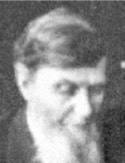
NameJohn Mohler STUDEBAKER 
Birth10 Oct 1833, Adams County, Pennsylvania5076, p 2,197, p 407
Removal1853, Placerville, El Dorado, California197, p 407 Age: 19
Memothen Hangtown
Removal21858, South Bend, St. Joseph, Indiana197 Age: 24
Death16 Mar 1917, South Bend, St. Joseph, Indiana5076, p 2 Age: 83
FatherJohn Clement STUDEBAKER (1799-1877)
MotherRebecca MOHLER (1802-1887)
Individual Notes
• John came to South Bend to join his brothers in their blacksmith shop but being young and adventurous (age 19) became interested in the Gold Rush to California. He was determined to go, and he and his brothers built a wagon which he traded to an expedition for his passage abroad. This was one of the wagons of the caravan that arrived in good condition at Hangtown, California in 1853.
Upon arrival in Hangtown he accepted job with J. L. Hines, a blacksmith of Hangtown, now Placerville, later becoming a partner with special responsibility for building sorely needed wheelbarrows. Hence the name John became known as “Wheelbarrow Johnny,” commemorated each year in the extraordinary wheelbarrow races in Placerville. John saved his money while in California.
Meanwhile, his brothers back in South Bend were having a hard time financing their business and about to go under. They appealed to J. M. to come back to South Bend and join them in their business. After five years in California he yielded to their suggestion and returned on a sailing ship for New York with $8,000 in gold nuggets sewed in a leather belt and strapped…197, p 407
• We owe his fame and fortune to a game of three card monte. As the story goes, on his way to Hangtown, Placerville, California, the enterprising young John Mohler Studebaker, son of John Studebaker and Rebecca Mohler, was duped into a game. Arriving in California with only fifty cents of his $65 grub stake, John began a life of toil in lieu of gold prospecting. His misfortune turned into a fortune as he supplied others seeking their fortune with hand built wheelbarrows. After returning to Indiana and buying out his older brother Henry’s share of the H. and C. Studebaker Co., he managed to parlay his $8000 wheelbarrow earnings into millions with the building of wagons and eventually the Studebaker automobile.5770
Upon arrival in Hangtown he accepted job with J. L. Hines, a blacksmith of Hangtown, now Placerville, later becoming a partner with special responsibility for building sorely needed wheelbarrows. Hence the name John became known as “Wheelbarrow Johnny,” commemorated each year in the extraordinary wheelbarrow races in Placerville. John saved his money while in California.
Meanwhile, his brothers back in South Bend were having a hard time financing their business and about to go under. They appealed to J. M. to come back to South Bend and join them in their business. After five years in California he yielded to their suggestion and returned on a sailing ship for New York with $8,000 in gold nuggets sewed in a leather belt and strapped…197, p 407
• We owe his fame and fortune to a game of three card monte. As the story goes, on his way to Hangtown, Placerville, California, the enterprising young John Mohler Studebaker, son of John Studebaker and Rebecca Mohler, was duped into a game. Arriving in California with only fifty cents of his $65 grub stake, John began a life of toil in lieu of gold prospecting. His misfortune turned into a fortune as he supplied others seeking their fortune with hand built wheelbarrows. After returning to Indiana and buying out his older brother Henry’s share of the H. and C. Studebaker Co., he managed to parlay his $8000 wheelbarrow earnings into millions with the building of wagons and eventually the Studebaker automobile.5770
Spouses
Birth25 Mar 1836197, p 407
Marriage2 Jan 1860, South Bend, St. Joseph, Indiana197, p 407
Marr Memoin her father’s home