
Mills-Martin Family Records - Person Sheet
Mills-Martin Family Records - Person Sheet
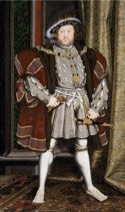
NameHenry VIII TUDOR King of England 
Birth28 Jun 1491, London, England5348, p 3; year only,5381, p 1
MemoGreenwich Palace
Accession15095348, p 3 Age: 17
Death28 Jan 1547, London, England5341, p 281; year only,5381, p 1 Age: 55
MemoWhitehall Palace
FlagsKing/Queen
FatherHenry VII TUDOR King of England (1457-1509)
MotherElizabeth YORK (1466-1503)
Individual Notes
• Henry VIII (28 June 1491 – 28 January 1547) was King of England from 1509 until his death in 1547. Henry is best known for his six marriages, and, in particular, his efforts to have his first marriage (to Catherine of Aragon) annulled. His disagreement with Pope Clement VII on the question of such an annulment led Henry to initiate the English Reformation, separating the Church of England from papal authority. He appointed himself the Supreme Head of the Church of England and dissolved convents and monasteries, for which he was excommunicated. Henry is also known as “the father of the Royal Navy,” as he invested heavily in the navy, increasing its size from a few to more than 50 ships, and established the Navy Board.
Domestically, Henry is known for his radical changes to the English Constitution, ushering in the theory of the divine right of kings. He also greatly expanded royal power during his reign. He frequently used charges of treason and heresy to quell dissent, and those accused were often executed without a formal trial by means of bills of attainder. He achieved many of his political aims through the work of his chief ministers, some of whom were banished or executed when they fell out of his favor. Thomas Wolsey, Thomas More, Thomas Cromwell, Richard Rich, and Thomas Cranmer all figured prominently in his administration.
Henry was an extravagant spender, using the proceeds from the dissolution of the monasteries and acts of the Reformation Parliament. He also converted the money that was formerly paid to Rome into royal revenue. Despite the money from these sources, he was continually on the verge of financial ruin due to his personal extravagance, as well as his numerous costly and largely unsuccessful wars, particularly with King Francis I of France, Holy Roman Emperor Charles V, James V of Scotland and the Scottish regency under the Earl of Arran and Mary of Guise. At home, he oversaw the legal union of England and Wales with the Laws in Wales Acts 1535 and 1542, and he was the first English monarch to rule as King of Ireland following the Crown of Ireland Act 1542.
Henry’s contemporaries considered him an attractive, educated, and accomplished king. He has been described as “one of the most charismatic rulers to sit on the English throne” and his reign has been described as the “most important” in English history. He was an author and composer. As he aged, however, he became severely overweight and his health suffered, causing his death in 1547. He is frequently characterised in his later life as a lustful, egotistical, harsh and insecure king. He was succeeded by his son Edward VI.
Domestically, Henry is known for his radical changes to the English Constitution, ushering in the theory of the divine right of kings. He also greatly expanded royal power during his reign. He frequently used charges of treason and heresy to quell dissent, and those accused were often executed without a formal trial by means of bills of attainder. He achieved many of his political aims through the work of his chief ministers, some of whom were banished or executed when they fell out of his favor. Thomas Wolsey, Thomas More, Thomas Cromwell, Richard Rich, and Thomas Cranmer all figured prominently in his administration.
Henry was an extravagant spender, using the proceeds from the dissolution of the monasteries and acts of the Reformation Parliament. He also converted the money that was formerly paid to Rome into royal revenue. Despite the money from these sources, he was continually on the verge of financial ruin due to his personal extravagance, as well as his numerous costly and largely unsuccessful wars, particularly with King Francis I of France, Holy Roman Emperor Charles V, James V of Scotland and the Scottish regency under the Earl of Arran and Mary of Guise. At home, he oversaw the legal union of England and Wales with the Laws in Wales Acts 1535 and 1542, and he was the first English monarch to rule as King of Ireland following the Crown of Ireland Act 1542.
Henry’s contemporaries considered him an attractive, educated, and accomplished king. He has been described as “one of the most charismatic rulers to sit on the English throne” and his reign has been described as the “most important” in English history. He was an author and composer. As he aged, however, he became severely overweight and his health suffered, causing his death in 1547. He is frequently characterised in his later life as a lustful, egotistical, harsh and insecure king. He was succeeded by his son Edward VI.
Spouses
Marriage11 Jun 1509, Greenwich, England5341, p 281; marriage only,5381, p 1
Marr MemoGrey Friars Church
Divorce15335341, p 281
ChildrenMary I (1516-1558)
Death1536, London, England5333, p 12
Memobeheaded, Tower of London
FatherThomas BOLEYN Earl of Wiltshire (~1477-1539)
MotherElizabeth HOWARD (-1537)
Individual Notes
• Anne Boleyn was created marchioness of Pembroke in 1532, a few months previous to her marriage with Henry VIII.5382, p 456
• Anne Boleyn (1501 – 19 May 1536) was Henry's second wife and the mother of Elizabeth I. Henry's marriage to Anne and her execution made her a key figure in the political and religious upheaval at the start of the English Reformation. She was the daughter of Sir Thomas Boleyn and Lady Elizabeth Boleyn (born Lady Elizabeth Howard), and she was of nobler birth than Jane Seymour, Henry's later wife. She was dark-haired with beautiful features and lively manners; she was educated in Europe, largely as a lady-in-waiting to Queen Claude of France.
Anne resisted the king's attempts to seduce her, and refused to become his mistress as her sister Mary Boleyn had been. It soon became the one absorbing object of the King's desires to secure a divorce from his wife Catherine of Aragon so that he could marry Anne. He wrote a love letter that provides evidence of some level of intimacy between them, in which he admires her "pretty duckies" (breasts).[10] It eventually became clear that Pope Clement VII was unlikely to give the king an annulment, so Henry began to break the power of the Catholic Church in England.
Henry dismissed Thomas Wolsey from public office and later had the Boleyn family's chaplain Thomas Cranmer appointed Archbishop of Canterbury. In 1533, Henry and Anne went through a secret wedding service.[11] She soon became pregnant and there was a second, public wedding service in London on 25 January 1533. On 23 May 1533, Cranmer declared the marriage of Henry and Catherine null and void. Five days later, Cranmer declared the marriage of Henry and Anne to be good and valid. Soon after, the Pope launched sentences of excommunication against the King and the Archbishop. As a result of Anne's marriage to the King, the Church of England was forced to break with Rome and was brought under the king's control.[11] Anne was crowned Queen Consort of England on 1 June 1533, and she gave birth to Henry's second daughter Elizabeth on 7 September. She failed to produce a male heir, her only son being stillborn. Henry grew tired of her and had their marriage annulled. Thomas Cromwell devised a plot to execute her.
Despite unconvincing evidence she was found guilty, and beheaded on 19 May 1536 for adultery, incest, and high treason. After the coronation of her daughter, Elizabeth I, Anne was venerated as a martyr and heroine of the English Reformation, particularly due to the works of John Foxe. Over the centuries, she has inspired or been mentioned in numerous artistic and cultural works.
• Anne Boleyn (1501 – 19 May 1536) was Henry's second wife and the mother of Elizabeth I. Henry's marriage to Anne and her execution made her a key figure in the political and religious upheaval at the start of the English Reformation. She was the daughter of Sir Thomas Boleyn and Lady Elizabeth Boleyn (born Lady Elizabeth Howard), and she was of nobler birth than Jane Seymour, Henry's later wife. She was dark-haired with beautiful features and lively manners; she was educated in Europe, largely as a lady-in-waiting to Queen Claude of France.
Anne resisted the king's attempts to seduce her, and refused to become his mistress as her sister Mary Boleyn had been. It soon became the one absorbing object of the King's desires to secure a divorce from his wife Catherine of Aragon so that he could marry Anne. He wrote a love letter that provides evidence of some level of intimacy between them, in which he admires her "pretty duckies" (breasts).[10] It eventually became clear that Pope Clement VII was unlikely to give the king an annulment, so Henry began to break the power of the Catholic Church in England.
Henry dismissed Thomas Wolsey from public office and later had the Boleyn family's chaplain Thomas Cranmer appointed Archbishop of Canterbury. In 1533, Henry and Anne went through a secret wedding service.[11] She soon became pregnant and there was a second, public wedding service in London on 25 January 1533. On 23 May 1533, Cranmer declared the marriage of Henry and Catherine null and void. Five days later, Cranmer declared the marriage of Henry and Anne to be good and valid. Soon after, the Pope launched sentences of excommunication against the King and the Archbishop. As a result of Anne's marriage to the King, the Church of England was forced to break with Rome and was brought under the king's control.[11] Anne was crowned Queen Consort of England on 1 June 1533, and she gave birth to Henry's second daughter Elizabeth on 7 September. She failed to produce a male heir, her only son being stillborn. Henry grew tired of her and had their marriage annulled. Thomas Cromwell devised a plot to execute her.
Despite unconvincing evidence she was found guilty, and beheaded on 19 May 1536 for adultery, incest, and high treason. After the coronation of her daughter, Elizabeth I, Anne was venerated as a martyr and heroine of the English Reformation, particularly due to the works of John Foxe. Over the centuries, she has inspired or been mentioned in numerous artistic and cultural works.
Marriage25 Jan 1533, London, England5333, p 12; marriage only,5381, p 2
Marr MemoWestminster Abbey
ChildrenElizabeth I (1533-1603)
Individual Notes
• On October 12, 1537, Henry finally got a male heir when Jane, through caesarean section, gave birth to a son, who was to become Edward VI of England.
Given the risk in such an operation at the time, it is not surprising that Jane died twelve days after the birth. Henry’s marriage to Jane Seymour was unequivocally legal, unlike his previous marriages, a fact which gave any heir she produced an unquestionable right to the throne.
Although [Henry] appeared to be deeply grieved by the sudden death of Jane Seymour, there is no clear evidence of his deep feelings for her. It is at least true that he neither divorced nor beheaded her.5383
Given the risk in such an operation at the time, it is not surprising that Jane died twelve days after the birth. Henry’s marriage to Jane Seymour was unequivocally legal, unlike his previous marriages, a fact which gave any heir she produced an unquestionable right to the throne.
Although [Henry] appeared to be deeply grieved by the sudden death of Jane Seymour, there is no clear evidence of his deep feelings for her. It is at least true that he neither divorced nor beheaded her.5383
Marriage20 May 1536, York, Yorkshire, England5333, p 12; marriage only,5381, p 2
Marr MemoYork Place
ChildrenEdward VI (1537-1553)
Marriage6 Jan 1540, London, England5333, p 12; marriage only,5381, p 2
Marr MemoGreenwich Palace
Divorce15405333, p 12
Birth1517/1520, Lambeth, Norfolk, England5384
Death1542, London, England5333, p 12; year only,5384 Age: 24
Memobeheaded; Tower of London
BurialLondon, England5384
MemoSt. James Chapel
FatherLord Edmund HOWARD
MotherJoyce CULPEPPER (~1480->1527)
Marriage28 Jul 1540, Richmond, England5333, p 12; marriage only,5381, p 2,5384
Marr MemoHampton Court Palace
Individual Notes
• Died in childbirth.5385, p 2
Marriage12 Jul 1543, Richmond, England5333, p 12; marriage only,5381, p 2
Marr MemoHampton Court Palace