
Mills-Martin Family Records - Person Sheet
Mills-Martin Family Records - Person Sheet
NameMartha COIT 
Birth9 Oct 1744, New London, New London, Connecticut503, p 241; date only
Baptism14 Oct 1744, New London, New London, Connecticut3162, p 334; date only Age: <1
Death31 Mar 1807, New London, New London, Connecticut503, p 241; date only,3162 Age: 62
BurialOld Burying Grounds, New London, New London, Connecticut3162, p 334
FlagsMayflower Descendant
FatherRichard COIT (1722-1745)
MotherAbigail BRADDICK (1712-1770)
Spouses
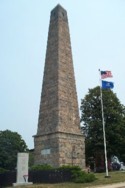
1John HOLT Jr. , 125
, 125Birth6 Dec 1746, New London, New London, Connecticut503, p 241,3162, p 334
Baptism7 Dec 1746, New London, New London, Connecticut503, p 241,3162, p 334 Age: <1
Death6 Sep 1781, Fort Griswold, Groton, New London, Connecticut503, p 241,3162, p 334,3163,3164 Age: 34
BurialOld Burying Grounds, New London, New London, Connecticut503, p 241,3162, p 334
FlagsEldest Child
FatherJohn HOLT , 50 (1719-1786)
MotherSarah STRICKLAND (1721-1776)
Individual Notes
• He was one of the band of patriots that defended Fort Griswold on that fatal day when [Benjamin] Arnold made his descent upon the coast and burnt New London. He was slain with many others by the infuriated conquerors after the surrender of the fort. His wife (Martha Coit) survived him for a quarter of a century. Their remains lie side by side in the ancient burial ground at New London, with a single head stone, bearing the following inscription:
In memory of
Mr. John Holt, jr.,
who was slain at Fort Griswold
Sep. 6, 1781,
in the 35th year of his age.
And in memory of
Mrs. Martha Holt,
relict of
Mr. John Holt, jr., who d.
Mar. 31, 1807, in the
63rd year of her age.503, p 241,504, p 96
• John Holt, Jr., (1746-81), was killed at Fort Griswold, and his brother Jonathan when in search of his body was wounded.507
In memory of
Mr. John Holt, jr.,
who was slain at Fort Griswold
Sep. 6, 1781,
in the 35th year of his age.
And in memory of
Mrs. Martha Holt,
relict of
Mr. John Holt, jr., who d.
Mar. 31, 1807, in the
63rd year of her age.503, p 241,504, p 96
• John Holt, Jr., (1746-81), was killed at Fort Griswold, and his brother Jonathan when in search of his body was wounded.507
Military Notes
• During the summer of 1781, the sixth year of the American Revolution, the fortunes of the American Army showed marked improvement. French troops and a French fleet had reached America and Washington's army had regained control of all captured territory except a few coastal strongholds. The chief of these was New York where Sir Henry Clinton, was strengthening his British army in expectation of a siege. Washington however had other plans. He rapidly and secretly had reinforcements marched around New York and by the last of August had reached the head of Chesapeake Bay, planning with the aid of Lafayette and the French fleet to lay siege of Yorktown. Sir Henry Clinton was suddenly awakened to the perils of Cornwallis' army. His hope lay in a diversion of Washington's forces and this he thought could be brought about best by an attack on New London, a center of the privateer shipping which had preyed on British commerce all through the war. It was known that considerable stores seized from British ships were accumulated there.
The man chosen to lead this undertaking was Benedict Arnold, the traitor, who had sold himself to the British the year before. Having grown up in Norwich, he was familiar with the harbor of New London and he was a brilliant leader. On the afternoon of September 5, 1781, his fleet of some 35 ships and a force of 1700 men anchored off the Long Island shore opposite New London. Here they waited for darkness and a favorable wind and tide hoping to make their attack by midnight, but a change in wind prevented them from entering the harbor until the next morning.
The defense of the harbor and city was under the command of Col. William Ledyard. Fort Trumbull was at that time only an earthworks but conditions at Fort Griswold were more favorable. This fort had been built between 1775-8 and according to Stephen Hempstead's diary consisted "of a wall and stones 10 or 12 feet high on the lower side and surrounded a ditch. On the wall were pickets projecting 12 feet, and above this a parapet with embrasures and within a platform for cannon and a step to mount on to shoot from the parapet with small arms. In the southwest bastion was a flag staff and in the side was a gate with a triangular breastworks to protect it and a redoubt with a three pounder in it.
It was from this height that the enemy fleet had been sighted early in the morning of the 6th and scouts had been sent out to call in the militia and volunteers. By the time the fort was attacked, it was manned by about 160 men, some of them volunteers without uniforms.
Arnold divided his forces into two divisions each of some 800 men. One of these, under his own command, was to attack and burn New London; the other commanded by Col. Eyre, was landed on the Groton side of the river. New London’s defenses were soon taken and the city set on fire. By nightfall some 143 buildings had been burned, in addition to ships and valuable stores.
In 1826 an eyewitness account of the battle was written for the Missouri Republican by Stephen Hempstead. He was first sergeant of Captain Adam Shapley’s company of State troops and was stationed with him and a force of 23 men at Fort Trumball. When advanced upon by the British they retreated across the river to Fort Griswold. The fort was defended by only 160 men and when promised an additional complement of 2or 300 troops, Colonel Ledyard sent defiance to the British commander when ordered to surrender. The troops failed to arrive and the fort was overwhelmed. Colonel Ledyard met the commanding officer of the British force and offered his sword in surrender. It was accepted and was used to stab Ledyard to death. Hempstead who was wounded in the battle by a ball in the elbow was bayoneted in the hip and with other injured soldiers subjected to a barbarous treatment by the victorious British. He referred to this as a massacre and described the bayonetting of the wounded. He reported “85 killed in all, 35 mortally and dangerously wounded, and 40 taken prisoners to New York, most of them slightly hurt.”
The 35 wounded were rescued the following day.3163, pp 13-14
The man chosen to lead this undertaking was Benedict Arnold, the traitor, who had sold himself to the British the year before. Having grown up in Norwich, he was familiar with the harbor of New London and he was a brilliant leader. On the afternoon of September 5, 1781, his fleet of some 35 ships and a force of 1700 men anchored off the Long Island shore opposite New London. Here they waited for darkness and a favorable wind and tide hoping to make their attack by midnight, but a change in wind prevented them from entering the harbor until the next morning.
The defense of the harbor and city was under the command of Col. William Ledyard. Fort Trumbull was at that time only an earthworks but conditions at Fort Griswold were more favorable. This fort had been built between 1775-8 and according to Stephen Hempstead's diary consisted "of a wall and stones 10 or 12 feet high on the lower side and surrounded a ditch. On the wall were pickets projecting 12 feet, and above this a parapet with embrasures and within a platform for cannon and a step to mount on to shoot from the parapet with small arms. In the southwest bastion was a flag staff and in the side was a gate with a triangular breastworks to protect it and a redoubt with a three pounder in it.
It was from this height that the enemy fleet had been sighted early in the morning of the 6th and scouts had been sent out to call in the militia and volunteers. By the time the fort was attacked, it was manned by about 160 men, some of them volunteers without uniforms.
Arnold divided his forces into two divisions each of some 800 men. One of these, under his own command, was to attack and burn New London; the other commanded by Col. Eyre, was landed on the Groton side of the river. New London’s defenses were soon taken and the city set on fire. By nightfall some 143 buildings had been burned, in addition to ships and valuable stores.
In 1826 an eyewitness account of the battle was written for the Missouri Republican by Stephen Hempstead. He was first sergeant of Captain Adam Shapley’s company of State troops and was stationed with him and a force of 23 men at Fort Trumball. When advanced upon by the British they retreated across the river to Fort Griswold. The fort was defended by only 160 men and when promised an additional complement of 2or 300 troops, Colonel Ledyard sent defiance to the British commander when ordered to surrender. The troops failed to arrive and the fort was overwhelmed. Colonel Ledyard met the commanding officer of the British force and offered his sword in surrender. It was accepted and was used to stab Ledyard to death. Hempstead who was wounded in the battle by a ball in the elbow was bayoneted in the hip and with other injured soldiers subjected to a barbarous treatment by the victorious British. He referred to this as a massacre and described the bayonetting of the wounded. He reported “85 killed in all, 35 mortally and dangerously wounded, and 40 taken prisoners to New York, most of them slightly hurt.”
The 35 wounded were rescued the following day.3163, pp 13-14
Marriage21 Nov 1771, New London, New London, Connecticut503, p 241,3162, p 334; date only,504, p 95; date only,3164
ChildrenRichard Coit , 273 (1772-1793)
John (Died as Child), 274 (1774-1777)
John , 275 (1778-1837)
Robert , 276 (1782-1838)